
NATO stands for the North Atlantic Treaty Organization, a political and military alliance of 32 countries from North America and Europe that agree to defend one another if any member faces an armed attack. The organization began in 1949 and still shapes global security decisions today.
This guide breaks down the full meaning behind the acronym, why the alliance was created, how it actually works, and how it differs from other security groups people often confuse it with. By the end, you’ll understand not just what the letters stand for, but why NATO still matters in 2026.
Table of Contents
- What NATO Stands For
- The Story Behind NATO’s Founding
- How NATO Actually Works
- Who Belongs to NATO
- NATO vs. Similar-Sounding Organizations
- Common Misunderstandings About NATO
- Why NATO Still Matters Today
- Quick Reference Summary
- FAQ
What NATO Stands For
Each letter in NATO carries specific meaning:
| Letter | Stands For |
| N | North |
| A | Atlantic |
| T | Treaty |
| O | Organization |
Put together, North Atlantic Treaty Organization describes exactly what the group is: an alliance built around a treaty signed by countries bordering the North Atlantic Ocean.
The name isn’t just branding. It reflects the original geography of the alliance, which linked North American nations like the United States and Canada with Western European nations across the Atlantic. That transatlantic connection remains the backbone of the organization, even though membership has since spread into Eastern Europe and the Baltic region.
What Is NATO in Simple Words?
NATO is a group of countries that promise to protect each other if one member is attacked. Instead of each country handling major security threats alone, NATO members work together through shared planning, military cooperation, and collective defense agreements.
Think of NATO like a security partnership: each country keeps its own military, but members agree that an attack against one ally is a concern for everyone.
The organization does not control the armies of its members. Instead, it helps countries coordinate defense strategies, conduct joint training exercises, share intelligence, and prepare responses to possible threats.
In short:
NATO = countries working together for mutual defense and security.
The Story Behind NATO’s Founding

NATO was established on April 4, 1949, when representatives from 12 countries signed the North Atlantic Treaty in Washington, D.C. The signing happened just a few years after World War II ended, at a moment when Western nations worried about the Soviet Union’s growing influence across Eastern Europe.
The founding members were Belgium, Canada, Denmark, France, Iceland, Italy, Luxembourg, the Netherlands, Norway, Portugal, the United Kingdom, and the United States. These countries wanted a formal guarantee: if one of them was attacked, the others would respond together rather than face the threat alone.
That guarantee became known as Article 5, the treaty’s most famous clause. It states that an armed attack against one member is treated as an attack against all members. Article 5 has only been formally invoked once in NATO’s history, following the September 11, 2001 terrorist attacks on the United States.
In response to NATO’s formation, the Soviet Union and its allies created a rival alliance in 1955 called the Warsaw Pact. That counter-alliance dissolved after the Soviet Union collapsed in 1991, and several of its former members later joined NATO themselves.
Why Was NATO Created?
NATO was created after World War II because many Western countries were concerned about future military conflicts and the growing influence of the Soviet Union in Eastern Europe.
Before NATO existed, countries often relied on individual defense agreements. Leaders believed a stronger alliance would discourage attacks by making it clear that aggression against one country would involve many others.
The main goals behind NATO’s creation were:
- Prevent future wars through collective defense
- Protect member countries from military threats
- Maintain stability in Europe and North America
- Encourage cooperation between allied nations
The idea was simple: a united group of countries would be harder to threaten than individual nations acting alone.
How NATO Actually Works

NATO isn’t a single army with its own soldiers waiting on standby. Instead, it’s a coordination structure that brings together the military forces, equipment, and planning of its member countries.
Here’s a simplified breakdown of how decisions and operations move through the organization:
- Political decisions happen at the North Atlantic Council, where representatives from every member country meet and must agree unanimously before NATO takes major action.
- Military planning is handled by NATO’s command structure, which coordinates joint exercises, defense strategy, and readiness among allied forces.
- Troop contributions come from individual member nations. When NATO launches an operation, it requests specific troops, ships, aircraft, or equipment from allies rather than deploying a standing NATO army.
- Standing forces, such as NATO’s maritime patrol groups, do exist and remain active for ongoing defense and monitoring tasks.
This structure means every member keeps its own military under national control, while agreeing to work together, share intelligence, and respond collectively when the alliance decides action is necessary.
Why Unanimous Agreement Matters
Because every major NATO decision requires consensus among all 32 members, no single country can drag the alliance into a conflict on its own. This slows decision-making at times, but it also means member nations trust that they won’t be committed to military action without their consent.
What Is NATO Article 5?
Article 5 is NATO’s collective defense agreement. It states that an armed attack against one NATO member is considered an attack against all members.
The purpose of Article 5 is deterrence. It signals that attacking one country could result in a response from the entire alliance.
However, Article 5 does not automatically mean every country immediately sends troops. NATO members decide together what response is appropriate, which could include military support, intelligence sharing, logistical assistance, or other actions.
Article 5 has only been officially used once:
- September 11, 2001: NATO invoked Article 5 after terrorist attacks against the United States.
This response showed that NATO’s collective defense promise applies not only to traditional military invasions but also to certain major security threats.
Where Is NATO Headquarters Located?
NATO’s headquarters is located in Brussels, Belgium.
The headquarters serves as the political center of the alliance, where representatives from all member countries meet to discuss security issues, make decisions, and coordinate NATO policies.
NATO’s command structure supports military operations through strategic commands located in different countries, including Belgium and the United States.
The Brussels headquarters is where many important NATO meetings take place, including sessions of the North Atlantic Council, NATO’s main decision-making body.
Who Belongs to NATO
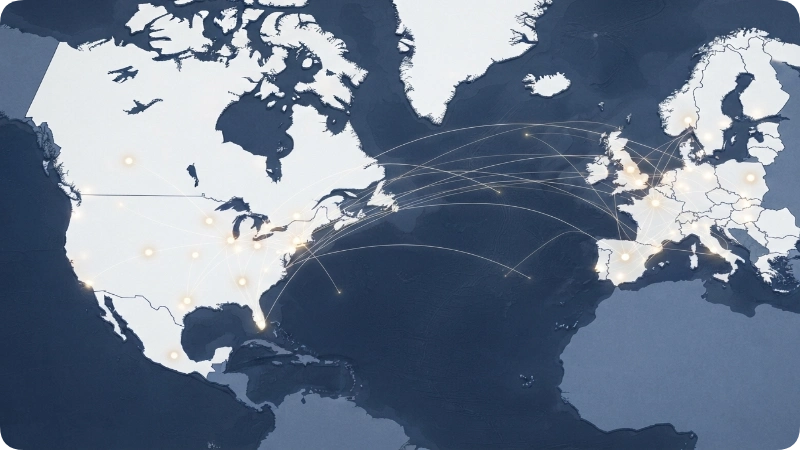
As of 2026, NATO has grown to 32 member countries, up from its original 12 founders. That growth happened gradually, through what’s often called “rounds of enlargement,” as more European nations applied to join after the Cold War ended.
The two most recent members are Finland, which joined in April 2023, and Sweden, which became the 32nd member in March 2024. Both countries had maintained military neutrality for decades but changed course after Russia’s full-scale invasion of Ukraine in 2022 reshaped the security outlook across Europe.
NATO Member Countries
As of 2026, NATO has 32 member countries. They include:
- Albania
- Belgium
- Bulgaria
- Canada
- Croatia
- Czech Republic
- Denmark
- Estonia
- Finland
- France
- Germany
- Greece
- Hungary
- Iceland
- Italy
- Latvia
- Lithuania
- Luxembourg
- Montenegro
- Netherlands
- North Macedonia
- Norway
- Poland
- Portugal
- Romania
- Slovakia
- Slovenia
- Spain
- Sweden
- Türkiye
- United Kingdom
- United States
NATO membership has expanded significantly since the alliance was founded with only 12 countries in 1949.
Membership isn’t automatic. A country must meet specific political, economic, and military standards, commit to democratic governance, and receive approval from every existing member before joining. This process can take years, and some countries remain in candidate or partnership status without full membership.
Notably, countries like Israel and India are not NATO members. NATO limits membership to North American and European nations, so countries outside those regions cannot qualify for full membership, regardless of their security partnerships with NATO members.
NATO vs. Similar-Sounding Organizations
People often confuse NATO with other international groups that sound similar or overlap in purpose. Here’s how NATO differs from three commonly confused organizations:
| Organization | Purpose | Membership Basis |
| NATO | Military alliance for collective defense | North American and European countries |
| United Nations (UN) | Global diplomacy, peacekeeping, and cooperation | Nearly every country in the world |
| European Union (EU) | Economic and political integration among European states | European countries only |
| Warsaw Pact (dissolved) | Former Soviet-led military alliance, created as a counter to NATO | Soviet Union and Eastern Bloc states |
A common mix-up is assuming NATO and the EU are the same thing because many countries belong to both. In reality, NATO focuses on military security, while the EU deals with economic policy, trade, and political integration. A country can belong to one without belonging to the other. Norway, for example, is a NATO member but not part of the EU.
How Is NATO Different From the United Nations?
NATO and the United Nations both work internationally, but their purposes are different.
| NATO | United Nations |
| Military and security alliance | Global diplomatic organization |
| 32 member countries | Almost every country worldwide |
| Focuses on collective defense | Focuses on peace, cooperation, and international issues |
| Members can coordinate military responses | Does not operate as a military alliance |
The UN focuses on diplomacy, humanitarian issues, and international cooperation, while NATO focuses specifically on security and defense among its members.
Common Misunderstandings About NATO
A few misconceptions come up regularly when people first learn what NATO stands for:
- “NATO has its own army.” NATO coordinates member militaries but doesn’t maintain a large independent army separate from its members’ forces.
- “Any attacked NATO member automatically drags others into war.” Article 5 requires collective agreement on how to respond, not an automatic declaration of war by every member.
- “NATO only includes European countries.” The United States and Canada have been founding members since 1949, making NATO a transatlantic alliance rather than a purely European one.
- “NATO membership is only about geography.” Countries also need to demonstrate democratic governance and meet defense standards before joining, geography alone isn’t enough.
Clarifying these points helps explain why NATO members often take time to make decisions and why they treat membership expansion as a serious, multi-year process rather than a simple agreement.
How Does NATO Get Money?
NATO does not receive funding like a traditional government. Instead, member countries contribute financially and provide military resources.
There are two main types of contributions:
Direct funding
Countries contribute money to support NATO’s shared budget, including headquarters, infrastructure, and joint programs.
National defense spending
Each member funds its own military forces, equipment, and personnel that can support NATO missions.
NATO encourages members to invest a certain percentage of their GDP in defense spending to maintain the alliance’s readiness.
Why NATO Still Matters Today
NATO remains one of the most influential security alliances in the world, and it regularly appears in news coverage related to European security, Russia’s actions in Ukraine, and broader debates about global defense spending.
In recent years, member countries have significantly increased defense budgets, with NATO’s collective target asking allies to spend a set percentage of their GDP on defense. This shift reflects growing concern about regional stability, especially following Russia’s invasion of Ukraine in 2022, which pushed several previously neutral countries toward NATO membership.
Beyond collective defense, NATO also plays a role in crisis response, cybersecurity cooperation, and partnerships with non-member nations that want closer security ties without full membership. This broader role means NATO’s influence extends beyond just military deterrence into diplomatic and strategic territory as well.
Quick Reference Summary
- NATO = North Atlantic Treaty Organization
- Founded April 4, 1949, by 12 countries
- Built around Article 5, the collective defense clause
- Grew to 32 members as of 2026, most recently adding Finland and Sweden
- Coordinates member militaries rather than operating as a single standing army
- Different from the UN and EU, which serve broader diplomatic and economic purposes
FAQs
What does the acronym NATO stand for?
NATO stands for North Atlantic Treaty Organization, a defense alliance formed by countries bordering the North Atlantic region.
Why is NATO important?
NATO is important because it allows countries to cooperate on security and defense. Its collective defense system is designed to discourage attacks and help members respond together to threats.
Does NATO have its own military?
No. NATO does not have a separate army like a country. Member nations provide troops, aircraft, ships, and equipment when NATO missions require them.
Who is the leader of NATO?
NATO is led politically by the Secretary General, who represents the alliance and helps coordinate discussions among member countries.
Is Ukraine part of NATO?
No. Ukraine is not currently a NATO member, although it has a close partnership with NATO and has expressed interest in joining.
When was NATO founded?
NATO was founded on April 4, 1949, when 12 countries signed the North Atlantic Treaty in Washington, D.C.
How many countries are in NATO?
NATO currently has 32 member countries, following Sweden’s accession in March 2024.
What is Article 5, and why is it important?
NATO’s collective defense clause, Article 5, states that all members will consider an attack on one member as an attack on the entire alliance. NATO has formally invoked Article 5 only once, following the September 11, 2001, attacks.
Is NATO the same as the European Union?
No. NATO is a military alliance focused on defense, while the EU is an economic and political union. Membership in one doesn’t require membership in the other.
Does every NATO country have to send troops if one member is attacked?
Not automatically. Members agree to respond collectively, but the specific response is decided together rather than triggering an automatic troop deployment from every country.
Can any country join NATO?
No. NATO limits membership to North American and European nations that meet political, economic, and military requirements, and all current members must approve a new country’s application.
Final Thought
NATO stands for the North Atlantic Treaty Organization, but the acronym only tells part of the story. It represents a decades-old promise between 32 countries to stand together rather than face security threats alone. From its founding in 1949 to its ongoing role in today’s shifting global landscape, NATO continues to shape how North America and Europe coordinate defense, respond to crises, and support one another under Article 5.
Whether you came here for a quick definition or a deeper understanding of how the alliance functions, the core idea stays the same: NATO exists to make collective defense stronger than any single nation could manage on its own.