Have you ever tried writing a paragraph and ended up repeating the word groups too many times? It feels clunky, right?
If you’re a student, blogger, content writer, or just someone looking to sound smarter in daily conversation, knowing synonyms for groups can make your writing shine.
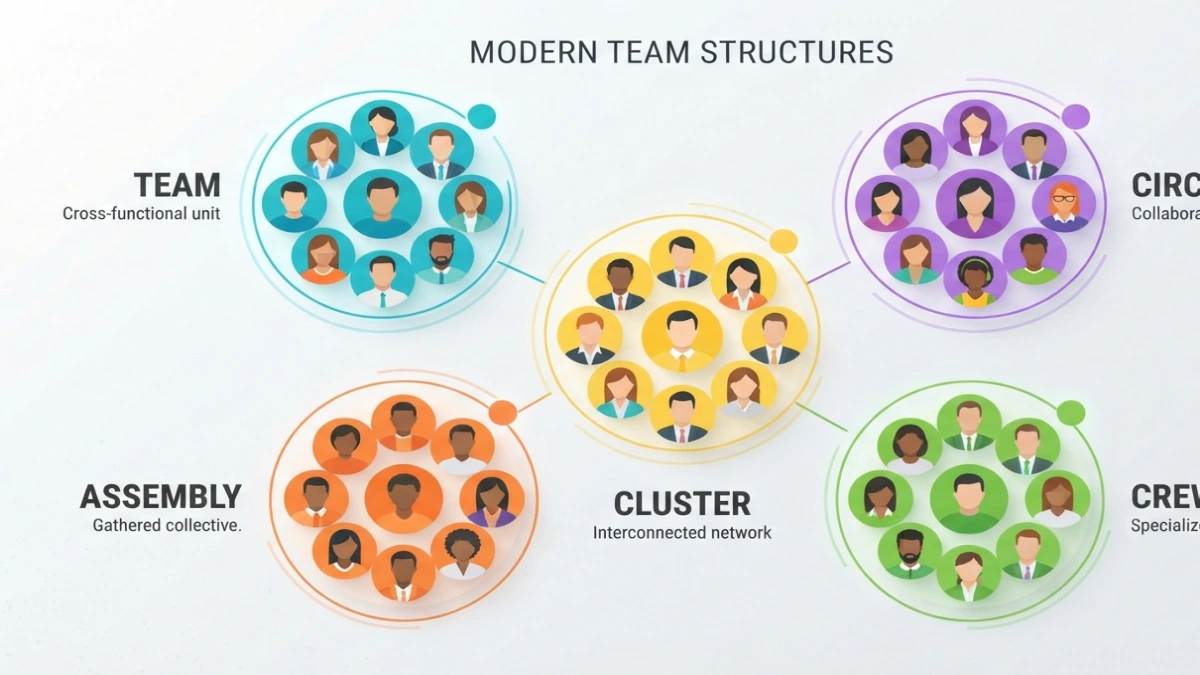
The word groups simply refers to a number of people, objects, or things gathered together. Using alternatives like teams, clusters, circles, or assemblies can make your sentences more engaging and precise.
By learning these synonyms, you can boost your writing, improve conversation, and even make emails or social media posts more polished.
Semantic variations like “collections of people” or “organized teams” also help in making your text more SEO friendly and reader friendly.
Featured Snippet Definition
What is meant by a synonym?
A synonym is a word that has the same or nearly the same meaning as another word.
What is the definition of [synonyms for groups]?
- Groups are collections of people, animals, or objects that are together for a purpose.
- Groups can also refer to organized teams or assemblies working toward a shared goal.
What is another word for groups?
Common synonyms for groups include teams, collections, clusters, sets, assemblies, organizations, communities, categories, and associations. The best synonym depends on whether you’re referring to people, objects, organizations, or classifications.
Common Expressions with “Group”
- group of people
- group discussion
- group project
- group work
- support group
- focus group
- study group
- working group
- research group
- leadership group
- age group
- peer group
- social group
- community group
- small group
- large group
- group dynamics
- group decision
- group activity
- group effort
Content Structure
1. Groups of People
Best synonyms:
- team
- crew
- squad
- committee
- assembly
- organization
- community
- association
- society
- gathering
Example:
Several groups of volunteers cleaned the park.
2. Groups of Things
Best synonyms:
- collection
- cluster
- set
- batch
- bundle
- assortment
- series
- package
Example:
The museum displayed groups of ancient artifacts.
3. Academic Classification
Best synonyms:
- category
- class
- division
- type
- classification
- segment
Example:
Scientists divided the plants into different groups.
4. Business & Organizations
Best synonyms:
- corporation (only when appropriate)
- consortium
- alliance
- partnership
- network
- organization
Example:
Several business groups supported the proposal.
5. Social & Community Context
Best synonyms:
- community
- circle
- network
- society
- club
- association
Example:
She joined several local community groups.
Common Collocations
Everyday English
- group of people
- group discussion
- group activity
- group project
- group work
- group members
- group leader
- age group
- peer group
- support group
Business
- business group
- management group
- leadership group
- focus group
- working group
- research group
- stakeholder group
- consulting group
Education
- study group
- student group
- learning group
- discussion group
- reading group
- project group
Science
- control group
- experimental group
- research group
- sample group
- population group
Contextual Usage
When and how to use [synonyms for groups]
You can use these synonyms in writing, blogging, emails, or conversations to sound precise and professional.
Examples:
- In school: Our reading club is one of the most active groups in class.
- Blogging: Content circles can help bloggers exchange ideas effectively.
- Email: Please share this with all project teams before the meeting.
Tip: Use the synonym that best matches your context. For example, “circle” feels casual, while “assembly” feels formal.
50 Synonyms List
| Synonym Word | Meaning | Examples |
| Team | A group working together toward a goal | 1. Our soccer team won the match. 2. The team is preparing for the presentation. |
| Circle | A group of friends or acquaintances | 1. She invited her reading circle to the event. 2. A close circle of friends supported him. |
| Cluster | Things or people gathered closely | 1. A cluster of stars lit up the sky. 2. The children formed a cluster around the teacher. |
| Assembly | People gathered for a purpose | 1. The school assembly starts at 9 AM. 2. A town assembly discussed the new rules. |
| Flock | A group of birds or animals | 1. A flock of geese flew overhead. 2. Tourists followed the flock to the museum. |
| Pack | A group of animals or objects | 1. A pack of wolves roamed the forest. 2. He carried a pack of cards. |
| Squad | A small organized group | 1. The police squad arrived quickly. 2. Our project squad met every morning. |
| Band | A group with a common purpose | 1. A band of musicians played at the festival. 2. A band of friends traveled together. |
| Gang | Informal group, often peers | 1. The gang of kids played soccer. 2. Local authorities warned the gang about safety rules. |
| Crew | People working together | 1. The movie crew prepared the set. 2. The crew on the ship was helpful. |
| Troop | Organized group, often scouts or soldiers | 1. A troop of scouts camped nearby. 2. Soldiers formed a troop for inspection. |
| Cohort | A group sharing a characteristic | 1. A cohort of students graduated this year. 2. The study tracked a cohort of patients. |
| Party | A group assembled for fun or politics | 1. A birthday party gathered friends. 2. The political party organized a rally. |
| Teamlet | Small team | 1. The teacher split students into teamlets. 2. Each teamlet completed a mini project. |
| Community | A group living together or sharing interests | 1. The online community supports writers. 2. Local communities celebrated the festival. |
| Guild | Group with shared skills or trade | 1. The artist guild hosted an exhibition. 2. A guild of bakers met weekly. |
| Packette | Small pack | 1. A packette of seeds was distributed. 2. Each packette had instructions. |
| Clustered Set | Closely connected group | 1. A clustered set of books was on the table. 2. The researchers observed a clustered set of cells. |
| Ensemble | Group performing together | 1. The jazz ensemble impressed the audience. 2. A dance ensemble rehearsed daily. |
| Platoon | Military group | 1. The platoon marched in formation. 2. A platoon completed the exercise. |
| Circle of Friends | Informal group of friends | 1. Her circle of friends is very supportive. 2. I met his circle of friends yesterday. |
| Panel | Group evaluating or judging | 1. A panel of judges scored the contest. 2. The panel discussed the proposal. |
| Crewlet | Small crew | 1. A crewlet managed the boat. 2. Each crewlet had a leader. |
| Convocation | Formal assembly | 1. The university held a convocation. 2. A convocation of experts debated policies. |
| Congregation | People gathered for religious purpose | 1. The church congregation prayed together. 2. The congregation sang hymns. |
| Set | Group of things together | 1. A set of keys was on the table. 2. She bought a set of plates. |
| Ensemble Cast | Actors in a show | 1. The movie had a talented ensemble cast. 2. An ensemble cast rehearsed daily. |
| Circle Team | Close working group | 1. The circle team planned the project. 2. His circle team met weekly. |
| Grouping | Act of forming a group | 1. A grouping of students was made. 2. The grouping helped organize activities. |
| Alliance | United group for a purpose | 1. Countries formed an alliance. 2. The alliance worked for peace. |
| Clan | Group with shared culture | 1. The clan lived in the valley. 2. Young people often join a music clan. |
| League | Group with shared interest | 1. The soccer league schedules matches. 2. A league of writers formed online. |
| Posse | Informal group | 1. The cowboy posse rode out at dawn. 2. A posse of friends visited the cafe. |
| Circle Group | Social group | 1. The circle group met weekly. 2. A circle group organized a picnic. |
| Cluster Group | Subdivision of larger group | 1. The cluster group studied together. 2. Each cluster group had a mentor. |
| Band of Friends | Informal gathering | 1. A band of friends traveled abroad. 2. The band of friends helped each other. |
| Section | Part of a larger group | 1. The library section had science books. 2. The section of employees attended training. |
| Division | Subset of a larger organization | 1. The sales division grew fast. 2. A new division handled logistics. |
| Party Team | Team within a larger party | 1. The party team organized events. 2. Each party team had roles. |
| Collective | People working together | 1. The artist collective shared ideas. 2. A collective of volunteers helped the city. |
| Faction | Subgroup with specific goal | 1. A political faction proposed changes. 2. The faction disagreed with leadership. |
| Ensemble Group | Musical or theatrical group | 1. The ensemble group performed beautifully. 2. Ensemble groups often practice daily. |
| Council | Advisory group | 1. The council discussed budgets. 2. A student council organized activities. |
| Organization | Structured group | 1. The NGO is a non profit organization. 2. A organization of volunteers cleaned the park. |
| Circle Network | Networked social group | 1. His circle network shares tech tips. 2. The circle network communicates weekly. |
| Cluster Circle | Subset group | 1. The cluster circle met for brainstorming. 2. A cluster circle shared resources. |
| Gathering | People coming together | 1. The family gathering was joyful. 2. A gathering of colleagues happened in the office. |
| Mob | Large, noisy group | 1. A mob of fans waited outside. 2. The mob cheered loudly. |
| Team Group | Synonymous with team | 1. The team group worked well together. 2. A team group shared responsibilities. |
| Crowd | Large assembly | 1. A crowd gathered at the park. 2. The crowd cheered for the performer. |
| Cluster Pack | Group in close formation | 1. The cluster pack moved quickly. 2. A cluster pack of birds landed nearby. |
Categorized Synonym Clusters
| Formal | Informal | Academic | Technical |
| Assembly | Circle | Cohort | Cluster |
| Convocation | Gang | Clan | Platoon |
| Council | Posse | League | Division |
| Organization | Mob | Collective | Ensemble |
| Alliance | Band of Friends | Circle of Friends | Clustered Set |
Antonyms Section
| Antonym | Meaning | Example |
| Individual | Single person or item | 1. Each individual must follow rules. |
| Solo | Alone, without others | 1. She worked solo on the project. |
| Lone | Single, isolated | 1. The lone traveler walked quietly. |
| One | Single entity | 1. Only one was selected. |
| Single | Not in a group | 1. The single book stood out. |
| Independent | Not connected to others | 1. He runs an independent business. |
| Isolate | Separated from a group | 1. They decided to isolate the sample. |
| Soloist | Person performing alone | 1. The soloist sang beautifully. |
| Solitary | Alone, by itself | 1. The solitary tree grew on the hill. |
| Unique | One of a kind | 1. Each painting was unique. |
Comparison Section
Groups vs Teams vs Circles vs Clusters vs Assemblies vs Organization vs Community
- Groups: General term for any gathering.
- Teams: Work together toward a goal. Example: Our soccer team practices daily.
- Circles: Informal social group. Example: Her circle of friends is supportive.
- Clusters: Close formation of objects/people. Example: A cluster of stars is visible tonight.
- Assemblies: Formal gatherings. Example: The school assembly was inspiring.
- Organization: Structured and has defined roles.
- Community: United by shared interests, identity, or location.
Examples of “Groups” in Everyday Sentences
- Students formed groups for the science project.
- The teacher divided the class into groups.
- Social groups share hobbies online.
- A group of tourists visited the museum.
- Friends often join groups on social media.
Examples of Phrases Using “Groups”
- Peer groups influence learning.
- Focus groups help businesses gather opinions.
- Study groups improve academic results.
- Volunteer groups cleaned the park.
- Musical groups performed at the festival.
Common Mistakes to Avoid
❌ Don’t replace group with team in every sentence.
Example:
- A study group may simply learn together.
- A team usually collaborates toward a specific objective.
Similarly, collection is more appropriate for objects than people.
| Type of Group | Best Synonyms |
|---|---|
| People | Team, Community, Assembly, Association |
| Objects | Collection, Cluster, Set, Bundle |
| Business | Organization, Alliance, Consortium, Network |
| Education | Study Group, Discussion Group, Class |
| Science | Category, Classification, Control Group |
| Social | Circle, Club, Society, Community |
FAQs
1. What is a synonym for groups?
Common synonyms include teams, circles, clusters, crews, and assemblies.
2. How do I choose the right synonym?
Pick one that fits your context: casual (circle), formal (assembly), or work focused (team).
3. Can groups refer to animals?
Yes! Words like flock, pack, or troop are used for animals.
4. Why use synonyms for groups?
To avoid repetition, improve clarity, and make your writing engaging.
5. Are there negative synonyms for groups?
Words like mob or gang can imply disorder or trouble.
Mini Vocabulary Growth Section
Learning these synonyms for groups:
- Improves writing and speaking.
- Boosts blog and content readability.
- Strengthens communication and vocabulary authority.
Using these words regularly will make your emails, essays, and social media posts more polished and professional.
Collective Nouns
| Collective Noun | Example |
|---|---|
| Herd | A herd of elephants |
| Flock | A flock of birds |
| Team | A team of players |
| Crew | A crew of sailors |
| Audience | An audience of spectators |
| Committee | A committee of experts |
Conclusion
Mastering synonyms for groups can elevate your writing, speaking, and content creation. Practice using these words in emails, blogs, essays, and social media captions to sound confident and precise.
If it’s forming teams, joining circles, or analyzing clusters, experimenting with different synonyms will make your English richer, clearer, and more engaging.
Keep exploring, writing, and using these words daily to build strong vocabulary and authority in communication.