ASMR stands for Autonomous Sensory Meridian Response. It describes a pleasant tingling sensation that some people experience in response to sounds, visuals, or gentle, focused attention. The feeling often begins around the scalp and may spread to the neck or upper body.
Today, it also refers to the videos, sounds, and other content designed to trigger this response. Whispering, tapping, crinkling, soft speaking, and slow hand movements are common examples.
In simple terms, it can mean either the tingling sensation itself or the content created to produce it. This guide explains what it stands for, where the term came from, what it feels like, how people use the word, and how it differs from similar sensory experiences.
Table of Contents
- What Does ASMR Stand For
- What Does ASMR Mean in Simple Words?
- How to Pronounce ASMR
- How Is ASMR Used in Slang and Online Conversation?
- Where the Term ASMR Come From
- What the Feeling Is Like
- How People Use “ASMR” in Different Contexts
- Why Do People Watch ASMR?
- ASMR vs. Similar Terms
- ASMR vs. Frisson: What’s the Difference?
- Common Misunderstandings About ASMR
- Is ASMR a Word or an Acronym?
- Quick Reference Table
- How to Find Out What Triggers Your ASMR
- Frequently Asked Questions
What Does ASMR Stand For?
It stands for Autonomous Sensory Meridian Response. The phrase describes a particular sensory response rather than a medical condition.
Here is what each part means:
| Word | Simple meaning |
| Autonomous | Happens automatically rather than through deliberate effort |
| Sensory | Related to the senses, especially hearing and sight |
| Meridian | Used in the term to suggest a peak or point of greatest intensity |
| Response | A reaction to a particular stimulus |
The word “meridian” can be confusing because it has other meanings in medicine, geography, and traditional practices. In the name ASMR, it was chosen to describe a peak or high point of the sensation. It does not mean that it is an acupuncture treatment or that the sensation follows traditional energy meridians.
In everyday language, people often describe the experience simply as “tingles.”
What Does ASMR Mean in Simple Words?
In simple words, it is a relaxing tingling sensation that some people get from certain sounds, sights, or forms of gentle attention.
For example, someone might experience it while listening to quiet whispering, watching slow hand movements, hearing someone tap on an object, or watching a pretend haircut video.
The word can also describe the type of content designed to create these sensations. For example:
- “I get ASMR from tapping.” → The person means the sensory response.
- “I watched an ASMR video.” → The person means content designed to trigger that response.
- “That sound is so ASMR.” → The person is using ASMR informally to describe a sound that feels soothing or tingly.
So, depending on context, it can refer to the experience, the trigger, or the content associated with the experience.
How Do You Pronounce ASMR?
It is usually pronounced by saying each letter separately: “A-S-M-R.”
You can say it as “ay-ess-em-are.”
The full phrase, Autonomous Sensory Meridian Response, is rarely used in everyday conversation. Most people simply say “ASMR.”
Example:
“I like listening to ASMR before bed.”
How Is ASMR Used in Slang and Online Conversation?
Although it originally describes a specific sensory response, people often use the word more loosely online.
Someone might call a sound “ASMR” simply because it feels satisfying, soothing, repetitive, or pleasant to hear. For example, a person might describe the sound of rain, keyboard typing, cutting paper, or organizing objects as “ASMR.”
In this informal use, the speaker may not necessarily mean that they experience the classic tingling sensation.
For example:
- “The sound of those pages turning is ASMR.”
- “Cleaning videos are oddly satisfying and very ASMR.”
- “That keyboard sound gives me ASMR.”
This broader internet usage is why it can sometimes mean more than the strict definition of the sensory response.
Where Did the Term ASMR Come From?
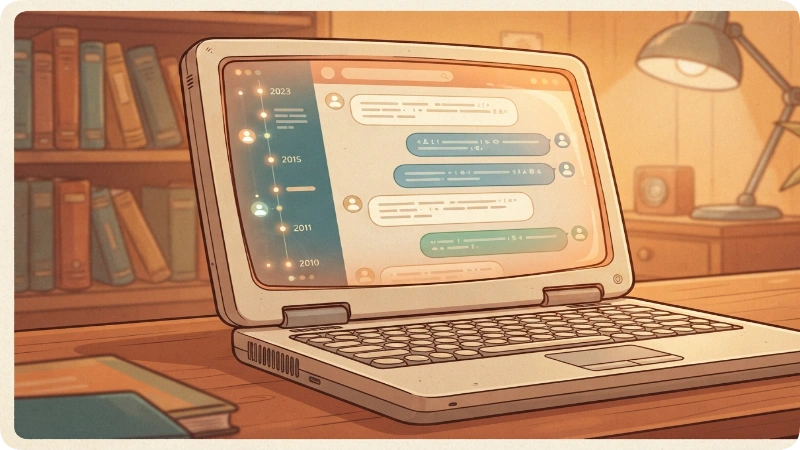
It was coined by Jennifer Allen in 2010. Before that, people who experienced the sensation had already discussed it online, but there was no widely accepted name for it.
Allen chose the phrase Autonomous Sensory Meridian Response to give the experience a neutral, descriptive name. The term helped people discuss the sensation without relying on confusing or sexualized descriptions that had appeared in some earlier online discussions.
The term gradually became more popular as online communities and video creators adopted it. YouTube played a major role in turning ASMR into a recognizable type of content, with creators producing videos built around whispering, tapping, brushing, personal-attention scenarios, and other triggers.
A Simple ASMR Timeline
- Before 2010: People discussed similar sensations online using different informal descriptions.
- 2010: Jennifer Allen coined the term ASMR.
- Early 2010s: Online communities and creators increasingly adopted the term.
- Later 2010s: It became a major YouTube and social-media content category.
- Today: It is commonly used to describe both the sensory experience and the content designed to trigger it.
What the Feeling Is Like
People who experience it usually describe it as a light, pleasant tingling that starts at the top of the scalp and can spread down the back of the neck, along the spine, or into the arms. It’s often paired with a sense of calm, relaxation, or mild euphoria, similar to the feeling some people get from a gentle scalp massage or having their hair played with.
Not everyone feels this response. Research on ASMR is still developing, and scientists have not fully mapped out why some brains react this way and others don’t. What is clear from surveys and small studies is that the response is real for a large number of people, even though it isn’t universal.
How People Use “ASMR” in Different Contexts
The word shows up differently depending on where you encounter it.
In Everyday Conversation
Someone might say, “Whispering gives me ASMR” or “That sound is so ASMR,” using the term loosely as shorthand for anything soft, repetitive, or tingly-feeling. In casual speech, “ASMR” often functions almost like an adjective, even though it started as a noun phrase.
On Social Media and YouTube
It labels an entire content category. Creators, often called ASMRtists, post videos of tapping, whispering, or roleplay scenarios specifically designed to trigger the response in viewers. A video titled “ASMR Haircut Roleplay” tells viewers exactly what kind of sensory experience to expect before they click play.
In Health and Wellness Contexts
Some people use ASMR videos as a sleep aid or a way to manage stress and anxiety. In this setting, the term is discussed alongside relaxation techniques, though it’s worth noting that it is not a clinical treatment and hasn’t been established as medical therapy.
In Academic or Scientific Writing
Researchers use the full term “Autonomous Sensory Meridian Response” when describing study methods or findings, reserving the acronym for repeated references once the full phrase has been introduced.
What Are Common ASMR Triggers?

An ASMR trigger is a sound, sight, movement, or situation that can produce an ASMR response in someone who experiences it. Triggers vary widely from person to person.
Common Audio Triggers
Some frequently reported sounds include:
- Whispering
- Soft speaking
- Tapping
- Crinkling paper or plastic
- Page turning
- Brushing sounds
- Scratching sounds
- Gentle clicking
- Slow, repetitive sounds
Common Visual Triggers
It does not always depend on sound. Some people respond to visual cues such as:
- Slow hand movements
- Careful demonstrations
- Watching someone organize objects
- Repetitive movements
- Close-up movements involving everyday tasks
Personal-Attention Triggers
Some people experience it from situations that simulate personal attention, such as:
- Pretend haircuts
- Makeup or skincare demonstrations
- Eye examinations
- Gentle consultations
- Personal-care roleplay
Not every trigger works for everyone. A sound that produces strong tingles for one person may have no noticeable effect on someone else.
Why Do People Watch ASMR?
People watch its content for different reasons. Some viewers enjoy the tingling sensation itself, while others simply find the sounds and slow movements calming.
Common reasons people give for watching ASMR include:
- Relaxing after a busy day
- Creating a calm environment before sleep
- Enjoying repetitive or satisfying sounds
- Experiencing ASMR tingles
- Taking a break from noisy or stressful surroundings
- Using familiar videos as part of a bedtime routine
However, not everyone experiences it, and people can enjoy its content even when they do not get the characteristic tingling sensation.
ASMR vs. Similar Terms
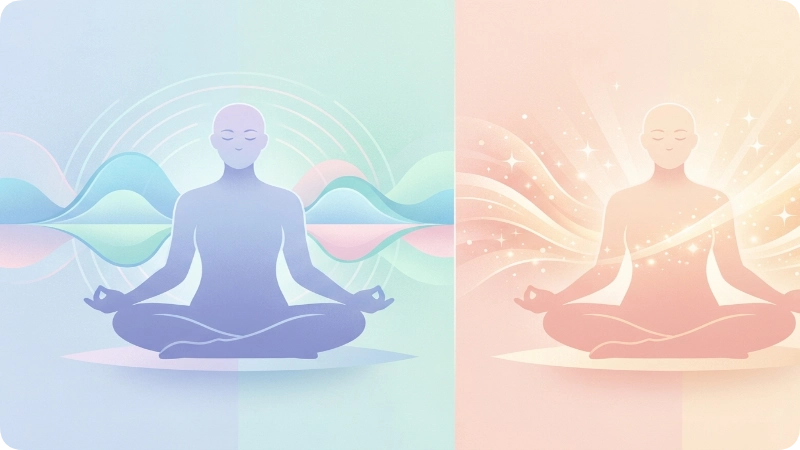
It helps to see how it compares to sensations and terms people sometimes mix it up with.
| Term | What It Means | How It Differs from ASMR |
| ASMR | Tingling sensory response to specific sounds or visuals | Involuntary, sound/visual-triggered, calming |
| Frisson | A brief chill or “skin orgasm,” often from music | Usually shorter, tied to emotional peaks in a song, not scalp-focused |
| Misophonia | Strong irritation or anger triggered by specific sounds | Opposite emotional reaction distress instead of relaxation |
| White noise | Steady, unchanging background sound | Used for masking sound, not designed to trigger tingling |
| Binaural beats | Audio illusion from two slightly different tones | Aimed at brainwave entrainment, not sensory tingling |
ASMR vs. Frisson: What’s the Difference?
Frisson and ASMR can both involve unusual physical sensations, but they are not the same experience.
It is commonly described as a pleasant tingling sensation associated with particular sounds, visuals, or personal-attention cues. Frisson, sometimes called musical chills, is more often associated with strong emotional reactions to music or other emotionally powerful experiences.
The experiences can overlap, but their typical triggers and sensations differ. Someone can experience frisson without experiencing ASMR, and vice versa.
Common Misunderstandings About ASMR
ASMR Is Not Just Any Relaxing Sound
A relaxing sound and an ASMR trigger are not necessarily the same thing. It specifically refers to the sensory response associated with particular triggers. Someone can find rain sounds relaxing without experiencing ASMR.
Everyone Can Feel ASMR
Not everyone experiences it. Some people may feel strong tingles from particular triggers, while others feel nothing at all. Both experiences are normal.
ASMR Is Inherently Sexual
ASMR itself is not inherently sexual. The term refers to a sensory response, and most its content focuses on sounds, relaxation, repetitive actions, or simulated personal attention.
ASMR and Relaxation Mean the Same Thing
They don’t. Relaxation is a broad state that can result from many activities. It refers to a specific sensory response that some people experience.
ASMR Is a Medical Diagnosis
It is not a medical diagnosis. It is a term used to describe a reported sensory experience that researchers continue to study.
Is ASMR a Word or an Acronym?
It is an acronym, not a traditional word. It comes from the first letters of Autonomous Sensory Meridian Response.
However, it has become common enough in everyday internet language that people use it like a normal noun.
For example:
“I watch ASMR at night.”
People also use it informally to describe content or sounds:
“That video is so ASMR.”
So while ASMR began as an acronym, its everyday use has expanded beyond the original full phrase.
Quick Reference Table
| Question | Short Answer |
| What does ASMR stand for? | Autonomous Sensory Meridian Response |
| How do you say it? | Ay-ess-em-are (four letters) |
| Who coined the term? | Jennifer Allen, in 2010 |
| Is it a medical diagnosis? | No, it’s a described sensory phenomenon |
| Where is it felt? | Scalp, neck, spine, sometimes arms |
| Is it the same as frisson? | No, frisson is a different, usually music-triggered chill |
How to Find Out What Triggers Your ASMR
If you want to explore whether you experience ASMR, start with simple and familiar triggers rather than assuming one particular sound will work.
Try different categories, such as whispering, tapping, soft speaking, page turning, or slow hand movements. Pay attention to which sounds or visuals feel calming or produce the characteristic tingling sensation.
You can also try different recording styles. Headphones may make subtle sounds easier to hear, especially in videos designed around left-right or close-up audio.
Most importantly, don’t expect yourself to experience ASMR. Some people feel it strongly, some experience it only with certain triggers, and others do not experience it at all.
FAQs
What does ASMR stand for?
ASMR stands for Autonomous Sensory Meridian Response. It describes a pleasant tingling sensation that some people experience in response to sounds, visuals, or gentle personal-attention cues. The acronym is also commonly used for videos and other content designed to trigger this response.
What does ASMR mean in simple terms?
In simple terms, ASMR is a calming tingling sensation that some people experience from specific sounds, sights, or actions. Whispering, tapping, crinkling, and slow movements are common examples of ASMR triggers.
What does ASMR mean on TikTok and YouTube?
On TikTok and YouTube, ASMR usually refers to content designed to create a relaxing or tingling sensory experience. Videos may feature whispering, tapping, eating sounds, object handling, repetitive movements, or other sensory triggers.
Is ASMR a slang word?
ASMR began as an acronym rather than slang, but people now use it informally online. For example, someone might call a satisfying sound “ASMR” even when they are simply describing something soothing or pleasant.
What is an ASMR trigger?
An ASMR trigger is a sound, visual cue, movement, or situation that can produce an ASMR response. Common triggers include whispering, tapping, crinkling, soft speaking, brushing, and personal-attention scenarios.
Why do some people not get ASMR?
ASMR is not experienced by everyone. People respond differently to sensory stimuli, so a sound that produces tingles for one person may have little or no effect on another.
Is ASMR the same as relaxation?
No. ASMR and relaxation are related but different. Relaxation is a broad state, while ASMR refers specifically to a sensory response that some people experience after particular triggers.
Is ASMR the same as frisson?
No. ASMR and frisson are different sensory experiences. ASMR is commonly associated with relaxing tingles from specific triggers, while frisson is often associated with chills caused by emotionally powerful experiences such as music.
Conclusion
ASMR stands for Autonomous Sensory Meridian Response. It describes a pleasant tingling sensation that some people experience in response to specific sounds, visuals, or gentle personal-attention cues.
Today, the word ASMR has a broader online meaning as well. It can refer to the videos and sounds created to trigger the response, or informally describe something that feels especially soothing or satisfying.
Not everyone experiences ASMR, and different triggers work for different people. Whether you encounter the term in a conversation, on YouTube, or across social media, its basic meaning remains connected to a distinctive sensory experience and the content built around it.