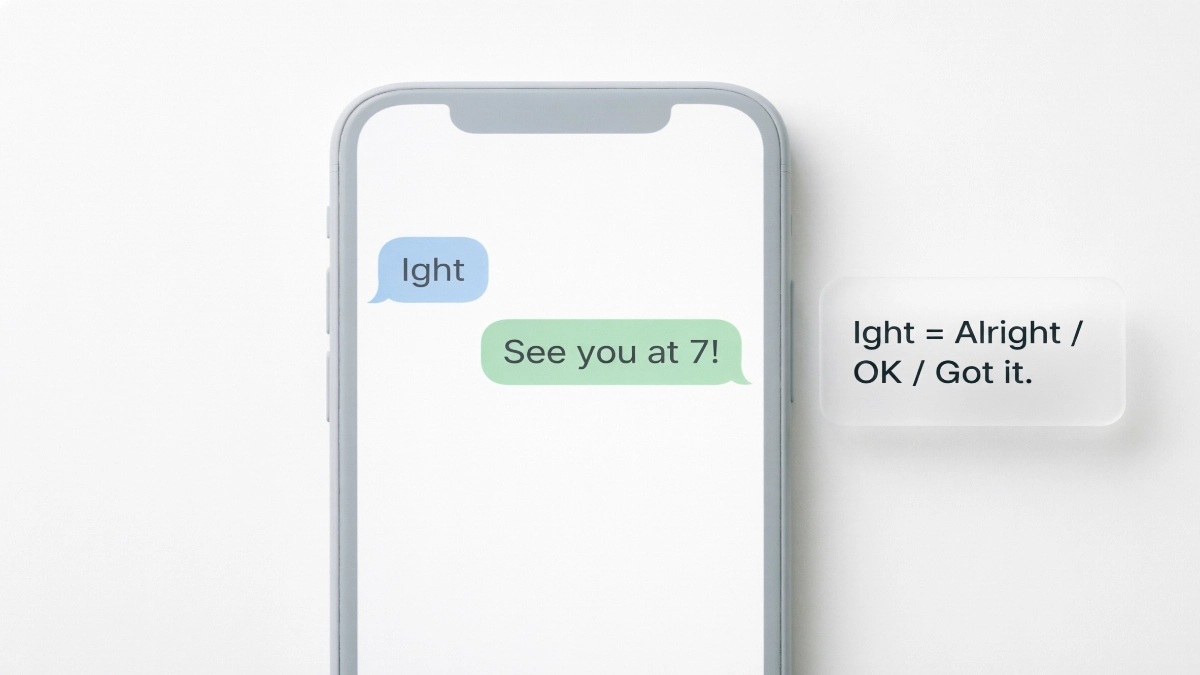
“Ight” is a casual, shortened way of spelling “alright,” typically used in texting, social media, and relaxed conversation to mean “okay,” “fine,” or “I agree.” It’s one of those words you’ll see constantly in DMs and comments but rarely explained clearly so here’s everything you need to know about where it comes from, how to say it, and how to use it naturally.
What “Ight” Means in Simple Terms
At its core, it is a clipped version of “alright.” People drop the first part of the word (“al “) and just keep the tail end, which happens to sound like “ight” (rhymes with “light” or “night”).
It carries the same basic meanings as “alright”:
- Agreement: “Sure, that works for me.”
- Acknowledgment “Got it, I heard you.”
- A casual greeting response “I’m doing fine.”
- A way to close out a conversation similar to saying “okay, bye” or “cool, talk later.”
The exact meaning shifts slightly depending on tone and context, which is part of what makes it so flexible in everyday texting.
Where Does “Ight” Come From? (Origin)
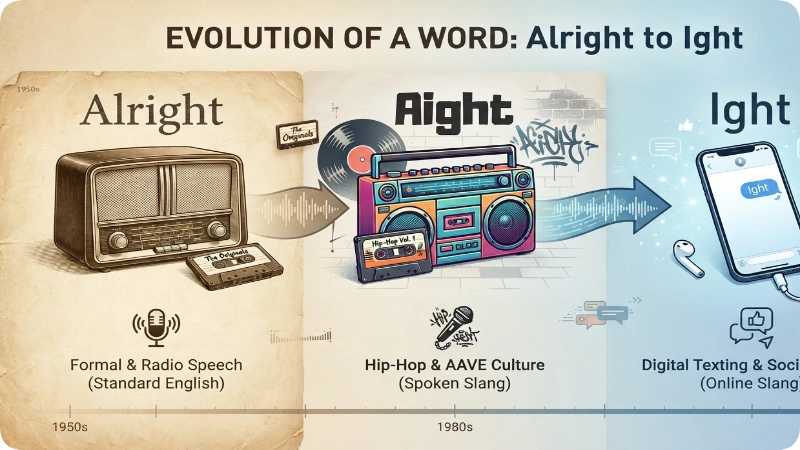
It grew out of African American Vernacular English (AAVE), where dropping unstressed beginning sounds from words is a common and natural speech pattern. “Alright” became “aight” and later “ight” as the pronunciation got even more compressed over time.
From there, the word spread widely through hip hop lyrics, everyday Black American speech, and eventually mainstream youth culture, especially once texting and social media made short, phonetic spellings the norm. Today it’s used by people from many different backgrounds, though it’s worth recognizing and respecting where the word originated.
This kind of word shortening isn’t unusual in English generally think of how “going to” became “gonna,” or “kind of” became “kinda.” It follows that same pattern of natural speech getting compressed into writing.
How to Pronounce “Ight”
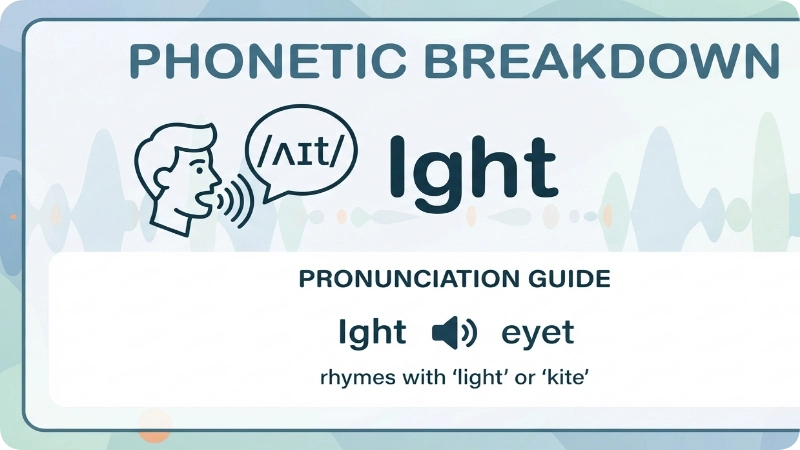
It is pronounced like the second syllable of “alright” on its own; it rhymes with “light,” “night,” and “tight.” Say it with a quick, clipped tone, almost like you’re cutting the word off early.
In spoken conversation, some people pronounce it closer to “aight” (with a short “ay” sound at the start), while the fully clipped “ight” version is more common in text form, since the written spelling drops that initial sound entirely.
How “Ight” Is Used in Different Contexts
In Texting
This is where it shows up the most. It’s a fast, low effort way to confirm plans or respond to a message without typing a full sentence.
Example:
Friend: “Meet outside at 7?” You: “ight, see you then”
On Social Media
On platforms like Instagram, TikTok, and X (formerly Twitter), “ight” often appears in comments or captions to express casual agreement, mild excitement, or a laid back reaction to something.
Example:
Comment under a video: “ight this is actually fire 🔥”
In Spoken Conversation
Though it started as spoken slang, “ight” (or its cousin “aight”) is still used out loud, especially among friends, to say goodbye, confirm something quickly, or react to news.
Example:
“Ight, I’ll call you later.”
In Professional or Formal Writing
It does not belong in emails, resumes, school papers, or workplace communication. It’s strictly informal, and using it in a professional setting can come across as unpolished or overly casual.
Real Life Examples of “Ight” in Conversation
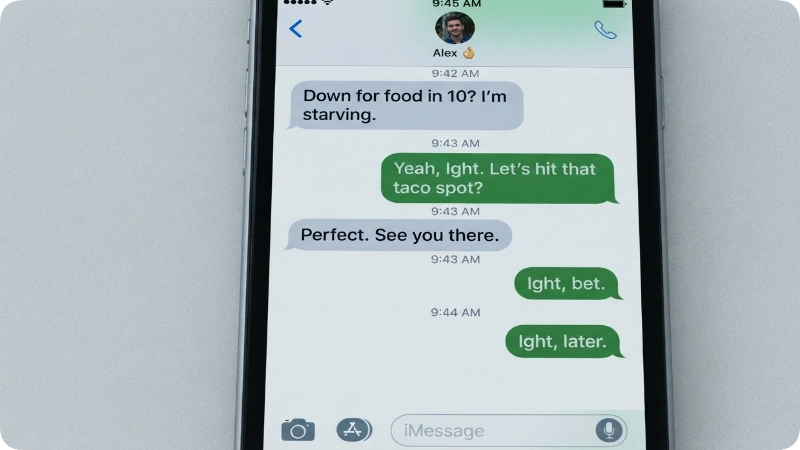
Here are a few natural examples showing the range of ways “ight” gets used:
- Confirming plans: “Ight, I’ll pick you up at noon.”
- Reacting to news: “You got the job? Ight, let’s celebrate!”
- Ending a chat: “Ight, gotta go. Talk later.”
- Reluctant agreement: “Ight, fine, we’ll do it your way.”
- Casual greeting: “Ight, what’s good with you?”
Notice how the tone of “ight” can shift from enthusiastic to reluctant depending on the situation the word itself doesn’t carry emotion, so context and punctuation (like extra letters or emojis) usually fill that in.
“Ight” vs. Similar Terms
| Term | Formality | Common Use | Typical Setting |
| Ight | Very informal | Quick agreement or sign off | Texting, social media |
| Aight | Very informal | Same as “ight,” slightly more spoken sounding | Spoken conversation, texting |
| Alright | Neutral | Full, standard version | Everyday speech, semi formal writing |
| Okay / OK | Neutral | General agreement or acknowledgment | Any setting, including formal |
| K | Very informal (can feel blunt) | Short acknowledgment | Texting only |
The main difference between “ight” and “k” is tone: “k” can come across as cold or annoyed in a text, while “ight” usually feels relaxed and friendly. “Alright” and “okay” are safe choices when you’re not sure how casual you can be.
Common Mistakes When Using “Ight”
- Using it in formal writing. It should never appear in emails, cover letters, or academic work.
- Assuming everyone knows it. Older generations or people less active on social media may not recognize it right away.
- Overusing it in professional sounding conversations, which can make messages seem dismissive even when that’s not the intent.
- Confusing it with “ite,” an unrelated spelling some people use as a typo “ight” is the standard slang form.
When to Use (and Avoid) “Ight”
Good times to use it:
- Texting friends or close contacts
- Casual social media comments
- Informal group chats
Times to avoid it:
- Emails or workplace messages
- School assignments or formal writing
- Conversations with someone you don’t know well, especially in a professional context
A simple rule of thumb: if you’d feel comfortable texting “lol” or “omg” in that conversation, “ight” fits right in too.
Quick Summary
| Question | Answer |
| What does “ight” mean? | A short way of saying “alright,” “okay,” or “fine” |
| How do you pronounce it? | Rhymes with “light” or “night” |
| Where did it come from? | African American Vernacular English (AAVE) |
| Where is it used? | Texting, social media, casual speech |
| Is it formal? | No avoid in professional or academic writing |
Frequently Asked Questions
Is “ight” the same as “aight”?
Yes, they mean the same thing. Aight” is slightly closer to how the word sounds when spoken aloud, while “ight” is the more clipped, text friendly spelling.
Is “ight” a real word?
It’s slang, not a word you’ll find in formal dictionaries as standard English, but it’s widely understood and commonly used in casual writing and speech.
Can I use “ight” with my boss or teacher?
It’s best to avoid it. Stick with “okay” or “sounds good” in professional or academic settings.
Does “ight” always mean agreement?
Mostly, yes, but tone matters. It can express enthusiastic agreement, reluctant acceptance, or simply an acknowledgment that you heard someone.
Is “ight” only used by younger people?
It’s most common among younger, internet active users, but it has spread widely enough that many adults use and understand it too.
Is there a punctuation difference that changes its meaning?
Yes.It” can sound exciting, “ight.” can sound flat or final, and “ight?” can turn it into a question, like checking if someone’s okay with a plan.
Final Takeaway
“Ight” is a simple, casual shorthand for “alright” that fits naturally into texting and social media conversations.
Understanding its origin, tone, and appropriate settings helps you use it confidently and know when to switch to something more formal instead.