In slang, mewing means pressing your tongue flat against the roof of your mouth to make your jaw and face look sharper. People also use the word as a joke on TikTok and Instagram, where “mewing” now describes anyone posing seriously to look attractive or “locked in.” This guide breaks down where the term came from, how it works, and how Gen Z uses it in real conversations today.
Table of Contents
- What Does Mewing Mean in Slang?
- Where Did the Word “Mewing” Come From?
- How the Mewing Technique Actually Works
- How People Use “Mewing” as Slang Online
- Mewing vs. Looksmaxxing vs. Rizz: What’s the Difference?
- Real Examples of Mewing in Conversation
- Common Misunderstandings About Mewing
- Does Mewing Actually Work? What Dental Experts Say
- How to Use “Mewing” Correctly in a Sentence
- FAQ
- Quick Summary
How to Pronounce “Mewing”
Many people see the word online before hearing it spoken, so pronunciation can be confusing.
Pronunciation: /ˈmjuː.ɪŋ/ (MYOO-ing)
It rhymes with “viewing.”
Examples:
- ✅ “He’s always mewing in selfies.”
- ✅ “People started talking about mewing on TikTok.”
This section helps beginners and targets searches like:
- how to pronounce mewing
- mewing pronunciation
What Does Mewing Mean in Slang?
Mewing carries two connected meanings today. The first is literal: it describes resting your tongue against the roof of your mouth with your lips closed and teeth lightly touching. The second meaning is social: online, people use “mewing” to describe someone posing with a tight jaw to look more attractive, often as a joke.
Younger internet users, especially teens on TikTok, stretch the word even further. Someone might say a friend is “mewing” simply because they’re staying quiet and looking composed in a photo. In that sense, mewing has drifted from a dental exercise into a broader piece of internet shorthand for trying to look good on camera.
Where Did the Word “Mewing” Come From?
The term traces back to a British orthodontist named Dr. Mike Mew, who popularized tongue posture techniques as part of his approach to facial development. His last name became the root of the verb “to mew,” and the practice eventually picked up its own following online, separate from any single clinic or expert.
The word stayed fairly niche in dental and orthodontic circles for years. It only exploded into mainstream slang once short form video platforms picked it up, turning a technical concept into a meme that spread far beyond anyone interested in orthodontics.
From Clinical Term to Internet Trend
Once TikTok creators started filming themselves “mewing” for the camera, the word split into two lives. One life stayed close to the original technique. The other became a punchline, used any time someone looked like they were trying too hard to appear attractive.
Why Is It Called “Mewing”?
The name “mewing” doesn’t come from the sound a cat makes.
Instead, it comes from the surname of Dr. Mike Mew, a British orthodontist who promoted proper tongue posture as part of facial development. Because of his work, people began calling the technique “mewing.”
As the idea spread across YouTube, Reddit, TikTok, and Instagram, the name stayed the same even after the internet turned it into a meme.
This section captures searches such as:
- why is it called mewing
- mewing name origin
How the Mewing Technique Actually Works
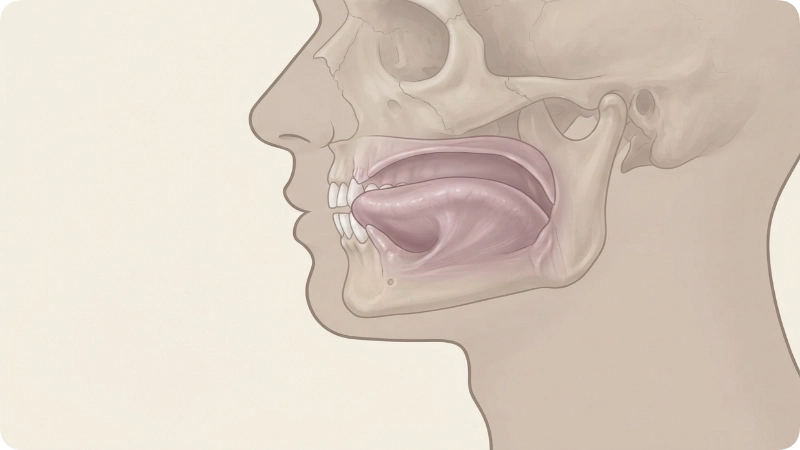
Outside of slang, mewing describes a specific mouth posture. Understanding the technique helps explain why the slang version exists in the first place.
The Basic Tongue Posture
People who practice mewing rest their whole tongue, including the back portion, against the roof of the mouth. The lips stay closed, the back teeth touch lightly, and breathing happens through the nose instead of the mouth.
The Claimed Goal
Supporters of the practice believe that holding this posture consistently over months or years might influence how the jaw and lower face develop, particularly in younger people whose bones are still growing. This is the idea that made “sharper jawline” and “mewing” become linked in people’s minds.
How People Use “Mewing” as Slang Online
The slang version of mewing has grown well past its dental roots. On social media, it now works almost like a verb for posing.
Mewing as a Pose or Reaction
Creators film themselves clenching their jaw and pressing their tongue up right as the camera turns to them. Commenters often joke, “he’s mewing,” when someone looks unusually composed or camera ready in a video or photo.
“Caught Mewing” Memes
A common format shows someone getting playfully called out mid conversation for holding their jaw a certain way, with captions like “caught mewing in the group chat.” The humor comes from treating a private habit like it’s been exposed on camera.
Mewing Paired With “Rizz”
Because both terms circle around attractiveness and confidence, people often combine them. A caption might read “mewing with rizz,” meaning someone looks effortlessly good and charismatic at the same time. Rizz itself is separate slang for charm or flirting skill, so pairing it with mewing just stacks two compliments together.
Mewing in the Classroom
Teachers have reported students using mewing as a distraction, staying silent and pointing to their jaw instead of answering a question. This use leans purely into humor and has little to do with the original technique.
Common Mewing Slang Phrases
If you spend time on TikTok, Instagram, or YouTube Shorts, you’ll see “mewing” used in many different expressions.
Some popular examples include:
| Phrase | Meaning |
| Caught mewing | Someone is secretly trying to improve their jawline or pose. |
| Always mewing | Someone constantly poses seriously in photos. |
| Professional mewer | A joke about someone who never smiles in pictures. |
| Mewing streak | Continuing the habit every day. |
| Stop mewing | A playful way to tell someone to stop posing. |
These phrases are usually humorous rather than serious.
Mewing vs. Looksmaxxing vs. Rizz: What’s the Difference?
These three words show up together constantly, which makes them easy to mix up. Here’s how they actually differ.
| Term | What It Really Means | How It’s Used |
| Mewing | Tongue posture technique; also a joke pose for looking sharp jawed | “Bro’s mewing in every photo now” |
| Looksmaxxing | A broader effort to improve overall appearance, from skincare to grooming to posture | “He’s been looksmaxxing since spring” |
| Rizz | Charisma, charm, or flirting skill, not tied to appearance at all | “She’s got so much rizz” |
Looksmaxxing acts as the umbrella term, and mewing sits underneath it as one specific method. Rizz stands apart because it describes personality and social skill rather than a physical technique or look.
Real Examples of Mewing in Conversation
Seeing the word in context makes the slang easier to recognize and use naturally.
Text between friends: “Why do you look different in this pic” / “I’ve been mewing lol”
Social media caption: “Not me mewing so hard my jaw hurts 💀”
Classroom joke: “Sorry Mr. Lindsay, I was mewing, I didn’t hear the question”
Workplace adjacent, lighthearted use: “Everyone in this headshot looks like they’re mewing”
Each example treats mewing as something between a private habit and a public performance, which is exactly why it fits so well into meme culture.
Where You’ll See “Mewing” Most Often
Although the word has spread across the internet, it appears far more often on some platforms than others.
You’ll commonly see it on:
- TikTok comments
- Instagram Reels
- YouTube Shorts
- Snapchat Stories
- Discord servers
- Reddit discussions
- Gaming chats
- Meme pages
Outside social media, the word is still uncommon in everyday conversation, especially among older adults.
This improves semantic coverage.
Common Misunderstandings About Mewing
A few mix ups come up again and again once mewing becomes a punchline instead of a technique.
- Thinking mewing is only a joke. The slang use grew out of a real orthodontic concept; it didn’t start as a meme.
- Assuming instant results. Online clips often show dramatic before and after comparisons, but any real change from tongue posture would take a long, gradual timeline, not days or weeks.
- Confusing mewing with a facial expression. The technique is about tongue position and breathing, not simply clenching your jaw for a photo, even though that’s the version most people copy on camera.
- Treating it as medically proven. Slang usage often implies mewing guarantees a sharper jaw, which isn’t something dental professionals broadly confirm.
Should You Use “Mewing” in Everyday Conversation?
Whether “mewing” sounds natural depends on your audience.
It’s perfectly normal among people who regularly use TikTok or follow internet culture.
However, many adults, teachers, coworkers, or family members may not recognize the slang meaning at all.
For formal writing, school assignments, workplace conversations, or professional emails, it’s usually better to describe the idea directly instead of using internet slang.
Example:
❌ “Everyone was mewing during the meeting.”
✅ “Everyone was trying to look serious in the photos.”
Does Mewing Actually Work? What Dental Experts Say

This is where the slang and the science pull apart. Orthodontic organizations have pointed out that solid clinical evidence for mewing reshaping the jaw is limited, and the practice isn’t a standard, widely endorsed treatment in mainstream dentistry.
That doesn’t mean tongue posture is meaningless. Correct tongue placement can support nasal breathing and overall oral posture, which some dental professionals do care about. The gap sits between that modest, reasonable idea and the bigger claims that spread through TikTok trends, where mewing gets credited with dramatically reshaping someone’s whole face.
Because of that gap, it’s worth treating dramatic mewing “transformation” videos with some skepticism rather than as proven results.
Mewing Myths vs. Facts
Internet discussions often blur the line between evidence and exaggeration.
| Myth | Reality |
| Mewing changes your face in a week. | No scientific evidence supports rapid facial changes. |
| Everyone should mew. | Tongue posture varies by individual needs. |
| Mewing replaces braces. | Orthodontic treatment and tongue posture are different things. |
| Mewing guarantees a sharp jawline. | Results vary, and strong evidence is limited. |
This improves trustworthiness and supports AI Overview eligibility.
How to Use “Mewing” Correctly in a Sentence
Mewing usually works as a gerund or present participle, built from the verb “to mew” in this slang sense.
- As a verb: “She mews every morning while brushing her teeth.”
- As a gerund (noun like use): “Mewing has become a whole personality online.”
- As slang shorthand: “Stop mewing and answer the question.”
In casual writing, people rarely capitalize it, and it almost never needs quotation marks once the audience already knows the term.
Common Grammar Patterns
You’ll most often see mewing used in these patterns:
- is mewing – “He is mewing for every selfie.”
- started mewing – “She started mewing after watching TikTok.”
- kept mewing – “He kept mewing during the class photo.”
- caught mewing – “They caught him mewing again.”
These patterns help English learners sound more natural.
Similar Internet Slang Terms
People who search for “mewing” often come across other Gen Z slang words.
Here are a few related terms:
| Slang | Meaning |
| Rizz | Charm or flirting ability. |
| Looksmaxxing | Trying to improve physical appearance. |
| Aura | Someone’s perceived confidence or presence. |
| Gyatt | Slang expressing surprise about someone’s appearance. |
| Sigma | Someone seen as independent or confident. |
| NPC | A person acting without originality. |
These words often appear together in memes and social media posts.
FAQs
Is mewing a real medical practice?
It’s based on a real orthodontic concept about tongue posture, but it isn’t a universally accepted or standard dental treatment.
Why do people say “mewing” as an insult or joke?
Because the pose looks exaggerated on camera, commenters often use it humorously to tease someone for looking overly serious or camera ready.
Does mewing actually change your jawline?
Evidence for dramatic, fast changes is weak. Any real influence on jaw shape would likely require years of consistent practice, and results aren’t guaranteed.
Is mewing only used by teenagers?
The slang usage is most common among teens and young adults on platforms like TikTok, but the underlying concept originally came from adult orthodontic discussions.
What’s the difference between mewing and looksmaxxing?
Looksmaxxing is the broader goal of improving appearance overall, while mewing is one specific tongue posture method that falls under that larger umbrella.
Is “mewing” a verb or a noun?
“Mewing” is usually used as a verb (“He’s mewing”) or as a gerund (“Mewing became popular on TikTok”).
Why is everyone talking about mewing?
The term went viral because social media users connected it with sharper jawlines, better selfies, and internet humor. Memes helped spread it far beyond its original orthodontic meaning.
Is mewing still trending?
Yes. Although its popularity has changed over time, mewing continues to appear in TikTok videos, Instagram Reels, memes, and discussions about looksmaxxing and Gen Z slang.
Can mewing be harmful?
The basic tongue posture itself is generally low risk, but people should be cautious of extreme routines or devices marketed alongside mewing trends without professional guidance.
Where did the mewing trend start?
It started with the surname of an orthodontist who taught the tongue posture technique, then spread widely once short form video platforms picked it up.
Key Takeaways
If you only remember a few things about mewing, keep these points in mind:
- Mewing originally referred to a tongue posture technique.
- The name comes from Dr. Mike Mew.
- TikTok transformed it into a viral slang term.
- Today it often jokes about posing with a sharp jawline.
- Scientific evidence for dramatic facial changes remains limited.
- The slang is casual and best suited to social media or informal conversations.
Quick Summary
Mewing means two things at once: a tongue posture technique aimed at facial development, and a slang term for posing or joking about looking sharp jawed online. The word grew from a real orthodontic idea into a full blown internet trend, often mixed with terms like looksmaxxing and rizz. If someone means it seriously or as a joke, mewing now sits firmly inside everyday Gen Z vocabulary, even though the dental evidence behind it stays limited.