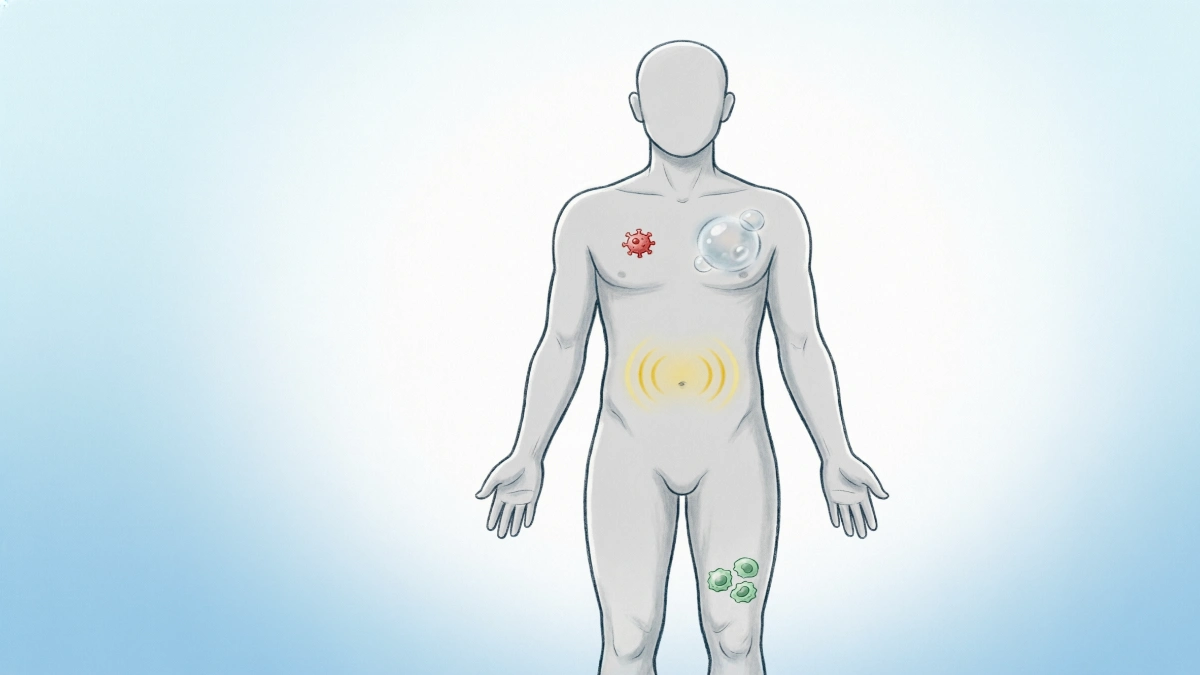
Syphilis can look different at each stage of infection. The earliest sign is usually a painless sore called a chancre, while later stages may cause a widespread rash, especially on the palms and soles. However, some people have no visible symptoms at all, which is why testing is the only reliable way to confirm infection.
Syphilis is a bacterial infection spread mainly through sexual contact, and it’s one of the few sexually transmitted infections (STIs) that moves through distinct, recognizable stages. Knowing what each stage looks like matters because syphilis is easy to mistake for a pimple, an ingrown hair, an allergic reaction, or a heat rash and missing it means the infection keeps progressing quietly.
This guide walks through exactly what syphilis looks like at every stage, how the signs differ between men and women, how it can be confused with other conditions, and when to get tested.
Table of Contents
- What Syphilis Is and Why Its Appearance Changes Over Time
- Primary Syphilis: The First Visible Sign
- Secondary Syphilis: The Rash Stage
- Latent Syphilis: When Nothing Is Visible
- Tertiary Syphilis: Long Term Damage
- Congenital Syphilis: What It Looks Like in Newborns
- Syphilis vs. Other Skin Conditions
- Syphilis Symptoms in Men vs. Women
- Quick Reference Table: Syphilis by Stage
- When to See a Doctor
- FAQs
- Key Takeaway
What Is Syphilis and Why Does It Look Different at Each Stage?
Syphilis is a sexually transmitted infection (STI) caused by the bacterium Treponema pallidum. After entering the body through tiny breaks in the skin or mucous membranes, the bacteria spread through the bloodstream and gradually affect different tissues.
Unlike many other STIs, syphilis changes its appearance as the infection progresses. The earliest stage usually causes a single painless sore, while later stages can produce a widespread rash or no visible symptoms at all. If left untreated for years, it may damage the brain, nerves, heart, or other organs.
Doctors divide syphilis into four stages: primary, secondary, latent, and tertiary. Each stage has its own signs, which is why someone searching online may see very different pictures depending on when the infection is photographed.
Although symptoms can sometimes disappear on their own, the infection does not. Early diagnosis and antibiotic treatment can prevent long-term complications.
Primary Syphilis: The First Visible Sign
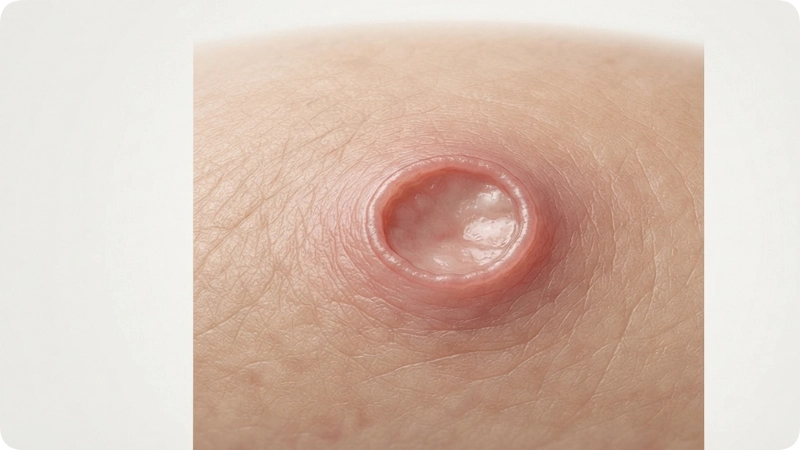
The first visible sign of syphilis is a chancre (pronounced “SHANK er”). This sore typically appears 10 to 90 days after exposure, with about three weeks being average.
What a syphilis chancre typically looks like:
- Round or oval in shape
- Firm at the edges, with a smooth base
- Usually painless, even though it looks like it should hurt
- Single in most cases, though some people develop more than one
- Reddish or the color of the surrounding skin, without pus or crusting
Chancres develop at the exact spot where the bacteria entered the body. That means they can appear on the penis, vulva, vagina, cervix, anus, rectum, or in or around the mouth and throat, depending on the type of contact involved.
Because the sore rarely hurts and often forms in a hidden location, such as inside the vagina or rectum, many people never notice it. Even without treatment, a chance usually heals on its own within three to six weeks. This natural healing is misleading; it does not mean the infection is gone. The bacteria are still active and moving into the next stage.
Secondary Syphilis: The Rash Stage
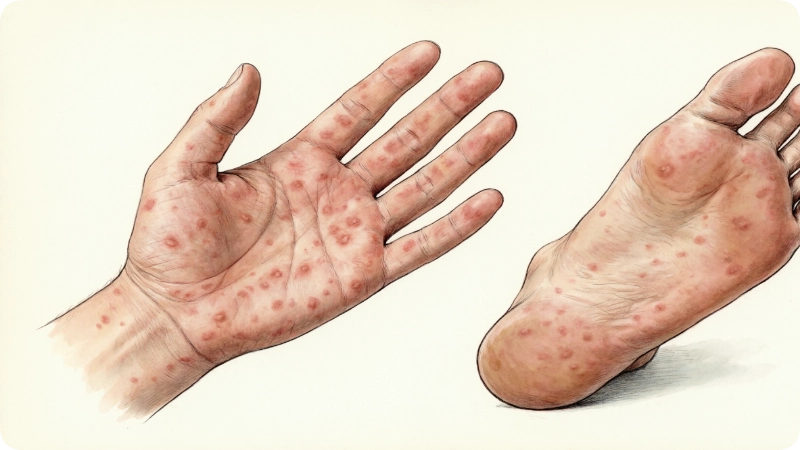
If primary syphilis isn’t treated, secondary syphilis usually develops two to eight weeks after the cancer first appeared. This stage is where syphilis becomes easiest to recognize, but also easiest to confuse with something else.
The Syphilis Rash
The hallmark of this stage is a rash that behaves differently from most skin rashes:
- It often appears on the palms of the hands and soles of the feet, areas rarely affected by common rashes or allergies
- Spots are usually reddish brown, rough, and flat or slightly raised
- The rash typically doesn’t itch, which surprises people expecting it to
- It can also spread across the torso, arms, or legs
Mucous Membrane Sores and Condyloma Lata
Alongside the rash, secondary syphilis can produce:
- Mucous patches: painless, grayish white sores inside the mouth or throat
- Condyloma lata: raised, moist, wart like growths that form in warm, damp areas such as the groin or under the arms; these look different from genital warts and are highly contagious through skin contact
Other Signs That Often Go Along With the Rash
Secondary syphilis frequently comes with symptoms that feel like a mild flu, including:
- Low grade fever
- Swollen lymph nodes
- Sore throat
- Fatigue and headaches
- Patchy hair loss, sometimes described as “moth eaten” in appearance
- Mild joint or muscle aches
Like the cancer before it, this rash can fade on its own within a few weeks to months, even without any treatment. That disappearance is not a sign of recovery. The bacteria are simply moving into a quieter phase.
Can Syphilis Look Different on Different Skin Tones?
Many online examples of syphilis show symptoms on lighter skin, but the infection can look different depending on a person’s natural skin tone.
On lighter skin, the rash often appears pink, red, or reddish-brown. On darker skin, it may look brown, purple, gray, or darker than the surrounding skin instead of bright red. A chancre may also blend more closely with nearby skin, making it harder to notice.
The overall pattern of the disease stays the same regardless of skin tone, but the color and contrast of the sores or rash can vary. Because of these differences, comparing your symptoms to internet photos is not a reliable way to diagnose syphilis. If you notice any unusual sore or rash after possible exposure, testing is the safest way to know for sure.
Can You Diagnose Syphilis by Appearance Alone?
No. Although syphilis has some characteristic signs, appearance alone cannot confirm or rule out the infection.
For example, the painless sore of primary syphilis can resemble an ingrown hair, pimple, or harmless skin ulcer. Later, the rash may look similar to allergic reactions, fungal infections, psoriasis, or viral illnesses. Some people develop very mild symptoms, while others have no visible symptoms at all.
Healthcare professionals diagnose syphilis with blood tests and, in some cases, laboratory testing of fluid from an active sore. If you think you may have been exposed, avoid relying on online images or self-diagnosis.
Latent Syphilis: When Nothing Is Visible
Latent syphilis has no visible symptoms at all. This is the stage where the “appearance” of syphilis is, in a sense, nothing to see.
This stage is split into two parts:
- Early latent: within the first year after infection
- Late latent: beyond one year, or of unknown duration
During this time, a person can still transmit syphilis to sexual partners, even without a visible sore or rash, and the infection continues to exist in the body. The only reliable way to detect it is through a blood test, since there’s nothing to see on the skin.
Tertiary Syphilis: Long Term Damage
Tertiary syphilis can develop years, or even decades, after the initial infection if it was never treated. This stage doesn’t always produce skin changes; instead, it often causes internal damage.
Visible or physical signs at this stage can include:
- Gummas: soft, tumor like growths that can form on skin, bones, or internal organs; they aren’t cancerous, but they can destroy nearby tissue
- Cardiovascular problems affecting the heart and major blood vessels
- Neurological symptoms, including vision changes, difficulty coordinating movement, memory problems, or numbness (a form called neurosyphilis, which can actually occur at any stage, not only in tertiary syphilis)
Because tertiary syphilis is rare today thanks to widespread testing and antibiotic treatment, most people will never reach this stage. It remains one of the strongest reasons not to ignore earlier symptoms.
Congenital Syphilis: What It Looks Like in Newborns
A pregnant person with untreated syphilis can pass the infection to their baby. This is called congenital syphilis, and it has its own distinct appearance.
Newborns with congenital syphilis may show:
- A rash on the palms and soles, similar in appearance to the adult secondary stage rash
- Swollen liver or spleen
- Low birth weight or failure to gain weight normally
- Skin peeling, particularly around the mouth, palms, and soles
- Bone abnormalities that may show up on an X ray
Some babies show no symptoms at birth, with signs appearing weeks or months later. This is why prenatal syphilis screening is a standard part of pregnancy care in most healthcare systems.
Syphilis vs. Common Skin Conditions: How to Tell the Difference
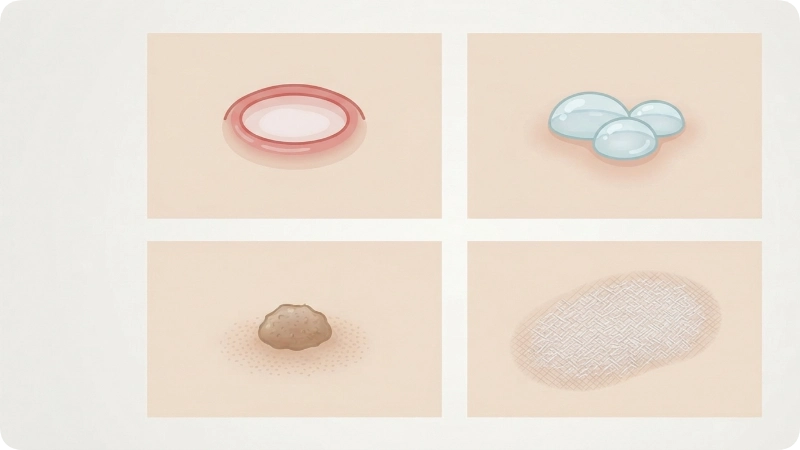
Syphilis is often mistaken for other conditions because its sores and rashes don’t always look “textbook.” Here’s how it compares to some commonly confused conditions.
| Condition | Typical Appearance | Key Difference from Syphilis |
| Genital herpes | Clusters of small, painful, fluid filled blisters | Herpes sores usually hurt and appear in clusters; a syphilis chancre is usually single and painless |
| Genital warts (HPV) | Small, flesh colored, cauliflower like bumps | Warts grow slowly over time; condyloma lata from syphilis appear more suddenly and look flatter and moister |
| Ingrown hair or pimple | Small, tender, sometimes pus filled bump | These are usually tender and resolve within days; a chancre is firm, painless, and lasts weeks |
| Allergic rash or contact dermatitis | Itchy, red, uneven patches | Allergic rashes usually itch; the secondary syphilis rash on palms and soles typically does not |
| Ringworm | Circular, scaly patch with a clearer center | Ringworm has a distinct ring shape and can itch; syphilis rash spots are more uniform and non itchy |
If you notice something unusual and aren’t sure which of these it matches, testing is the only way to know for certain that self diagnosis based on appearance alone is unreliable, even for experienced clinicians.
Syphilis Symptoms in Men vs. Women
The disease process is the same in men and women, but where the signs show up can differ.
In men, a chancre most commonly appears on the penis, though it can also form around the anus or mouth depending on the type of sexual contact. This location often makes the sore easier to notice.
In women, a chancre may develop on the vulva, but it can also form inside the vagina or on the cervix, where it isn’t visible without an internal exam. Because of this hidden location, women may be less likely to notice primary syphilis in its early stage, which makes routine screening especially valuable.
Once secondary syphilis develops, the rash, fever, and swollen glands tend to look similar regardless of sex.
Quick Reference Table: Syphilis by Stage
| Stage | Typical Timing | What It Looks Like | Duration Without Treatment |
| Primary | 10–90 days after exposure | Single, firm, painless chancre at the infection site | Heals in 3–6 weeks |
| Secondary | 2–8 weeks after the chancre | Reddish brown rash (often palms/soles), mucous patches, condyloma lata, flu like symptoms | Fades within weeks to months |
| Latent | Months to years later | No visible signs | Can last indefinitely |
| Tertiary | Years to decades later | Gummas, organ and nerve damage | Ongoing without treatment |
How Doctors Diagnose Syphilis
Doctors diagnose syphilis using laboratory tests rather than appearance alone.
The most common test is a blood test that looks for antibodies produced in response to the infection. If a person has an active sore, a healthcare provider may also collect a sample from the lesion for testing in certain situations.
Because symptoms can disappear while the infection remains active, testing is recommended for anyone who:
- Notices a painless sore on the genitals, mouth, or anus
- Develops an unexplained rash, especially on the palms or soles
- Has had sexual contact with someone diagnosed with syphilis
- Has had unprotected sex with a new or multiple partners
- Is pregnant, since routine prenatal screening helps prevent congenital syphilis
Early diagnosis allows treatment before serious complications develop.
When Should You Get Tested for Syphilis?
See a doctor or visit a sexual health clinic if you notice any painless sore in the genital, anal, or oral area, even if it seems to be healing on its own. Also seek testing if you develop an unexplained rash on your palms or soles, especially alongside fatigue, fever, or swollen lymph nodes.
Syphilis is confirmed with a simple blood test, and in some cases, a swab of an active sore. It’s treated effectively with antibiotics, most commonly penicillin, particularly when caught in the primary or secondary stage. Regular STI screening is worth considering for anyone who is sexually active with new or multiple partners, since early stages are often missed without testing.
Can Syphilis Be Treated?
Yes. Syphilis is treatable with antibiotics, and early treatment is highly effective. Penicillin remains the standard treatment in most cases, although healthcare providers may recommend alternative antibiotics for people with certain allergies.
Treatment stops the infection from progressing and prevents further damage, but it cannot reverse complications that have already occurred. That’s why early testing is so important, even if symptoms disappear on their own.
After treatment, healthcare providers may recommend follow-up blood tests to confirm that the infection has responded appropriately.
FAQs
Can syphilis look like nothing at all?
Yes. During the latent stage, there are no visible symptoms, even though the infection is still present and detectable through a blood test.
Does a syphilis sore hurt?
Usually not. The chancre in primary syphilis is typically painless, which is part of why it’s so often overlooked.
Can syphilis be mistaken for a pimple or ingrown hair?
Yes, especially early on. A chancre can look small and simple at first glance, but it tends to be firmer, longer lasting, and painless compared to a typical pimple or ingrown hair.
How long does the syphilis rash last?
The secondary stage rash can last anywhere from a few weeks to several months, and it may come and go, even without treatment.
Can you have syphilis with no symptoms and still spread it?
Yes. A person in the latent stage can have no visible signs but can still potentially transmit the infection to sexual partners.
Is the syphilis rash itchy?
Typically, no. This is one of the clues that helps distinguish it from many allergic or fungal rashes, which usually do itch.
Can syphilis symptoms go away without treatment?
The visible symptoms of both the primary and secondary stages can fade on their own, but the infection itself remains in the body and continues to progress unless treated with antibiotics.
Key Takeaway
Syphilis changes appearance as it moves through its stages, starting with a painless sore, moving into a rash that often affects the palms and soles, then becoming invisible during the latent stage, and potentially causing serious internal damage years later if untreated. Because its early signs are easy to miss or misread, testing remains the most reliable way to know for sure.
Although the appearance of syphilis changes from one stage to another, no single sore or rash can confirm the infection on its own. Medical testing is the only reliable way to diagnose syphilis. If you’ve noticed symptoms or think you’ve been exposed, getting tested promptly can lead to simple, effective treatment and help prevent serious long-term complications.
If you notice any unusual sore or rash, especially one that doesn’t hurt or itch the way you’d expect, getting checked promptly is the safest next step.