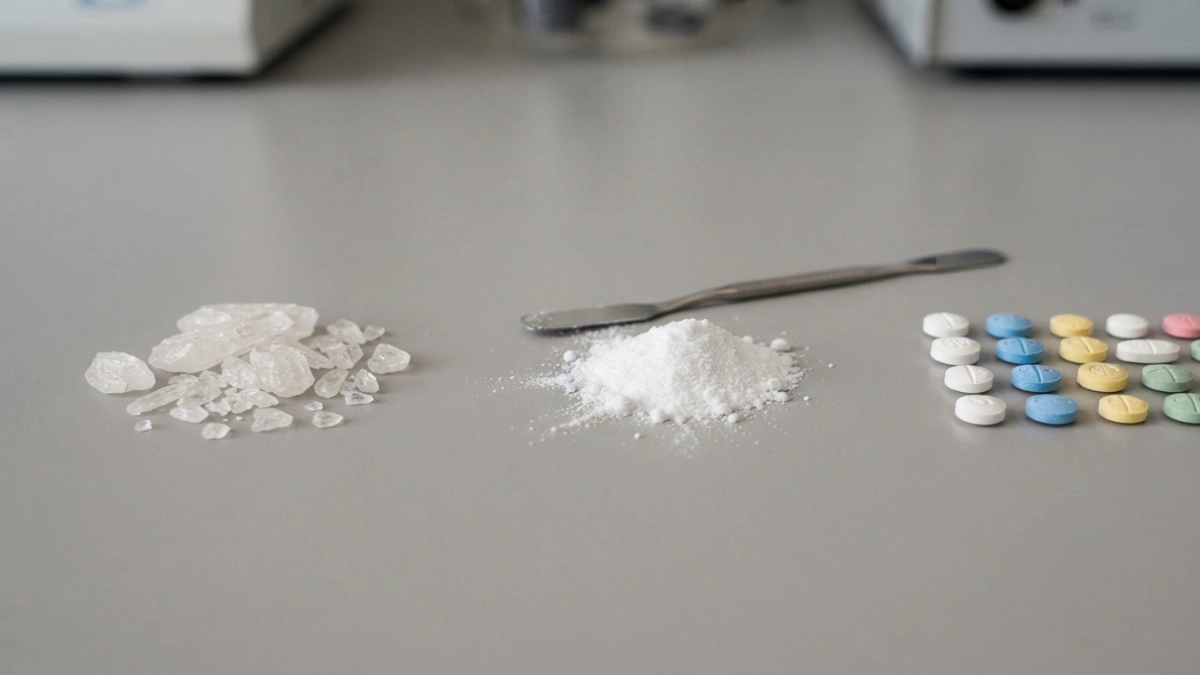
Methamphetamine usually shows up as clear or white crystal chunks that look like broken glass or ice, though it can also appear as a fine powder or a pressed pill. Recognizing these forms matters because meth is often mistaken for harmless household substances, and knowing the difference can protect your family, help you support someone struggling with addiction, or simply satisfy honest curiosity about a drug you’ve heard about in the news.
This guide breaks down every common form meth takes, the colors and textures you might encounter, how it’s typically packaged, and how it compares to substances it’s sometimes confused with. You’ll also find guidance on what to do if you find something suspicious and where to turn for help.
Table of Contents
- What Is Methamphetamine?
- What Does Meth Look Like in Its Different Forms
- Common Colors of Meth and What They Might Indicate
- How Meth Is Typically Packaged
- Meth vs. Similar Looking Substances
- Signs Someone May Be Using Meth
- What to Do If You Find Something That Looks Like Meth
- Common Misconceptions About Meth’s Appearance
- FAQ
- Conclusion
What Is Methamphetamine?
Methamphetamine is a powerful synthetic stimulant that affects the central nervous system. Doctors rarely prescribe it today, and on the street it circulates almost entirely as an illegal, unregulated drug. Because no safety standards govern its production, its appearance varies widely depending on how and where it was made.
People sometimes call it “meth,” “crystal,” “ice,” “glass,” or “tina,” and each nickname often hints at a specific look or form. Understanding those forms helps explain why the same drug can look so different from one encounter to the next.
What Does Meth Look Like in Its Different Forms
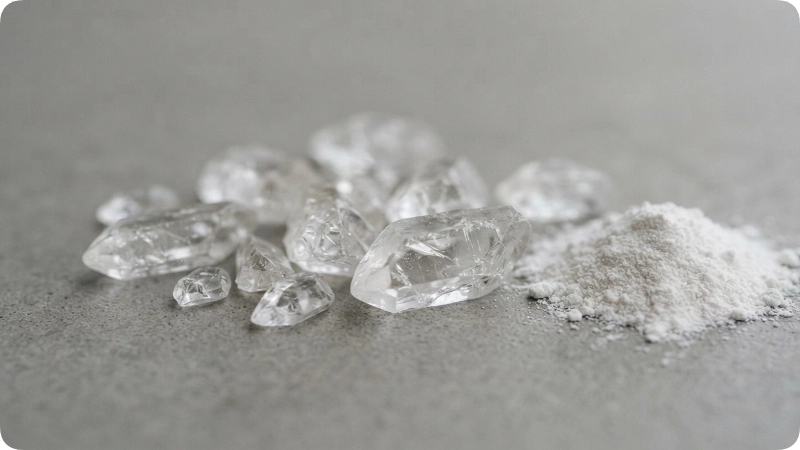
Meth doesn’t have one single appearance. Manufacturers and dealers process it differently depending on the market, and each method leaves a distinct visual signature.
Crystal Meth (“Ice”)
Crystal meth is the form most people picture when they think of methamphetamine. It typically looks like small, jagged shards or chunks that resemble broken glass, rock candy, or shaved ice. The crystals are usually clear, bluish white, or slightly cloudy, and they catch light in a way that makes them look almost glassy under a lamp.
Purity affects clarity: cleaner batches tend to look more transparent, while crystals cut with other substances often appear duller or more opaque. Crystal meth is usually smoked or dissolved, and its hard, glassy texture is one of its most recognizable traits.
Powder Meth
Powder meth looks much closer to what people expect from a generic street drug. It ranges from a fine, almost flour like white powder to a coarser, slightly granular texture. Depending on the manufacturing process and any additives mixed in, the powder can shift toward off white, light yellow, or even light brown.
This form tends to clump less predictably than crystal meth and can sometimes be mistaken for other powdered substances at a glance, which is one reason color and texture alone aren’t reliable identifiers.
Pill Form Meth
Less commonly, meth is pressed into tablets, sometimes called “yaba” in some regions. These pills are often small, brightly colored (orange, pink, or green are common), and occasionally stamped with a logo or symbol to mimic legitimate medication or brand recognition among users. Because they can resemble over the counter or prescription pills, this form is particularly easy to misidentify without lab testing.
Can You Identify Meth by Sight Alone?
No. You cannot reliably identify methamphetamine just by looking at it.
Although crystal meth often appears as clear or white glass-like shards, many legal and illegal substances can look almost identical. Sugar, Epsom salt, certain cleaning chemicals, and other drugs may have a similar color or crystal shape.
Appearance also doesn’t reveal:
- what chemicals the substance contains
- how pure it is
- whether it has been mixed with other drugs
- whether it contains dangerous contaminants
Only laboratory analysis or an appropriate drug-testing process can confirm a substance’s identity. If you discover an unknown powder, crystal, or pill, avoid handling it unnecessarily and treat it as potentially hazardous.
Where Is Meth Commonly Found?
Illegal methamphetamine may be found in places where drug use or drug storage has occurred. Examples include:
- small plastic baggies inside drawers or backpacks
- vehicles
- abandoned buildings
- hotel or motel rooms
- storage containers
- personal belongings
Finding an unfamiliar substance does not automatically mean it is meth. Many legal products look similar, so avoid making assumptions based on appearance alone.
If children or pets could reach the substance, move them away from the area and seek appropriate local guidance rather than trying to identify the material yourself.
Common Colors of Meth and What They Might Indicate
| Color | Typical Form | What It May Suggest |
| Clear or bluish white | Crystal | Often perceived as higher purity, though this isn’t guaranteed |
| White | Powder or crystal | Common baseline color across many batches |
| Yellow or tan | Powder or crystal | Often linked to leftover chemical residue from production |
| Brown | Powder | Usually indicates more impurities or additives |
| Pink, orange, green | Pressed pills | Coloring is intentional, often used to disguise the drug or brand it |
Color is a helpful starting clue, but it’s never a reliable way to confirm what a substance actually is. Only laboratory testing can verify a substance’s identity and purity with certainty.
How Meth Is Typically Packaged
Because meth is illegal, it’s rarely packaged with any labeling. Common packaging includes:
- Small resealable plastic baggies, sometimes with colorful designs printed on them
- Twisted plastic wrap or cellophane corners, often called “twists”
- Small glass or plastic vials
- Folded paper bindles
Finding a substance in this kind of packaging, especially alongside items like small glass pipes, torch lighters, or straws, raises the likelihood that it’s a controlled substance rather than something benign.
Packaging also varies by region and seller. The same type of plastic bag or container may hold completely legal substances, so packaging alone cannot identify methamphetamine.
Meth vs. Similar Looking Substances
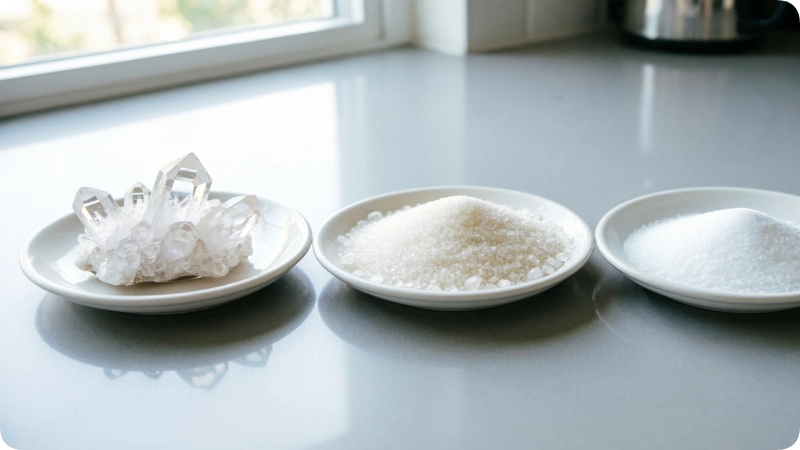
Several legal and illegal substances can resemble meth at first glance. This comparison highlights the differences.
| Substance | Appearance | Key Difference from Meth |
| Table salt or Epsom salt | White crystals | Softer, dissolves easily in water, no glassy shine |
| Sugar (coarse or rock candy) | Clear to white crystals | Sweet smell, dissolves quickly, often more uniform shape |
| Alum (used in cooking/crafts) | Clear crystal chunks | Similar look to crystal meth but has a distinct sour taste and is far less dense |
| Bath salts (synthetic cathinones) | White or off white powder/crystals | Different chemical class, though visually very similar; only testing can distinguish them |
| MDMA (in crystal form) | Clear to yellowish crystals | Often more brittle and less glassy than meth crystals |
Because visual differences can be subtle or nonexistent, appearance alone should never be used to confirm or rule out methamphetamine. If identification matters for safety or legal reasons, a professional drug testing kit or law enforcement lab is the only reliable method.
Signs Someone May Be Using Meth
No single behavior proves someone is using methamphetamine. However, several signs occurring together may suggest a problem.
Possible physical signs include:
- rapid weight loss
- dilated pupils
- poor sleep or staying awake for unusually long periods
- frequent scratching or skin sores
- noticeable dental problems over time
Behavioral signs may include:
- unusual bursts of energy
- nervousness or agitation
- secrecy
- mood swings
- sudden financial problems
- loss of interest in work, school, or family activities
Environmental clues can include unfamiliar powders or crystals, small plastic baggies, glass pipes, foil, or burnt household items.
These signs can also result from other medical or mental health conditions, so avoid jumping to conclusions based on one symptom alone.
What to Do If You Find Something That Looks Like Meth
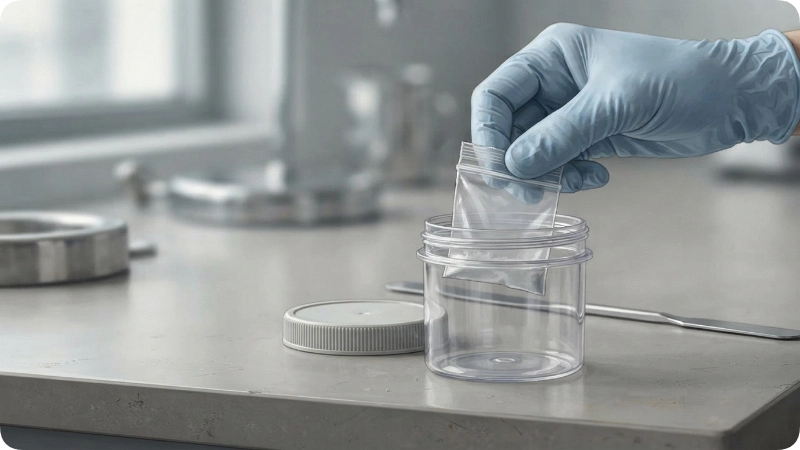
If you come across a substance you suspect might be meth, a few practical steps can keep everyone safer:
- Avoid touching it directly; use gloves or a barrier if you need to move it.
- Keep it away from children and pets.
- Don’t taste or smell it to try to identify it.
- Contact local law enforcement’s non emergency line for guidance on disposal, especially if you’re unsure of your local laws.
- If you’re worried about a family member’s safety or health, consider reaching out to a substance use helpline or a medical professional for guidance on next steps.
Acting cautiously matters more than identifying the substance with certainty yourself.
If anyone has accidentally swallowed, inhaled, or touched an unknown substance and begins showing unusual symptoms, seek emergency medical care immediately or contact your local poison center. Prompt medical advice is more important than trying to identify the substance yourself.
Why Can Meth Look Different?
Illegal meth is manufactured without consistent quality controls. As a result, its appearance can vary depending on:
- the production process
- remaining chemical impurities
- added fillers
- moisture
- storage conditions
These differences explain why one batch may appear as clear crystals while another looks yellowish, cloudy, or powdery.
Because appearance varies so much, it should never be used to judge purity or safety.
Is Crystal Meth Different From Methamphetamine?
Crystal meth is simply one form of methamphetamine.
The term methamphetamine refers to the drug itself, while crystal meth describes the clear or white crystal form commonly sold illegally.
Other forms include:
- powder meth
- pressed tablets in some regions
Although the appearance changes, the active drug remains methamphetamine.
Common Misconceptions About Meth’s Appearance
A few myths persist about how meth looks, and clearing them up can prevent dangerous assumptions:
- Myth: Meth is always crystal clear. In reality, color and clarity vary widely based on production quality.
- Myth: You can tell purity just by looking at it. Visual clues offer hints at best; only lab testing confirms purity.
- Myth: Pills can’t contain meth. Pressed tablets are an increasingly common form, especially in certain regions.
- Myth: A “clean” looking crystal means it’s safe. Appearance has no bearing on safety, legality, or health risk.
FAQs
Does meth smell like anything specific?
Meth production can leave behind a sharp chemical smell, often compared to ammonia or solvents, but the finished product itself frequently has little to no odor, so smell isn’t a dependable identifier.
Can meth look like ordinary sugar or salt?
Yes, especially in crystal form. This is exactly why professional testing, not visual comparison, is the only reliable way to confirm what a substance is.
Is powder meth more dangerous than crystal meth?
Danger depends more on purity, additives, and how it’s used rather than the form itself. Both forms carry serious health risks.
Why do meth pills come in different colors?
Coloring is usually intentional, either to mimic other pills, make the product recognizable to buyers, or brand it within a particular drug market.
Can I identify meth just from a photo online?
Not reliably. Photos can’t capture texture, weight, or chemical composition, all of which matter for accurate identification.
What should I do if I suspect a family member has meth in their room?
Prioritize safety over confrontation. Consider speaking with a counselor, doctor, or addiction helpline before deciding how to approach the situation directly.
Is it illegal just to possess something that looks like meth?
Laws vary by location, and even look alike substances can carry legal consequences in some jurisdictions. Local law enforcement or legal counsel can clarify rules in your area.
Can meth be white powder instead of crystals?
Yes. Methamphetamine may appear as either clear crystals or a white to off-white powder. The appearance depends on how it was manufactured and prepared.
Does pure meth always look clear?
No. Clear crystals are often associated with higher purity, but appearance alone cannot accurately indicate purity or chemical composition.
Can meth be blue?
Sometimes. Some batches may appear slightly bluish or blue-white, but color alone does not identify methamphetamine or indicate quality.
Why does meth come in crystal and powder form?
Methamphetamine can be processed differently during manufacturing. Some batches form crystals, while others remain as powder or are pressed into tablets.
Can legal products look like meth?
Yes. Products such as rock salt, Epsom salt, sugar crystals, and some household chemicals can resemble methamphetamine. Visual appearance alone cannot confirm what a substance is.
Conclusion
Meth can appear as glassy crystal shards, fine or coarse powder, or brightly colored pressed pills, and its color often shifts from clear to yellow or brown depending on how it was made. Because so many legal substances share a similar look, appearance alone is never enough to confirm what you’re dealing with.
If you’re ever uncertain about a substance you’ve found, caution, safe handling, and professional guidance are always the better path than guessing.