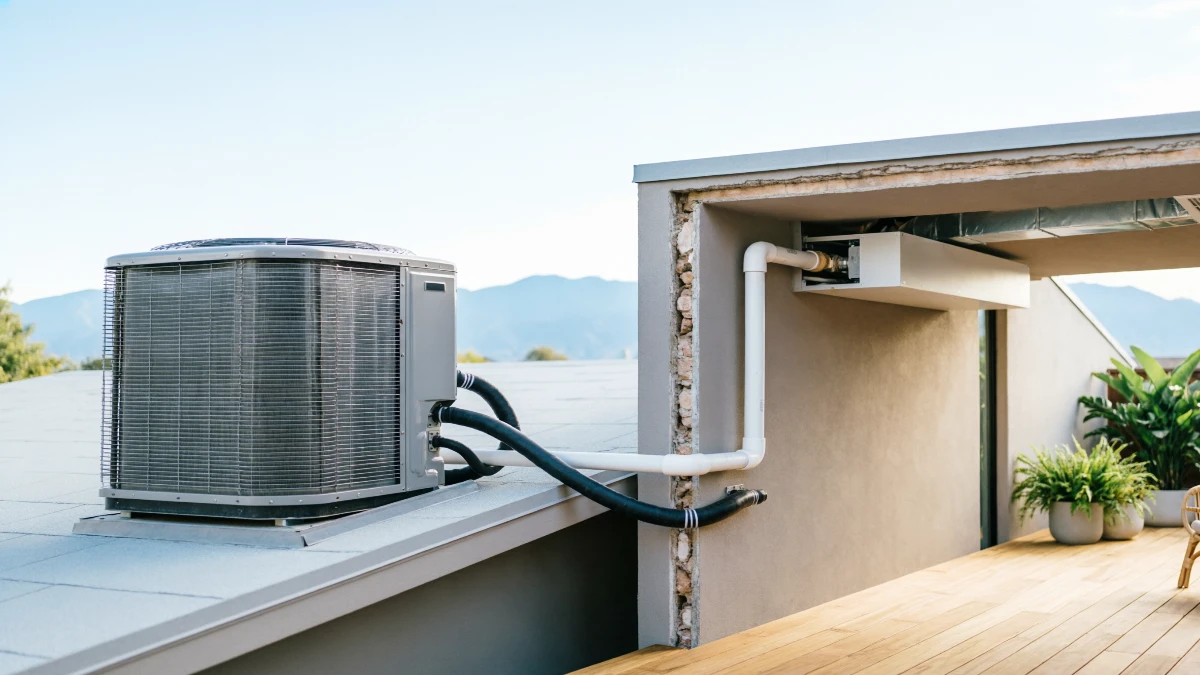
HVAC stands for Heating, Ventilation, and Air Conditioning. The term describes systems and equipment used to heat, cool, circulate, and manage air inside buildings. You will commonly see “HVAC” used when people talk about home heating and cooling, commercial buildings, air quality, repairs, and climate control.
The three parts of HVAC have different jobs: heating raises indoor temperature, ventilation manages the movement and exchange of air, and air conditioning cools and often dehumidifies indoor spaces.
Whether you saw HVAC on a contractor’s estimate, a job listing, an equipment manual, or a home inspection report, understanding the acronym makes the terminology much easier to follow.
Table of Contents
- What Does HVAC Stand For?
- What Does Each Letter in HVAC Mean?
- H = Heating
- V = Ventilation
- AC = Air Conditioning
- How Does an HVAC System Work?
- Why Is HVAC Important?
- Common Types of HVAC Systems
- Split Systems
- Packaged Systems
- Ductless Mini-Split Systems
- Heat Pump Systems
- Central HVAC Systems
- HVAC vs. AC: What’s the Difference?
- HVAC vs. Related Terms
- What Does HVAC-R Stand For?
- Common Misunderstandings About HVAC
- HVAC Maintenance Tips for Homeowners
- Quick Reference: What Does HVAC Stand For?
- Frequently Asked Questions
What Does HVAC Stand For?
HVAC stands for Heating, Ventilation, and Air Conditioning.
- H — Heating: Equipment that raises indoor temperature, such as furnaces and heat pumps.
- V — Ventilation: Processes and equipment that move, exchange, or introduce air to help manage indoor air quality.
- AC — Air Conditioning: Equipment that cools indoor air and commonly removes some moisture from it.
Together, these functions help control temperature, airflow, humidity, and indoor air quality in residential and commercial buildings.
What Does Each Letter in HVAC Mean?

The acronym HVAC contains three main functions: Heating, Ventilation, and Air Conditioning. Each one addresses a different part of indoor environmental control.
H = Heating
Heating is the part of an HVAC system that raises indoor temperature when a building becomes too cold.
Common heating equipment includes:
- Furnaces
- Boilers
- Heat pumps
- Electric heating systems
The exact equipment depends on the building, climate, fuel source, and system design.
V = Ventilation
Ventilation involves bringing in outdoor air and removing or circulating indoor air. Its purpose can include reducing stale air, odors, excess moisture, and indoor pollutants.
Ventilation may occur naturally through openings such as windows or mechanically through fans and dedicated ventilation equipment.
Importantly, ventilation is not simply the same thing as running a fan. A complete ventilation system is designed to move air in a controlled way.
AC = Air Conditioning
Air conditioning removes heat from indoor air to lower the temperature. Most conventional air-conditioning systems also remove some moisture from the air as part of the cooling process.
Air conditioners commonly use a refrigeration cycle to transfer heat from indoors to outdoors.
How Does an HVAC System Work?
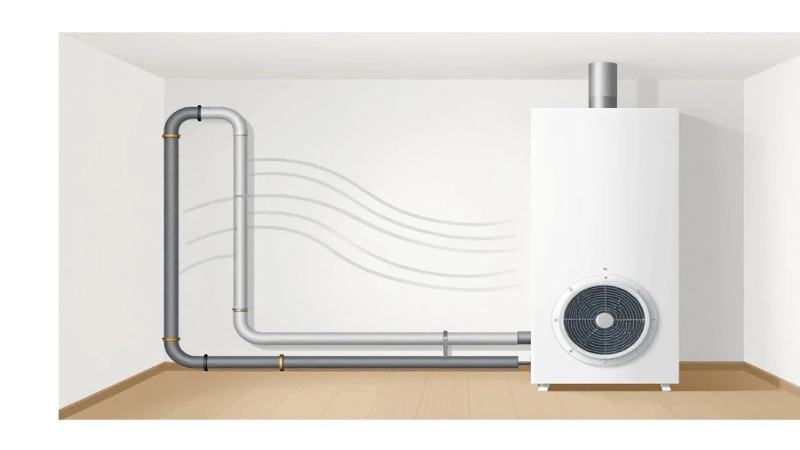
An HVAC system works by controlling indoor temperature and air movement according to the needs of a building. The exact process depends on the type of system, but most systems use some combination of a thermostat, heating or cooling equipment, fans, filters, ductwork, and controls.
A simplified heating or cooling cycle looks like this:
- The thermostat detects indoor conditions. It compares the current temperature with the desired setting.
- The system responds. If heating or cooling is needed, the appropriate equipment starts operating.
- The equipment conditions the air. A furnace, heat pump, or air conditioner heats or cools air depending on the system.
- Air moves through the building. In ducted systems, a blower distributes conditioned air through supply ducts and returns air through return ducts.
- The system adjusts or stops. Once the desired conditions are reached, the equipment cycles down or changes operation.
Not every HVAC system uses ductwork. Ductless mini-splits, for example, deliver conditioned air directly into individual rooms or zones.
Why Is HVAC Important?
HVAC systems affect how comfortable and usable an indoor space feels throughout the year. They can also influence energy consumption and indoor air conditions.
Comfort
Heating and cooling systems help maintain temperatures that are comfortable for the people using a building.
Indoor Air Quality
Ventilation, filtration, and air circulation can help manage indoor pollutants, odors, particles, and excess moisture.
Energy Use
Heating and cooling can account for a significant portion of a building’s energy use. Efficient equipment, proper sizing, insulation, and regular maintenance can help reduce unnecessary energy consumption.
Building Protection
Controlling temperature and moisture can help protect certain building materials, furnishings, and equipment from problems associated with excessive heat, cold, or humidity.
Common Types of HVAC Systems
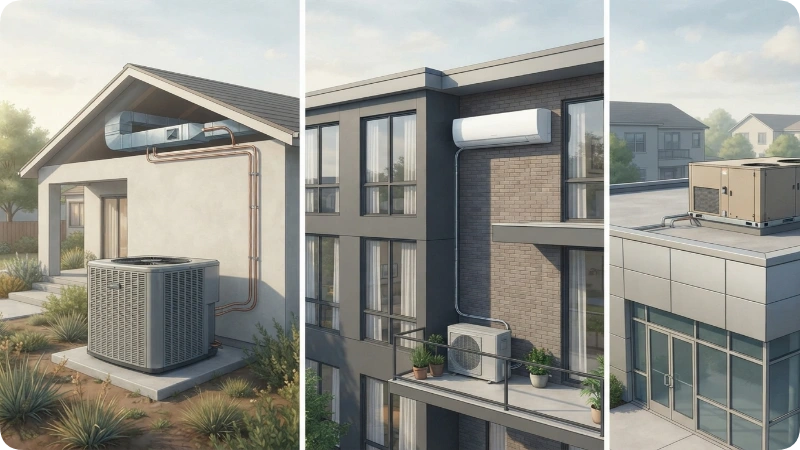
HVAC systems come in several configurations. The best choice depends on the building’s size, layout, climate, existing infrastructure, and heating and cooling needs.
Split Systems
A split system places major components in separate indoor and outdoor units. A common residential arrangement combines an outdoor air conditioner or heat pump with an indoor furnace or air handler.
Packaged Systems
A packaged system places several major heating and cooling components in one outdoor cabinet. These systems are often used where indoor equipment space is limited or where the building design suits an outdoor packaged unit.
Ductless Mini-Split Systems
A ductless mini-split uses an outdoor unit connected to one or more indoor units. Because it doesn’t require traditional ductwork, it can work well for additions, individual rooms, or buildings where installing ducts would be difficult.
Heat Pump Systems
A heat pump can provide both heating and cooling by transferring heat rather than simply generating it. Heat pumps can be configured as ducted or ductless systems.
Central HVAC Systems
A central HVAC system generally serves multiple rooms or zones from centralized equipment, often using ductwork to distribute conditioned air throughout the building.
HVAC vs. AC: What’s the Difference?
It is the broader term, while AC refers specifically to air conditioning.
HVAC stands for Heating, Ventilation, and Air Conditioning, so it can include equipment and processes for heating, ventilation, and cooling.
AC, short for air conditioning, specifically refers to cooling indoor spaces and managing moisture associated with the cooling process.
For example:
- A furnace provides heating.
- An air conditioner provides cooling.
- A ventilation system manages air exchange or movement.
- An HVAC system can combine these functions.
So, AC can be part of an HVAC system, but HVAC is not simply another word for AC.
HVAC vs. Related Terms
People often use HVAC interchangeably with narrower terms, but each one actually describes something more specific.
| Term | Meaning | Difference |
| HVAC | Heating, Ventilation, and Air Conditioning | Broad term covering these building climate-control functions |
| AC | Air Conditioning | Refers specifically to cooling |
| Furnace | Heating equipment | Provides heat but isn’t the entire HVAC system |
| Heat Pump | Equipment that transfers heat | Can provide both heating and cooling |
| HVAC-R | Heating, Ventilation, Air Conditioning, and Refrigeration | Adds refrigeration to the scope |
| Climate Control | General term for controlling indoor conditions | Broader, less specific terminology |
Understanding these distinctions helps when talking to a contractor, reading a lease, or comparing equipment quotes, since each term points to a different scope of work.
What Does HVAC-R Stand For?
HVAC-R stands for Heating, Ventilation, Air Conditioning, and Refrigeration.
The R adds refrigeration to the three functions covered by HVAC. Refrigeration systems are especially important in settings such as grocery stores, restaurants, food-storage facilities, and other commercial environments.
The distinction matters because an HVAC technician may work primarily with building heating and cooling, while an HVAC-R technician may also work with refrigeration equipment.
Common Misunderstandings About HVAC
HVAC and AC mean the same thing
They don’t. AC is one part of HVAC, while HVAC includes heating, ventilation, and air conditioning.
Every HVAC system has ducts
Not necessarily. Ductless mini-split systems can heat and cool rooms without traditional ductwork.
HVAC only means the equipment itself
HVAC can refer broadly to the systems, equipment, and processes used to control indoor temperature, air movement, and related indoor conditions.
Ventilation simply means opening windows
Natural ventilation can involve windows and other openings, but buildings can also use mechanical ventilation to control how air enters and leaves.
A furnace is the same thing as HVAC
A furnace is a heating component. An HVAC system may include a furnace along with cooling, ventilation, controls, and air-distribution components.
Quick Reference: What Does HVAC Stand For?
| Part | Stands For | Main Function |
| H | Heating | Raises indoor temperature |
| V | Ventilation | Manages air movement and exchange |
| AC | Air Conditioning | Cools indoor air and commonly removes moisture |
| HVAC | Heating, Ventilation, and Air Conditioning | Combines these functions into a broad building-systems term |
HVAC Maintenance Tips for Homeowners
Regular maintenance can help an HVAC system operate reliably and efficiently.
- Check your air filter regularly. Follow the equipment manufacturer’s guidance for replacement rather than using one fixed schedule for every system.
- Keep outdoor equipment clear. Remove leaves, debris, and vegetation that restrict airflow around outdoor units.
- Schedule professional maintenance. Periodic inspection can identify worn components or performance problems before they become larger issues.
- Keep supply and return vents unobstructed. Furniture, curtains, and other objects can restrict airflow.
- Pay attention to changes. Unusual noises, odors, weak airflow, or inconsistent temperatures can be signs that the system needs attention.
FAQs
Does HVAC always include air conditioning?
Not necessarily. HVAC stands for Heating, Ventilation, and Air Conditioning, but people sometimes use “HVAC” broadly when referring to building heating, ventilation, or climate-control systems. A particular building may have heating and ventilation without having active air conditioning.
Is HVAC-R different from HVAC?
Yes. HVAC-R adds refrigeration, which is common in commercial settings like restaurants and grocery stores that need to keep food cold, not just spaces comfortable.
How long does an HVAC system last?
There isn’t one lifespan for every HVAC system. Different components have different expected service lives, and actual longevity depends on equipment quality, installation, climate, usage, maintenance, and operating conditions.
What does HVAC stand for in a house?
In a house, HVAC stands for Heating, Ventilation, and Air Conditioning. It refers to the equipment and systems used to heat, cool, circulate, and manage indoor air.
Is HVAC the same as central air?
No. Central air generally refers to a cooling system that distributes conditioned air throughout a building, often through ducts. HVAC is a broader term that includes heating, ventilation, and air conditioning.
What’s the difference between a furnace and a heat pump?
A furnace generates heat by burning fuel or using electric resistance, while a heat pump moves existing heat from outside air (or the ground) into a building, which can be more energy-efficient in moderate climates.
Why does my HVAC system need ventilation if it already heats and cools?
Heating and cooling adjust temperature, but ventilation manages air freshness and humidity. Without it, indoor air can become stale or overly humid even at a comfortable temperature.
Conclusion
HVAC stands for Heating, Ventilation, and Air Conditioning, three connected functions that work together to keep indoor air comfortable, healthy, and well-circulated. Understanding what each letter covers makes it easier to talk to contractors, choose the right system, and keep it running efficiently for years to come.