
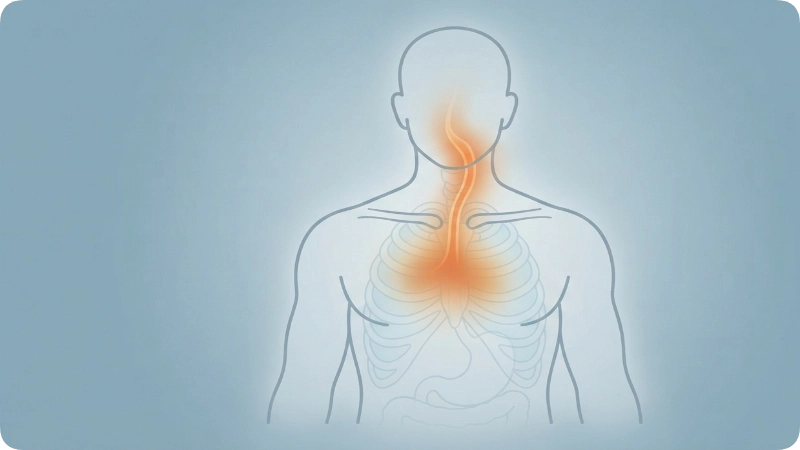
Acid reflux usually feels like a burning sensation in the chest, a sour or bitter taste in the mouth, and sometimes a feeling of food or liquid creeping back up the throat. It can also cause bloating, a lump in the throat sensation, or a mild cough. These feelings happen when stomach acid moves backward into the esophagus, the tube that connects your throat to your stomach.
Millions of people deal with this at some point, if after a heavy meal, late night snack, or a stressful week. Understanding exactly what acid reflux feels like helps you tell it apart from other conditions, catch it early, and know when it’s time to see a doctor. This guide breaks down every common sensation, how reflux differs from more serious problems like a heart attack, and practical ways to find relief.
Table of Contents
- What Is Acid Reflux?
- What Does Acid Reflux Feel Like?
- Common Physical Sensations of Acid Reflux
- Acid Reflux at Night vs. During the Day
- Acid Reflux vs. a Heart Attack: How to Tell the Difference
- Silent Reflux: When There’s No Burning at All
- What Triggers These Sensations
- How Long Do Symptoms Usually Last?
- When to See a Doctor
- Simple Ways to Ease Symptoms at Home
- Quick Reference: Reflux Symptoms at a Glance
- FAQ
- Conclusion
What Is Acid Reflux?
Acid reflux happens when the lower esophageal sphincter, a ring of muscle that normally keeps stomach contents where they belong, relaxes or weakens at the wrong time. Stomach acid then flows backward into the esophagus, which doesn’t have the same protective lining as the stomach. That acid irritates the esophageal tissue and produces the sensations most people describe as heartburn.
Occasional reflux is common and usually harmless. When it happens more than twice a week, doctors often call it gastroesophageal reflux disease, or GERD. Recognizing the physical feeling early makes it much easier to manage.
Did You Know?
Not everyone with acid reflux experiences heartburn. Some people mainly develop a chronic cough, hoarse voice, or constant throat clearing—a condition often called silent reflux because the classic burning sensation may never appear.
Can Acid Reflux Feel Like Something Is Stuck in Your Chest?
Yes. Some people describe acid reflux as feeling like food is stuck behind the breastbone or moving very slowly after swallowing. This sensation can happen because stomach acid irritates the esophagus, causing temporary inflammation or muscle spasms that make swallowing feel uncomfortable.
Unlike choking, food usually continues moving into the stomach, although it may feel delayed. The sensation often improves after the reflux episode settles.
If food repeatedly becomes stuck, swallowing becomes painful, or liquids are difficult to swallow, see a healthcare provider promptly. These symptoms may point to a narrowing of the esophagus or another condition that needs evaluation.
Can Acid Reflux Cause Back Pain?
Acid reflux mainly causes discomfort in the chest and throat, but some people also notice pain that seems to spread into the upper back or between the shoulder blades.
This happens because nerves serving the esophagus can send pain signals to nearby areas, making reflux feel as though it is coming from the back instead of the chest.
Back pain by itself is not a typical symptom of acid reflux. If severe back pain occurs with chest pressure, shortness of breath, dizziness, or pain spreading into the arm or jaw, seek emergency medical care immediately because these symptoms could indicate a heart problem.
Can Acid Reflux Make You Feel Short of Breath?
Sometimes.
When stomach acid reaches the upper esophagus or throat, it can irritate the airways and trigger coughing, throat tightness, or the feeling that taking a deep breath is difficult.
For some people, reflux can also worsen asthma symptoms or cause brief episodes of wheezing, especially at night.
However, sudden or severe shortness of breath should never be assumed to be acid reflux. If breathing problems occur alongside chest pain, fainting, or heavy sweating, seek emergency medical care immediately.
What Does Acid Reflux Feel Like in the Throat?
Although many people think of acid reflux as heartburn, some notice throat symptoms more than chest discomfort.
Acid reaching the throat may cause:
- A burning feeling in the throat
- Frequent throat clearing
- Hoarseness
- A chronic cough
- A feeling that mucus is stuck in the throat
- Difficulty swallowing
- A lump-in-the-throat sensation
These symptoms are especially common with laryngopharyngeal reflux, often called silent reflux, because many people experience little or no heartburn.
What Does Acid Reflux Feel Like?
Most people describe acid reflux as a warm or burning feeling that starts behind the breastbone and can travel up toward the throat. Some describe it as pressure or tightness rather than a sharp pain. A few notice it more as a sour or metallic taste at the back of the mouth than as chest discomfort at all.
The exact feeling varies from person to person and even from episode to episode. Because of this, it helps to look at the individual sensations one by one.
People often describe acid reflux differently. Some compare it to a burning fire in the chest, while others say it feels like pressure, food coming back up, or an uncomfortable warmth rising into the throat. The symptoms can range from mild irritation to severe discomfort, and not everyone experiences the same combination of sensations.
Common Physical Sensations of Acid Reflux
Burning in the Chest (Heartburn)
This is the hallmark symptom. It usually feels like heat spreading upward from the lower chest toward the throat, often worse after eating, bending over, or lying down.
Sour or Bitter Taste
When acid reaches the back of the throat or mouth, it can leave a tangy, metallic, or bitter taste. Some people notice this before they feel any burning at all.
A Lump in the Throat Feeling
Reflux can irritate the throat enough to create a sensation similar to a lump stuck in it, sometimes called globus sensation. Swallowing may feel slightly harder or more effortful during a flare up.
Regurgitation
This is the feeling of food or liquid rising back into the throat or mouth, sometimes with a sour taste attached. It’s more physical than heartburn and can happen without any burning sensation.
Bloating, Belching, or Mild Nausea
Reflux often travels with a full or gassy stomach, frequent burping, or a queasy feeling, especially after large or fatty meals.
Chest Tightness or Pressure
Instead of a clear burning feeling, some people feel dull pressure or tightness, which is one reason reflux is sometimes confused with heart related pain.
Acid Reflux at Night vs. During the Day
Reflux often feels different depending on the time of day. During the day, gravity helps keep stomach contents down, so symptoms may show up mainly after meals or when bending forward.
At night, lying flat removes that advantage. Acid can sit closer to the esophagus for longer, which is why nighttime reflux often feels more intense, disrupts sleep, and may come with a cough, sore throat in the morning, or a hoarse voice.
Nighttime reflux is also more likely to interrupt sleep because stomach acid stays in contact with the esophagus longer while you’re lying flat. Some people wake up coughing, choking, or with a sour taste in the mouth, even if they had no symptoms before going to bed.
Acid Reflux vs. a Heart Attack: How to Tell the Difference
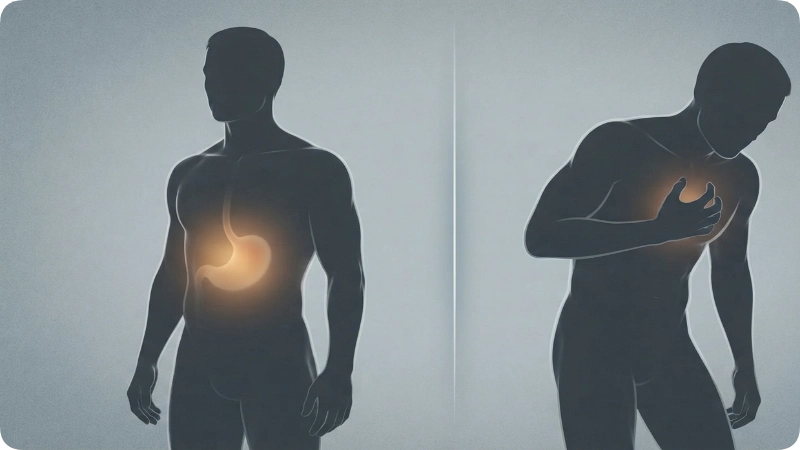
Because both can cause burning or pressure in the chest, it’s important to know the difference. This is general educational information, not a substitute for medical evaluation.
| Feature | Acid Reflux | Possible Heart Attack |
| Feeling | Burning, rises after eating or lying down | Crushing pressure, tightness, or squeezing |
| Location | Usually behind the breastbone, may reach throat | Chest, may spread to arm, jaw, back, or neck |
| Triggers | Meals, spicy or fatty food, lying down | Physical exertion, stress, can occur at rest |
| Other symptoms | Sour taste, burping, regurgitation | Shortness of breath, cold sweat, dizziness, nausea |
| Relief | Often eased with antacids or sitting upright | Not relieved by antacids or position change |
If chest discomfort comes with shortness of breath, pain spreading to the arm or jaw, sweating, dizziness, or a feeling of doom, treat it as a medical emergency and seek immediate care rather than assuming it’s reflux.
Silent Reflux: When There’s No Burning at All
Not everyone feels the classic burning sensation. In a condition called laryngopharyngeal reflux, often nicknamed silent reflux, acid reaches the throat and voice box without producing obvious heartburn. Instead, people notice:
- A chronic sore or scratchy throat
- Hoarseness, especially in the morning
- A persistent dry cough
- A sensation of constantly needing to clear the throat
This form is easy to miss because it doesn’t feel like typical reflux at all.
What Triggers These Sensations
Certain habits and foods make the burning, pressure, or sour taste more likely to appear. Common triggers include:
- Large meals or eating too close to bedtime
- Spicy, fatty, or fried foods
- Caffeine, alcohol, and carbonated drinks
- Citrus fruits, tomatoes, chocolate, and mint
- Smoking
- Lying down or bending over soon after eating
- Tight clothing around the waist
- Excess body weight, which adds pressure on the stomach
Triggers vary between individuals, so keeping a simple food and symptom log can help identify personal patterns.
How Long Do Symptoms Usually Last?
A typical episode of heartburn from a single meal often eases within one to two hours, especially once digestion progresses or an antacid is taken. Reflux tied to lying down can linger longer, sometimes for several hours, since gravity isn’t helping move acid back down.
If burning, regurgitation, or throat symptoms show up regularly over weeks, that pattern points toward GERD rather than an isolated episode, and it’s worth discussing with a healthcare provider.
When to See a Doctor
Occasional reflux rarely needs medical attention, but certain signs call for a proper evaluation:
- Heartburn more than twice a week
- Symptoms that don’t improve with over the counter antacids
- Difficulty or pain when swallowing
- Unexplained weight loss
- Persistent hoarseness or cough
- Chest pain that feels different from usual reflux, especially with shortness of breath or sweating (seek emergency care)
- Vomiting blood or passing dark, tarry stools (seek emergency care)
A doctor can confirm if symptoms are reflux, GERD, or something else that feels similar, such as an ulcer or gallbladder issue.
Simple Ways to Ease Symptoms at Home

- Eat smaller meals and slow down while eating
- Wait two to three hours after eating before lying down
- Raise the head of the bed slightly for nighttime symptoms
- Limit known trigger foods and drinks
- Avoid tight belts or waistbands after meals
- Maintain a body weight that feels comfortable for your frame
- Consider over the counter antacids for occasional flare ups, following label directions
These steps often reduce both the frequency and intensity of symptoms, though persistent cases usually need a tailored plan from a healthcare provider.
Foods That May Help Reduce Acid Reflux
Certain foods are less likely to trigger reflux and may be easier on the stomach, including:
- Oatmeal
- Bananas
- Melons
- Brown rice
- Whole-grain bread
- Lean chicken or turkey
- Steamed vegetables
- Ginger
- Low-fat yogurt
These foods don’t cure acid reflux, but many people find they cause fewer symptoms than spicy or high-fat meals.
Quick Reference: Reflux Symptoms at a Glance
| Symptom Type | What It Feels Like |
| Classic heartburn | Burning behind the breastbone |
| Regurgitation | Food or liquid rising into the throat |
| Sour taste | Tangy or bitter taste in the mouth |
| Throat symptoms | Lump feeling, hoarseness, chronic cough |
| Digestive symptoms | Bloating, burping, mild nausea |
| Chest pressure | Dull tightness, sometimes mistaken for heart pain |
| Throat burning | Burning or irritation in the throat |
| Hoarse voice | Rough or weak voice, especially in the morning |
FAQs
Can acid reflux feel like a lump in your throat without any burning?
Yes. This is common in silent reflux, where acid irritates the throat without producing the classic burning feeling in the chest.
Does acid reflux ever feel like chest pain on the left side?
It can, since the esophagus sits close to the heart. Because of the overlap with heart related pain, sudden or unfamiliar left sided chest pain should always be checked by a medical professional.
Why does acid reflux feel worse when I lie down?
Without gravity’s help, stomach acid stays closer to the esophagus longer, which often intensifies burning and increases the chance of regurgitation.
Can stress make acid reflux symptoms feel stronger?
Stress doesn’t produce stomach acid on its own, but it can heighten sensitivity to normal amounts of acid and encourage habits, like eating quickly or choosing trigger foods, that make symptoms more noticeable.
Can acid reflux feel like pressure instead of burning?
Yes. While many people experience heartburn, others mainly notice pressure, fullness, or tightness in the chest. This is one reason acid reflux can sometimes be mistaken for heart-related conditions.
Can acid reflux hurt your throat?
Yes. Repeated exposure to stomach acid can irritate the throat and voice box, leading to soreness, hoarseness, chronic throat clearing, or a persistent cough.
Can acid reflux make swallowing feel difficult?
Yes. During a reflux episode, inflammation can make swallowing feel uncomfortable or create the sensation that food is moving slowly. Persistent difficulty swallowing should always be evaluated by a healthcare provider.
Is it normal for acid reflux to feel different every time?
Yes. The intensity and type of sensation can shift based on what you ate, your position, stress levels, and how much acid reaches the esophagus that day.
How can I tell if it’s acid reflux or a stomach ulcer?
Both can cause burning discomfort, but ulcers often produce a gnawing pain that may worsen on an empty stomach and improve briefly after eating. A doctor can confirm the cause through evaluation.
Does everyone with acid reflux feel heartburn?
No. Some people mainly notice throat symptoms, a cough, or a sour taste, with little or no classic burning sensation.
Conclusion
Acid reflux typically feels like a burning sensation in the chest, a sour or bitter taste, or a sense of food creeping back up the throat, though it can also show up as bloating, throat irritation, or pressure without any burning at all.
Paying attention to when symptoms appear, what triggers them, and how they respond to simple changes can help you manage most cases at home. If symptoms are frequent, severe, or ever resemble heart related pain, treat that as a signal to get evaluated rather than waiting it out.