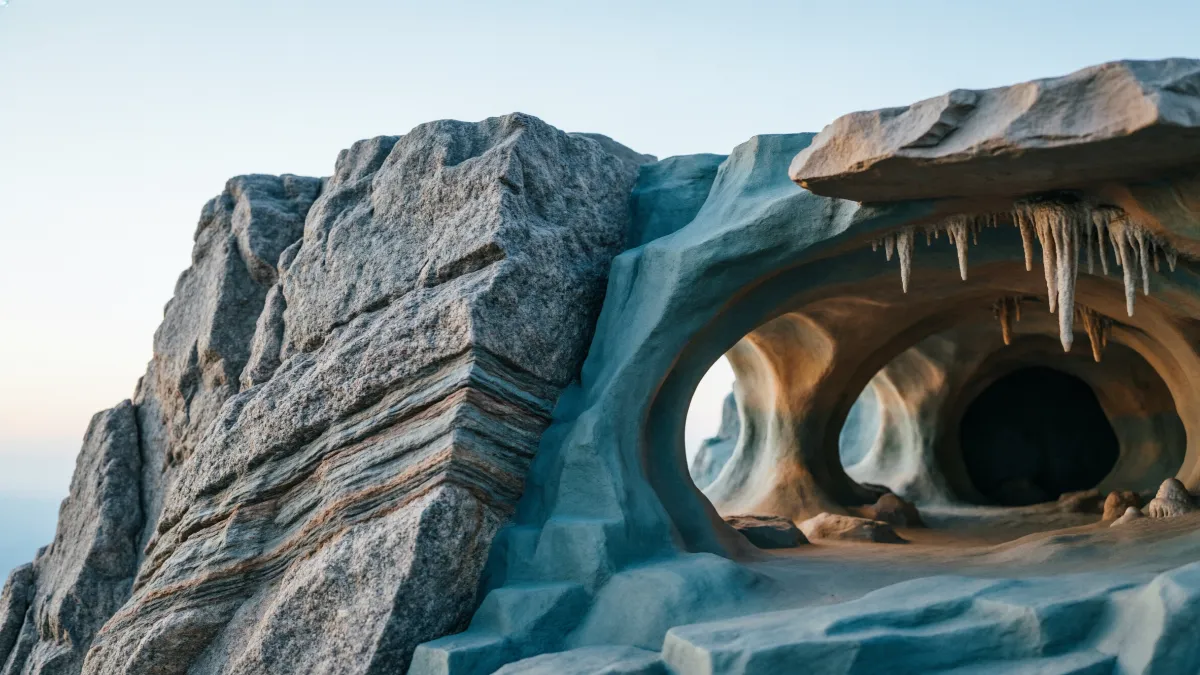
Density in Minecraft is the number the game’s world generator uses to decide if a spot in the world becomes solid ground, open air, or water. You won’t find a “density” slider in the normal game menus, but this value quietly controls how mountains rise, caves hollow out, and terrain feels natural instead of blocky and repetitive. This guide breaks down exactly how density works, where players and creators run into it, and how to use it if you build custom worlds.
Table of Contents
- What Density Means in Minecraft
- How Density Functions Shape Terrain
- Where Players Actually Encounter Density
- Density and Feature Spawn Rates
- Density Functions vs Noise Settings vs Surface Rules
- Common Misunderstandings About Density
- Tips for Working With Density in Custom World Generation
- FAQ
- Conclusion
Quick Answer: What Does Density Do in Minecraft?
In Minecraft, density determines whether each position in the world becomes a solid block, air, or water during terrain generation. The game calculates a density value for every coordinate, allowing it to create mountains, caves, valleys, and overhangs naturally. Most players never interact with density directly, but it plays a key role in custom world generation.
What Density Means in Minecraft
Density is a hidden number the game calculates for every position in the world during generation. For technical accuracy, clarify that the density value determines whether the terrain is solid or empty, and water placement is handled later by the world-generation pipeline (for example, filling empty spaces below sea level).
Think of density as an invisible sculptor. It works block by block, deciding what stays solid and what gets carved away, long before you ever load into the world. Regular survival and creative players never see this number directly, but every hill, overhang, and cavern you explore exists because of it.
The term becomes far more visible once you step into data packs, custom world generation, or certain modding tools. There, density stops being invisible and turns into something you can read, edit, and rebuild.
Why Minecraft Uses Density Functions
Explain that before Minecraft 1.18:
- terrain generated mostly in vertical columns
- caves were limited
- overhangs were rare
Density functions enabled:
- true 3D terrain
- massive cave systems
- natural mountains
- floating landforms
- smoother terrain transitions
How Density Functions Shape Terrain
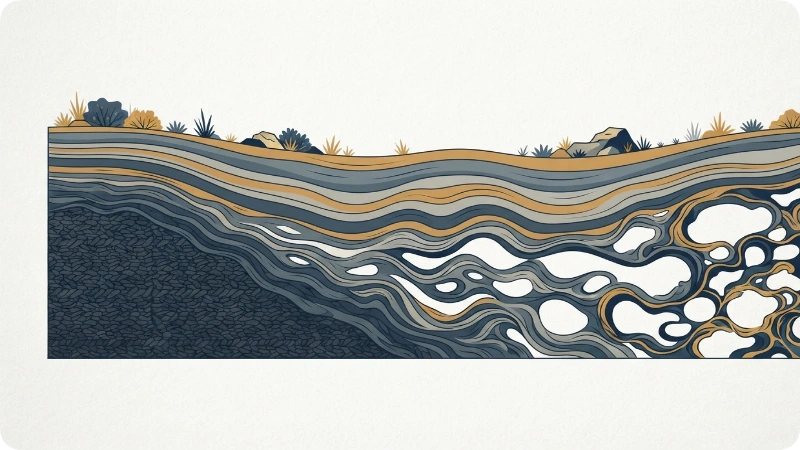
Minecraft generates terrain using something called a density function. A density function is a small mathematical formula stored inside a data pack. It takes a location in the world (its x, y, and z coordinates) and returns a single number.
That number then decides what fills that exact block. Millions of these calculations run across a chunk to build the landscape you walk on.
Positive vs Negative Density Values
The rule Minecraft follows is simple once you see it laid out:
| Density Value | Result in the World |
| Greater than 0 | Solid block (stone, dirt, deepslate, etc.) |
| 0 or lower, above sea level | Air |
| 0 or lower, below sea level | Water |
A steep cliff face has strongly positive density on one side and a sharp drop into negative territory on the other. A cave system exists because density dips below zero in a pocket surrounded by solid, positive density rock.
Noise, Octaves, and Why Density Isn’t Random
Density values don’t come from pure randomness, because pure randomness produces terrain that looks like static rather than a believable landscape. Instead, the game blends several layers of Perlin noise, a smooth and continuous type of randomness, at different frequencies and strengths. Developers call each layer an octave.
Combining octaves gives Minecraft the rolling hills, gentle slopes, and occasional dramatic cliffs that make the terrain feel handmade instead of mechanical. Broad, low frequency octaves shape continents and mountain ranges. Finer, high frequency octaves add the small bumps and texture you notice up close.
Coordinates
↓
Density Function
↓
Positive or Negative Value
↓
Solid Block or Air
↓
Surface Rules
↓
Final Terrain
Where Players Actually Encounter Density
Vanilla survival play never forces you to interact with density directly, but a few situations bring it to the surface.
Custom World Generation Data Packs
Since Minecraft 1.18, creators can write their own density function files inside a data pack. These JSON files live in a folder path such as data/<namespace>/worldgen/density_function and get referenced by the game’s noise settings. Builders use them to design entirely new dimensions, flatter survival worlds, floating islands, or ocean heavy maps.
Caves, Overhangs, and 3D Terrain
Before density functions existed, Minecraft’s terrain generation worked mostly in 2D columns, which is why older worlds rarely had overhangs or true 3D caves. Modern density based generation calculates a value for every block in three dimensions, which is exactly what allows floating arches, winding ravines, and cave systems that twist beneath mountains.
Modding and Command Based Tools
Some mods expose density related settings so players can tweak how cave dense or mountain dense a world feels without writing raw JSON. Advanced command block or function file creators sometimes reference density indirectly when scripting custom terrain checks.
What Is a Density Function File?
- JSON file
- located inside datapacks
- referenced by noise settings
- evaluated during world generation
- not loaded after chunks generate
Mention common file names like:
- spline
- blend_density
- add
- min
- max
without becoming overly technical.
Density and Feature Spawn Rates
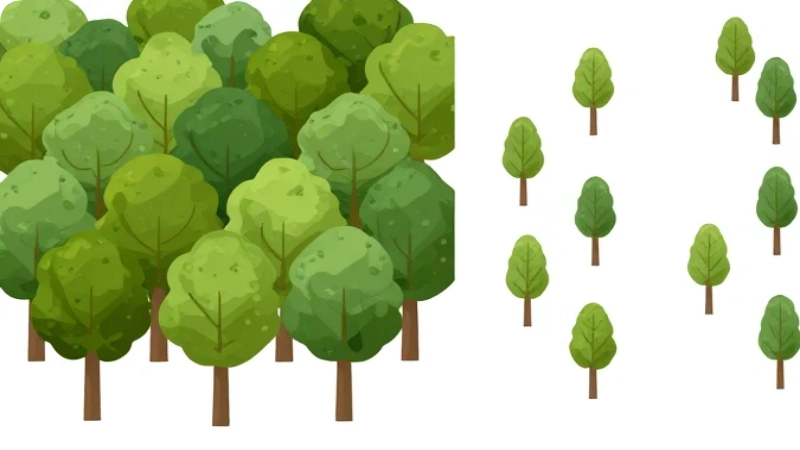
Density also shows up in a second, related sense: how often something spawns across a chunk. This usage is looser than the strict terrain shaping density function, but creators often describe tree spread, ore frequency, or flower placement as having a “density.”
A forest data pack with high tree density places trunks close together, producing a thick woodland. A setting with low density spreads the same trees thin, leaving open clearings between them. The same idea applies to ore veins underground and to decorative plants on the surface.
Because this second meaning overlaps with the first, it helps to keep them separate in your head:
- Terrain density decides solid vs. air at a single point.
- Feature density decides how often an object appears across an area.
Although creators often use the word “density” for tree or ore frequency, Minecraft treats these as different systems. Terrain density controls the landscape itself, while configured features control how often structures, ores, plants, and trees appear.
Density Functions vs Noise Settings vs Surface Rules
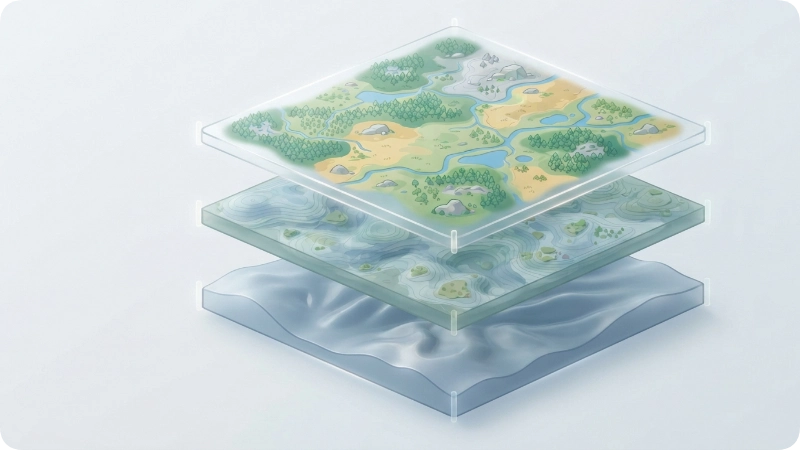
Creators building custom worlds often confuse these three systems because they work together closely. Here’s how each one differs.
| System | What It Controls | Where It Lives | Example |
| Density Function | The raw solid/air/water value at each coordinate | worldgen/density_function folder | Cave |
| Noise Settings | How density functions combine into a finished terrain shape, plus sea level and bedrock rules | worldgen/noise_settings folder | Mountain |
| Surface Rules | Which blocks (grass, sand, stone) appear once the terrain shape is already decided | Defined inside the noise settings file | Grass |
A density function answers “is this spot solid?” Noise settings answer “how do all these density calculations combine into a coherent world?” Surface rules answer “now that we know it’s solid, what block should show on top?”
Density Functions After Minecraft 1.18
Before 1.18
Mostly 2D terrain
Small caves
Few overhangs
↓
Minecraft 1.18
Density Functions introduced
↓
True 3D terrain
Huge caves
Tall mountains
Floating formations
Real Examples of Density Functions
Mountain
positive density
↓
solid cliff
Cave
negative density
↓
empty space
Ocean
negative density below sea level
↓
water
Floating island
positive density
↓
surrounded by negative density
Does Density Affect Existing Worlds?
No.
Density only applies while Minecraft generates new chunks.
Existing terrain will not change unless you regenerate chunks or create a new world using different generation settings.
Common Misunderstandings About Density
Several mix ups come up often enough that they’re worth clearing up directly.
Density is not a difficult setting. It has nothing to do with mob spawn rates, hunger, or combat difficulty, even though the word sounds like it could relate to game difficulty.
Density is not visible in the pause menu. Vanilla Minecraft never surfaces a “terrain density” slider to regular players. You only encounter the term by opening data pack files or reading generation documentation.
Density isn’t the same as biome size. Biome size and shape come from separate noise parameters (continentalness, temperature, and similar values). Density then decides the physical solidity of the terrain those biomes sit on.
High density doesn’t always mean “better” terrain. Extremely high density everywhere just produces a solid, featureless mass with no caves or valleys. Good terrain design depends on variation between high and low density, not a constant high number.
Tips for Working With Density in Custom World Generation
If you’re building or editing a data pack, a few habits save a lot of trial and error.
- Start from vanilla files. Copy Minecraft’s existing density function files before writing your own from scratch, since they show working examples of caves, mountains, and oceans already balanced against each other.
- Change one layer at a time. Density functions stack on top of each other, so editing several at once makes it hard to tell which change caused a visual result.
- Test at multiple Y levels. A density function that looks fine near the surface can produce strange floating islands or solid underground voids at other heights.
- Use caching wrappers when performance matters. Functions like flat_cache or cache_once stop the game from recalculating the same value repeatedly, which keeps chunk generation fast.
- Preview with a superflat or small test world first. Small test worlds load faster, so you can judge a density change in seconds instead of waiting on full world generation.
FAQs
Does density affect FPS or game performance?
Density function calculations run during chunk generation, so a very complex custom density function can slow down world generation. Once terrain is generated and saved, density itself doesn’t affect ongoing frame rate.
Can I see density values in vanilla Minecraft without a data pack?
No. Density is purely a background calculation. There’s no built in debug screen or command that displays a raw density number for regular survival play.
Is density the same thing as “3D biomes”?
No, though they’re related. 3D biome placement determines which biome a block belongs to, while density determines if that block is solid or air. Both systems work together in the modern world generation.
Do I need to understand density to make a simple data pack?
Not necessarily. Many data packs only add items, recipes, or loot tables and never touch world generation files. Density only matters once you’re customizing how terrain itself is shaped.
Why did older Minecraft worlds lack overhangs?
Older generation methods built terrain column by column in two dimensions, which made true 3D shapes like overhangs and floating arches impossible. Full density based, three dimensional generation solved that limitation starting in Minecraft 1.18.
Are density functions difficult to learn?
Not necessarily. Beginners can modify existing density functions before creating their own from scratch.
Can mods replace Minecraft’s density functions?
Yes. Many world-generation mods use their own density calculations or extend the vanilla system.
Does density affect structures?
Indirectly. Structures generate after terrain generation, so density shapes the land that structures are placed on but does not determine whether villages or temples spawn.
Can density functions create floating islands?
Yes. By forcing density to go negative around a certain height range while staying positive at another height, a custom data pack can produce landmasses that float with open air both above and below them.
Does density control ore generation directly?
Not the terrain density function itself. Ore placement uses separate configured features and rarity settings, though creators sometimes loosely call ore frequency “density” in everyday conversation.
Conclusion
Density in Minecraft is the quiet math behind every hill, cave, and cliff you walk past. A positive value builds solid ground, a negative one opens up air or water, and layered noise keeps that pattern from feeling repetitive or artificial.
Most players never need to think about it, but anyone building custom terrain through data packs will run into density functions constantly, since they sit at the very foundation of how Minecraft decides what the world looks like.