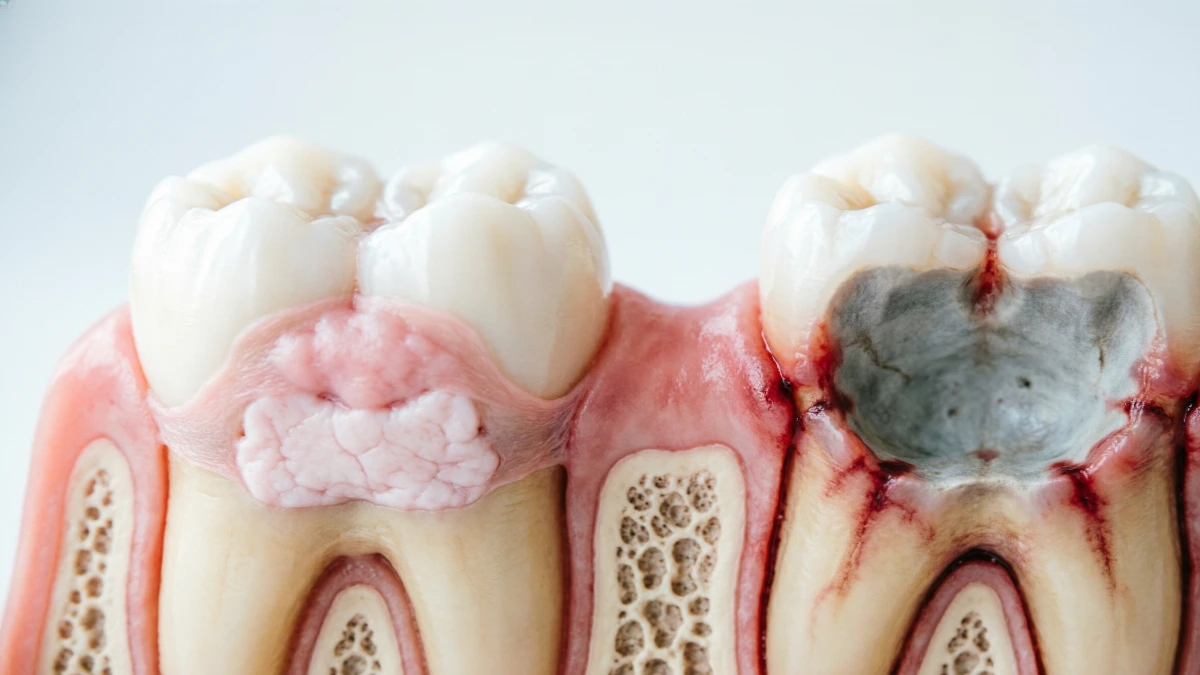
A dry socket usually looks like an empty or grayish hole where a tooth used to be, often with visible bone instead of a healthy blood clot. It typically shows up two to four days after a tooth extraction and comes with a sharp, radiating pain that gets worse instead of better. This guide walks through exactly what a dry socket looks like, how it differs from normal healing, and what to do if you spot one.
Table of Contents
- What Is a Dry Socket?
- What Does a Dry Socket Look Like Inside the Mouth
- Dry Socket vs. Normal Healing Socket
- Other Symptoms That Come With a Dry Socket
- When Dry Socket Symptoms Usually Appear
- What Causes a Dry Socket
- When to See a Dentist
- How Dry Sockets Are Treated
- How to Prevent a Dry Socket After Extraction
- Quick Summary
- FAQ
What Is a Dry Socket?
Dentists call this condition alveolar osteitis. It happens when the blood clot that normally forms in a tooth socket after an extraction falls out or dissolves too early. That clot protects the bone and nerve endings underneath while the gum heals, so losing it exposes sensitive tissue to air, food, and bacteria.
Dry socket is not an infection by itself, though it can lead to one if left untreated. It’s essentially a delay in healing that causes intense discomfort. Wisdom tooth removal is the most common trigger, since those sockets tend to be deeper and harder to keep clean.
What Does a Dry Socket Look Like Inside the Mouth
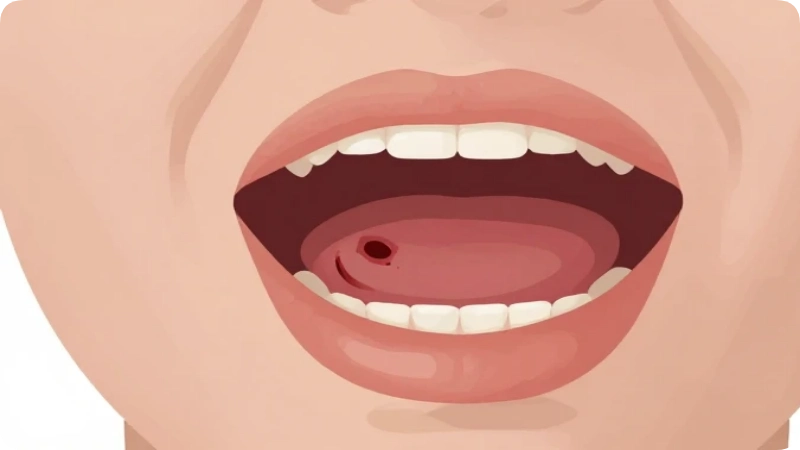
If you look at a dry socket in a mirror, a few visual clues stand out. You’ll usually need good lighting and a flashlight to see the socket clearly, since it sits toward the back of the mouth in most cases.
An Empty or Grayish Socket
A healthy healing socket has a dark reddish purple clot filling the hole. A dry socket often looks pale, gray, or simply empty, because that clot has partially or fully disappeared. The tissue around the opening can look dull instead of the healthy pink red color you’d expect from normal gum tissue.
Visible Bone
Because the protective clot is gone, you may be able to see a whitish or yellowish surface at the base of the socket. This is the jawbone itself. Seeing bone is one of the clearest signs that something isn’t healing the way it should, and it’s part of why dry socket hurts so much bone and nerve endings are directly exposed.
A Broken Down or Missing Clot
Sometimes the socket doesn’t look completely empty. Instead, you might see fragments of a grayish, film like clot that looks disintegrated rather than the firm, solid clot present in normal healing. Food debris can also collect in the open socket, making it look darker or more irritated than the surrounding gum.
Can You See a Dry Socket Yourself?
In many cases, you can see part of the extraction site by using a mirror and good lighting, but it isn’t always easy. Back teeth, especially wisdom tooth sockets, sit far enough toward the back of the mouth that the angle makes them difficult to inspect.
If you do look, remember these points:
- A healthy socket often appears dark because a blood clot fills the opening.
- A dry socket may look empty, pale, gray, or show exposed bone.
- Food trapped in the socket can resemble a missing clot, making self-diagnosis difficult.
- Appearance alone cannot confirm a dry socket, since normal healing can vary from person to person.
If you’re unsure whether what you’re see is normal, increasing pain is usually a more reliable reason to contact your dentist than appearance alone.
Dry Socket vs. Normal Healing Socket
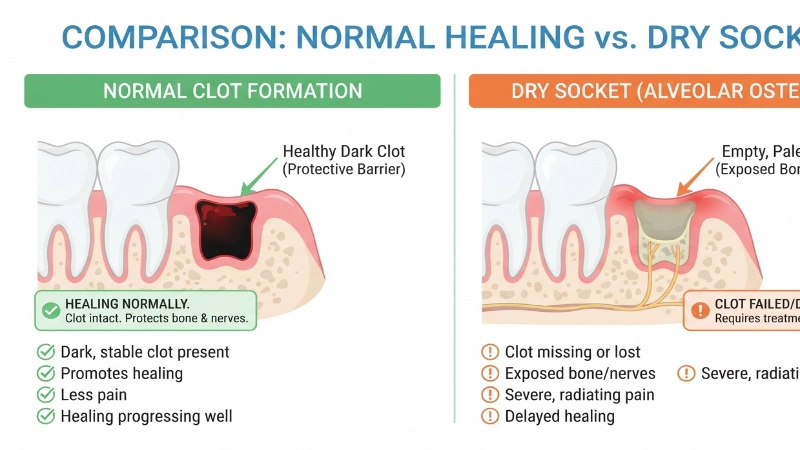
It helps to compare the two side by side, since normal healing can look uncomfortable too, even without a dry socket.
| Feature | Normal Healing Socket | Dry Socket |
| Color inside socket | Dark red or purple (blood clot) | Gray, pale, or visibly empty |
| Visible bone | Not visible | Often visible at the base |
| Pain pattern | Improves each day | Worsens after day 2–3 |
| Odor | Mild or none | Noticeable bad smell often present |
| Taste | Normal | Unpleasant or metallic taste common |
| Swelling | Mild, decreasing | May stay the same or increase |
This table covers the general pattern, but only a dentist can confirm a diagnosis by examining the socket directly.
Other Symptoms That Come With a Dry Socket
The appearance of the socket rarely shows up alone. Most people also notice:
- Throbbing pain that can radiate to the ear, eye, temple, or neck on the same side of the face
- Bad breath that doesn’t improve with brushing
- A foul or metallic taste in the mouth
- Mild swelling around the jaw or lymph nodes
- Pain that spikes rather than gradually easing, unlike typical post extraction soreness
If the pain from an extraction feels like it’s getting worse instead of better after the second or third day, that pattern alone is often more telling than what the socket looks like.
When Dry Socket Symptoms Usually Appear
Dry socket typically develops between two and four days after an extraction. Pain from a normal extraction tends to peak within the first 24 hours and then steadily fades. Dry socket pain does the opposite it often starts mild and then intensifies once the clot is lost, sometimes catching people off guard because the first day or two felt manageable.
Symptoms are uncommon after the first week, since the socket usually develops enough new tissue by then to protect the bone underneath, even if the clot never fully heals as expected.
Does Every Tooth Extraction Have the Same Dry Socket Risk?
No. Dry socket can develop after any tooth extraction, but some procedures carry a higher risk than others.
The likelihood generally increases with:
- Lower wisdom tooth extractions.
- Surgical extractions that require cutting bone or gum tissue.
- Teeth removed because of severe infection or difficult positioning.
- Extractions that involve significant trauma to the surrounding bone.
Simple extractions of visible teeth can still develop a dry socket, but they tend to have a lower risk than impacted wisdom teeth.
What Causes a Dry Socket
Several factors raise the risk of losing the healing clot early:
- Smoking or vaping soon after extraction, since suction and chemicals interfere with clot formation
- Using a straw, which creates suction that can dislodge the clot
- Spitting forcefully or rinsing too vigorously in the first 24 hours
- Poor oral hygiene before or after the procedure
- Difficult or lower wisdom tooth extractions, which naturally have a higher dry socket rate
- Hormonal birth control, which some research links to a slightly higher risk
- A history of dry socket from a previous extraction
Knowing these triggers matters just as much as recognizing the appearance, since avoiding them is the main way to prevent the problem in the first place.
When to See a Dentist
Contact your dentist or oral surgeon promptly if you notice:
- Pain that worsens after day two instead of improving
- An empty looking or gray socket
- Visible bone in the extraction site
- A bad taste or odor that doesn’t go away with rinsing
- Pain that spreads to your ear, temple, or neck
Dry socket isn’t a dental emergency in the same category as uncontrolled bleeding or facial swelling that affects breathing, but it does need prompt attention because home care alone usually can’t resolve it. A same day or next day dental visit is appropriate for most cases.
How Dry Sockets Are Treated

Treatment is typically quick and provides fast relief once completed. A dentist will usually:
- Gently clean the socket to remove food debris and bacteria.
- Place a medicated dressing or paste directly into the socket to ease pain and support healing.
- Recommend pain relief and give instructions for keeping the area clean at home.
- Schedule a follow up to replace the dressing if needed, since some pastes need to be changed every day or two until the socket heals over.
Most people feel noticeably better within a day of treatment, even though full healing of the socket still takes one to two weeks.
What Should You Avoid if You Think You Have a Dry Socket?
If you suspect a dry socket, avoid doing anything that could further irritate the exposed bone or delay healing while you arrange a dental appointment.
Until you’re seen by a dentist:
- Don’t smoke or vape.
- Avoid drinking through a straw.
- Don’t poke the socket with your fingers, tongue, cotton swabs, or dental tools.
- Skip vigorous rinsing, spitting, or forceful mouthwashing.
- Choose soft foods and chew on the opposite side of your mouth.
- Take pain medicine only as directed by your dentist or according to the product label.
These steps won’t cure a dry socket, but they can help reduce irritation until professional treatment is available.
How to Prevent a Dry Socket After Extraction
Following your dentist’s aftercare instructions closely lowers the risk significantly. Helpful habits include:
- Avoid smoking, vaping, and using straws for at least 3–5 days after extraction
- Bite gently on gauze as directed to help the clot form properly
- Avoid vigorous rinsing or spitting for the first 24 hours
- Stick to soft foods and chew on the opposite side for the first few days
- Keep the mouth clean with gentle rinses once your dentist says it’s safe to start
- Attend any follow up appointments, especially after wisdom tooth removal
Can a Dry Socket Heal on Its Own?
Yes, a dry socket will eventually heal as new tissue gradually covers the exposed bone, but that process can take longer and remain quite painful without treatment.
Professional care doesn’t necessarily make the socket heal instantly. Instead, it focuses on relieving pain, protecting the exposed area, and helping the healing process continue more comfortably.
If your pain becomes severe or continues to worsen after a tooth extraction, it’s best to contact your dentist rather than waiting for it to improve on its own.
Quick Summary
A dry socket looks like an empty, pale, or grayish hole where the healing blood clot should be, often with visible bone at the base. It shows up a few days after extraction and comes with pain that worsens rather than improves, along with bad breath or an unpleasant taste.
Because it’s easy to confuse with normal post extraction discomfort, the safest step is to have a dentist examine the area if pain increases after day two.
FAQs
Can I diagnose a dry socket myself just by looking?
You can spot warning signs like an empty or gray looking socket, but a dentist needs to examine it directly to confirm the diagnosis and rule out infection.
Does a dry socket always look empty?
Not always. Sometimes a broken down, film like clot remains, so the socket may look partially filled rather than completely open.
How long does a dry socket take to heal?
With treatment, pain usually improves within a day or two, though the socket itself typically takes one to two weeks to fully close over.
Is a dry socket the same as an infection?
No. Dry socket is a loss of the protective clot, not an infection on its own, though an untreated dry socket can become infected over time.
Can dry socket happen after any tooth extraction, or just wisdom teeth?
It can happen after any extraction, but lower wisdom teeth have the highest risk because of their depth and location.
Will the pain go away on its own without treatment?
It can take significantly longer to resolve without treatment, and the pain is often severe enough that most people seek dental care rather than wait it out.
What if I can’t get to a dentist right away?
Over the counter pain relief and avoiding further irritation to the socket can help temporarily, but a dental visit is still the recommended next step as soon as possible.
Conclusion
A dry socket looks like an open, pale, or grayish wound where a healthy dark red blood clot should be, often with the bone underneath visible. The clearest signal isn’t just appearance, though it’s pain that gets worse a few days after an extraction instead of gradually fading.
If that pattern sounds familiar, a quick dental visit can bring relief fast and get healing back on track.