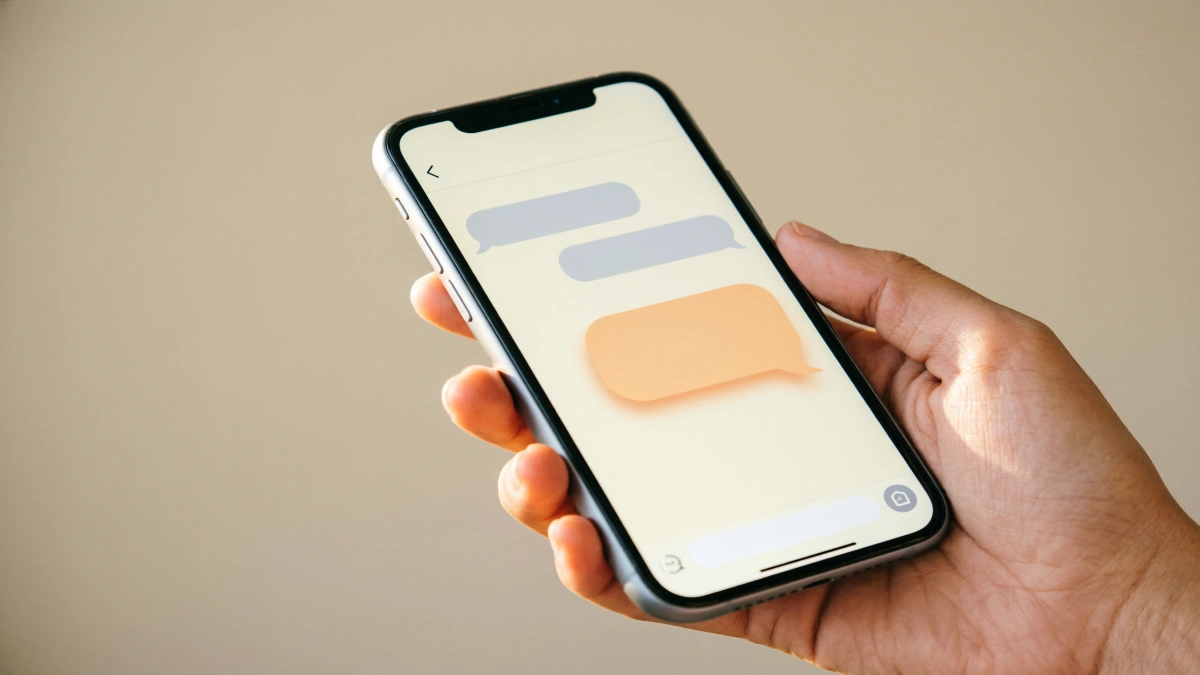
GIF in a text message usually refers to a short animated image that plays automatically and often loops. The term technically stands for Graphics Interchange Format, a digital image format introduced in 1987. In everyday texting, however, people usually use “GIF” to mean the animated reaction image itself.
This guide breaks down where the word came from, how to say it, how people actually use GIFs when texting, and the small details like pronunciation arguments and etiquette that most articles skip over.
What Does GIF Stand For?
GIF stands for “Graphics Interchange Format.” CompuServe developed this digital image format in 1987.
The word “Graphics” refers to visual images, “Interchange” reflects the format’s purpose of exchanging digital images, and “Format” describes how the format stores image data.
In texting, however, people rarely think about the technical meaning. They usually use “GIF” to describe a short animated image that communicates a reaction or emotion.
What Does GIF Mean in a Text Message?
When someone sends “here’s a GIF” or drops a moving image into a chat thread, they mean a short animated clip, usually just a few seconds long, that plays on repeat automatically. Unlike a video, a GIF has no sound and no play button it just loops the moment you open it.
Texters use GIFs the way earlier generations used one-liners or exclamations. Instead of typing “I’m so excited I could scream,” someone might send a GIF of a character jumping up and down. The image carries the emotional tone that plain text sometimes struggles to convey.
GIFs are searchable inside most messaging apps. Type a mood or phrase like “shocked,” “no thanks,” or “Monday mornings,” and a library of pre-made clips pops up, ready to send in one tap.
Why Do People Send GIFs in Texts?
People send GIFs because they can communicate emotion quickly without writing a full sentence. A well-chosen GIF can make a message feel funnier, more dramatic, or more expressive.
Common reasons include:
- Reacting: showing surprise, excitement, laughter, or disbelief
- Joking: adding humor to a conversation
- Showing emotion: expressing feelings that are difficult to put into words
- Agreeing: visually showing “exactly” or “same”
- Breaking the ice: making a conversation feel more relaxed
- Responding quickly: communicating a reaction without typing a long message
For example, someone who receives exciting news might send a celebratory GIF instead of typing, “That’s amazing!”
Where the Word GIF Comes From
GIF stands for Graphics Interchange Format. The format was developed by a team at CompuServe and introduced in 1987 as a way to display images efficiently on early computer networks.
The format later became especially popular for simple web animations. As internet culture, social media, and messaging apps developed, people began using GIFs as quick visual reactions.
Today, when someone says, “Send me a GIF,” they usually mean an animated image used to communicate an emotion, joke, reaction, or idea not the technical file format itself.
How Do You Pronounce GIF? (The Debate, Explained)
GIF is commonly pronounced in two ways: “jif” with a soft G and “gif” with a hard G. Both pronunciations are widely used.
- “Jif” — sounds like the beginning of “giraffe”
- “Gif” — rhymes with “gift” without the t
The pronunciation has been debated for decades. The format’s creator favored the soft-G pronunciation, but many English speakers use the hard-G version.
For everyday conversation, either pronunciation will generally be understood.
How People Use GIFs in Everyday Texting
GIFs show up across nearly every messaging platform, but the way people use them shifts depending on the setting.
In Casual Conversations With Friends
Friends often use GIFs to react quickly without typing anything. A friend shares good news, and instead of “that’s amazing,” someone sends a GIF of a celebrity applauding or a character dancing. It’s fast, funny, and often communicates more personality than plain text.
In Group Chats
Group chats tend to use GIFs as running jokes. A specific GIF might become an inside joke that the group reuses whenever a certain topic comes up, creating a shared visual language unique to them.
Can You Use GIFs at Work?
Yes, but context matters. GIFs can work well in informal team chats when coworkers already communicate casually. For example, a celebratory GIF can be appropriate after completing a difficult project.
However, GIFs may be inappropriate in formal emails, client communication, serious discussions, or conversations with people you don’t know well.
When you’re unsure, a short written response is usually safer than a GIF.
On Social Media Comments and Replies
Platforms like X, Instagram, and TikTok let users comment with GIFs instead of, or alongside, text. This is common when a reply needs to communicate strong emotion shock, laughter, secondhand embarrassment faster than a sentence could.
GIF vs. Meme vs. Sticker vs. Emoji: What’s the Difference?
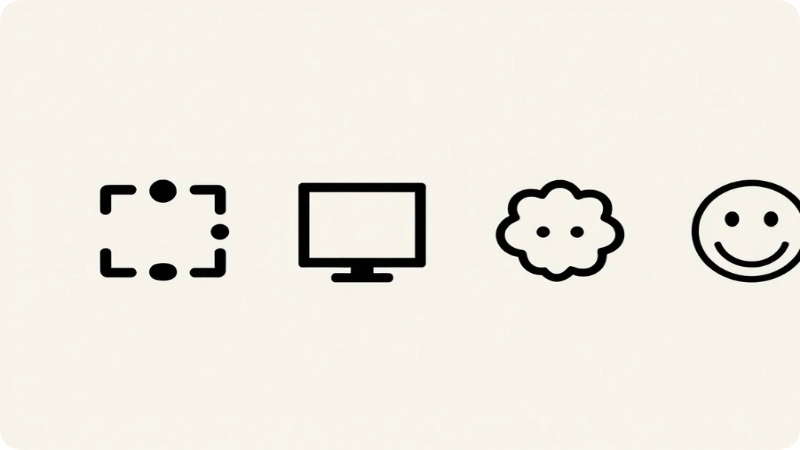
These four formats often get mixed up because people use them for similar emotional shorthand, but they aren’t the same thing.
| Format | Usually Animated? | Main Purpose |
| GIF | Sometimes | Reactions, short animations, visual jokes |
| Meme | Usually static, but can be animated | Humor or commentary built around recognizable content |
| Sticker | Static or animated | Decorative or expressive messaging |
| Emoji | Usually static | Quick standardized emotional or symbolic expression |
| Video | Yes | Longer or more complete moving content, often with sound |
The easiest distinction is that GIF is a file format, while meme describes a type of cultural content, sticker describes a messaging graphic, and emoji refers to standardized digital symbols.
A meme can technically be turned into a GIF if it’s animated, which is part of why the terms blur together in casual speech. The clearest distinction is motion: if it loops and moves on its own, it’s a GIF; if it’s a still image with text, it’s usually a meme.
Common Mistakes People Make With GIFs in Texting
- Assuming every moving image is a GIF. Some messaging apps send looping clips as short video files, such as MP4s, that look and behave like GIFs. Most people won’t notice the difference, but it explains why some “GIFs” have noticeably sharper quality than others.
- Sending GIFs in the wrong tone. A joking GIF sent in response to serious news can come across as dismissive, even if that wasn’t the intent.
- Overusing GIFs in professional settings. A single well-placed GIF can add warmth to a work chat; several in a row can start to feel unprofessional or distracting.
- Forgetting that GIFs are public in shared spaces. In group chats or open channels, a GIF meant as an inside joke can land differently with people outside that context.
Texting Etiquette: When a GIF Works and When It Doesn’t
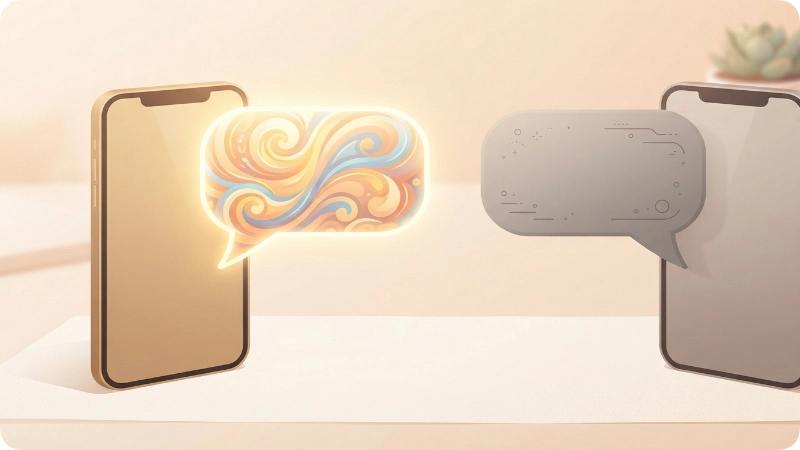
GIFs work best when the emotional tone of the conversation is already light, or when a reaction needs to happen faster than typing allows. They tend to work poorly in serious, sensitive, or formal exchanges, where a plain, sincere response usually reads better.
A simple rule many people follow: if the message you’re replying to includes bad news, a serious question, or something emotionally heavy, skip the GIF and respond in your own words first. Save the GIF for later, if it still fits.
Quick Reference Table
| Question | Short Answer |
| What does GIF stand for? | Graphics Interchange Format |
| What does it mean in texting? | A short, looping animated image sent as a reaction |
| How do you pronounce it? | Either “hard G” or “soft G (jif)” both are widely accepted |
| Does a GIF have sound? | No |
| Is a GIF the same as a meme? | Not always memes are usually static images with captions |
| Can GIFs be used at work? | Yes, in moderation, especially in casual team chats |
FAQs
Does GIF always mean the same thing in every context?
In texting and social media, yes it almost always refers to the short animated clip. The only exception is in more technical settings, like web design or software development, where “GIF” refers strictly to the file format itself.
Why do GIFs loop instead of playing once?
Many creators configure animated GIFs to loop continuously, making them useful for reaction images and short animations. However, creators do not have to make a GIF loop forever; the file’s settings determine its animation behavior.
What does sending a GIF mean in a text?
Sending a GIF usually means the person is using a short animated image to express a reaction, emotion, joke, or response. The exact meaning depends on the GIF and the conversation.
Does GIF mean video?
Not exactly. A GIF is an image format that can contain animation. GIFs often look like very short videos, but they are technically different from standard video files.
What does a GIF say about someone’s texting style?
A GIF often makes a conversation feel more casual, expressive, or playful. However, the meaning depends on the specific GIF and the relationship between the people communicating.
Is GIF an acronym or abbreviation?
People commonly describe GIF as an acronym for Graphics Interchange Format. Because people usually pronounce it as a word rather than saying each letter separately, some discussions classify it specifically as an acronym.
Is it rude to reply to a text with only a GIF?
It depends on the relationship and context. Among close friends or in casual group chats, a GIF-only reply is normal and often expected. In formal or serious conversations, it can come across as evasive or dismissive.
Can you make your own GIF to send in texts?
Yes. Many messaging apps and third-party tools let users turn a short video clip into a GIF, which can then be saved and reused like any other GIF.
Why do some GIFs look higher quality than others?
Quality differences often come down to the source. Some “GIFs” sent through apps are actually short video files disguised as GIFs, which tend to look sharper than a true GIF file, which has a more limited color range.
Is GIF the same thing as an emoji?
No. Emojis are small, standardized symbols built directly into keyboards, while GIFs are separate media files pulled from a searchable library or the internet.
Do GIFs work the same way on every app?
Mostly, yes, though the search library and sending method can differ slightly between apps like iMessage, WhatsApp, Slack, and social platforms.
Final Takeaway
In a text message, “GIF” means a short, silent, looping animated image used to react, joke, or express emotion faster than words allow. The term technically stands for Graphics Interchange Format, but in everyday texting, it simply means: this is how I feel, shown in a few seconds of looping motion. Whether you say it with a hard G or a soft G, everyone in the conversation will know exactly what you mean.