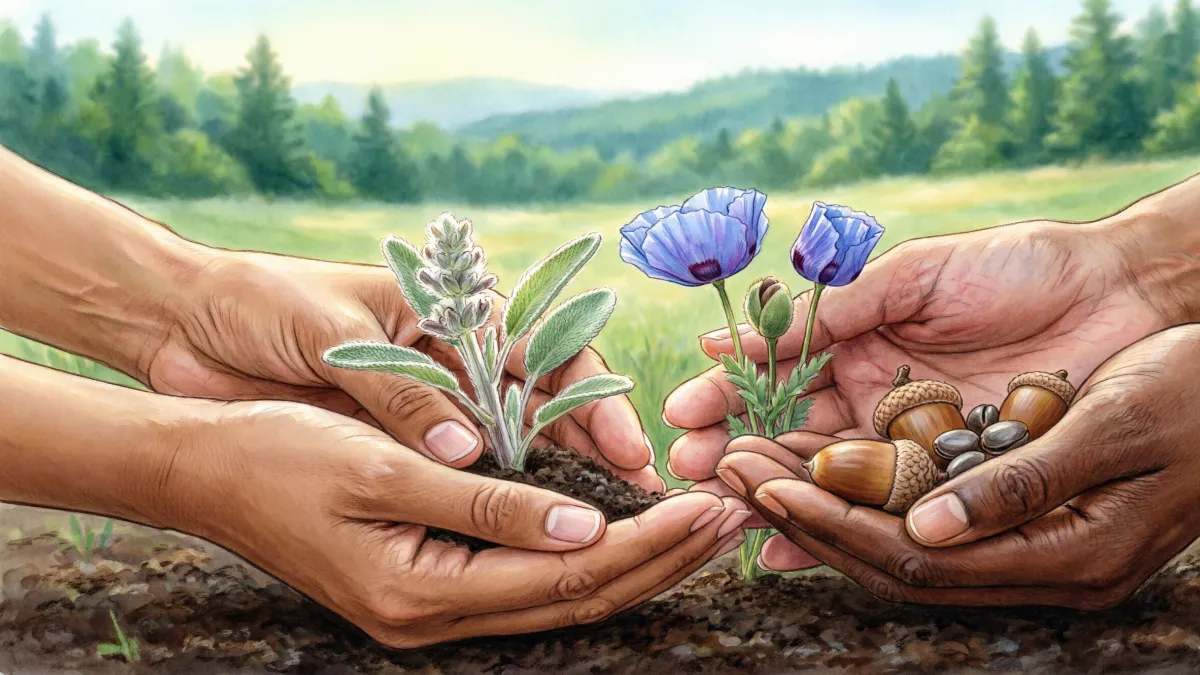
“Indigenous” describes a person, group, plant, animal, or custom that originated naturally in a specific place rather than arriving from somewhere else. People most often use the word to talk about the original inhabitants of a land and their descendants, but it also applies to native species and long standing local traditions.
This guide breaks down the definition, origin, pronunciation, and real world usage of “indigenous,” plus the mistakes people commonly make with it.
Table of Contents
- What Does “Indigenous” Mean?
- Where Does the Word Come From?
- How to Pronounce “Indigenous”
- Indigenous vs. Native vs. Aboriginal vs. First Nations
- How “Indigenous” Is Used in Different Contexts
- Real Life Examples in Sentences
- Who Are Indigenous Peoples?
- Common Misunderstandings
- Grammar Notes: Capitalization and Usage
- Synonyms and Antonyms
- When to Use and When to Avoid the Word
- Quick Reference Summary
- FAQ
What Does “Indigenous” Mean? (Definition)
People use “Indigenous” as an adjective to describe something that originates naturally in a particular place rather than something introduced or brought in from elsewhere. Dictionaries define it as something native to a region or environment by birth or origin.
The word works in two main ways:
- For people and cultures: It refers to the earliest known inhabitants of a land and their descendants, especially groups who kept distinct languages, customs, and connections to their traditional territory before colonization or large scale settlement by outside groups.
- For plants, animals, and objects: It describes something that occurs naturally in an area without human introduction. A plant is indigenous to a region if it grew there on its own, not because someone planted it.
A simple way to remember it: if something is indigenous to a place, that place is its original home.
Where Does the Word “Indigenous” Come From? (Origin and Etymology)
The word traces back to the Latin term indigena, meaning “a person born in a place” or “a native.” This Latin word combines indu (an older form related to “in”) with gignere, meaning “to beget” or “to produce.”
English speakers adapted the term into “indigenous” in the 17th century, initially using it in scientific and botanical writing to describe native plants and animals. Over the following centuries, the word expanded into anthropology, law, and everyday language to describe native peoples and their cultures. Today, the meaning has broadened even further, and it now carries strong cultural, legal, and political weight in discussions about land rights, identity, and history.
How to Pronounce “Indigenous”
“Indigenous” is pronounced in DIJ uh nus (IPA: /ɪnˈdɪdʒənəs/).
The stress falls on the second syllable, “DIJ.” A common mistake is stressing the first syllable or adding an extra sound, so it helps to break it into four parts when practicing: in DIJ uh nus.
Indigenous vs. Native vs. Aboriginal vs. First Nations: What’s the Difference?
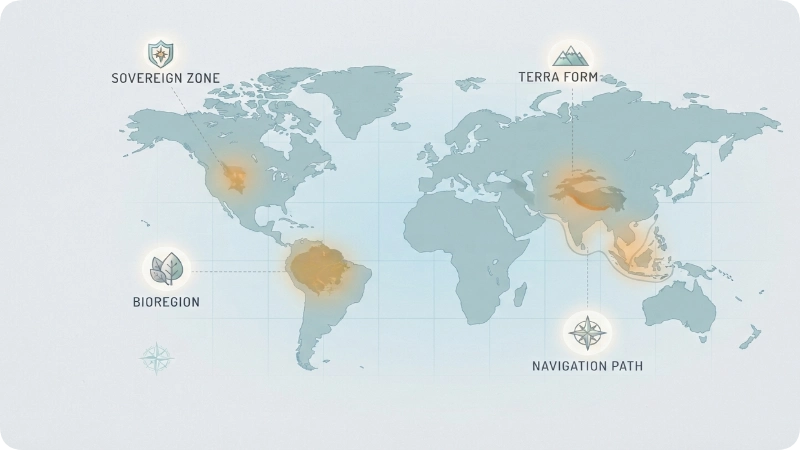
These words overlap, but they aren’t always interchangeable. The region, context, and preference of the specific community often determine the right choice.
| Term | Typical Meaning | Common Usage Notes |
| Indigenous | The earliest known inhabitants of a region and their descendants, or something naturally originating in a place | Widely used internationally; often capitalized when referring to peoples |
| Native | Born in or naturally belonging to a place | Broader and less formal; can describe anyone born somewhere, not just original inhabitants, so context matters |
| Aboriginal | Original inhabitants of a land, especially from the very beginning | In Australia, “Aboriginal” specifically refers to mainland and island peoples distinct from Torres Strait Islanders; using it outside that context can cause confusion |
| First Nations | A term used mainly in Canada for status and non status Indian bands, excluding Métis and Inuit peoples | Not a global term; specific to Canadian usage and law |
Because terminology preferences differ by country and community, the safest approach is to use the specific name of the nation, clan, or group whenever possible, such as “Navajo Nation” or “Māori,” rather than a general umbrella term.
How “Indigenous” Is Used in Different Contexts
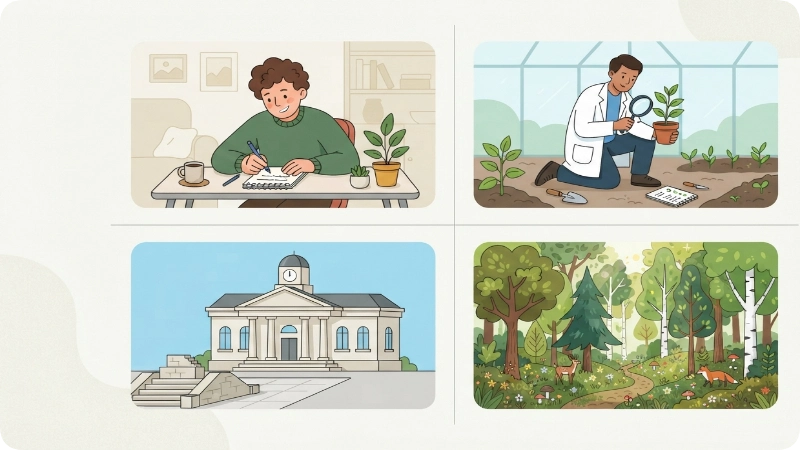
Everyday Conversation
In casual speech, people often use “indigenous” loosely to mean “native” or “original to a place.”
- “This plant is indigenous to the rainforest.”
- “The indigenous population has lived here for centuries.”
In Academic and Scientific Writing
Researchers use the term with precision, especially in anthropology, ecology, and biology, where “indigenous” distinguishes native species or communities from those introduced through migration, trade, or colonization.
- “The study documented indigenous knowledge systems used in sustainable farming.”
- “Researchers compared indigenous and introduced insect populations.”
In Legal and Political Contexts
Governments, courts, and international bodies use “Indigenous” (often capitalized) as a formal legal and political category tied to rights, land claims, and self governance.
- “The United Nations Declaration on the Rights of Indigenous Peoples outlines protections for native communities.”
- “The group filed a claim based on Indigenous land rights.”
In Biology and Ecology
Scientists use “indigenous” to describe species that developed or arrived in an ecosystem without human help, as opposed to species that people introduced intentionally or accidentally.
- “The indigenous fish species declined after non native predators were introduced.”
- “Botanists catalogued the indigenous flora of the region.”
Real Life Examples of “Indigenous” in a Sentence
- Daily conversation: “My neighbor grows only indigenous plants in her garden to support local wildlife.”
- School setting: “Our history class discussed the indigenous communities who lived in this region long before European settlers arrived.”
- Workplace writing: “The company’s new policy includes consultation with indigenous communities before any construction begins on ancestral land.”
- Professional/academic writing: “The anthropologist studied indigenous oral traditions to understand pre colonial history.”
- Social media caption: “Grateful to learn from indigenous artists at today’s cultural festival. #IndigenousArt #Heritage”
Who Are Indigenous Peoples?
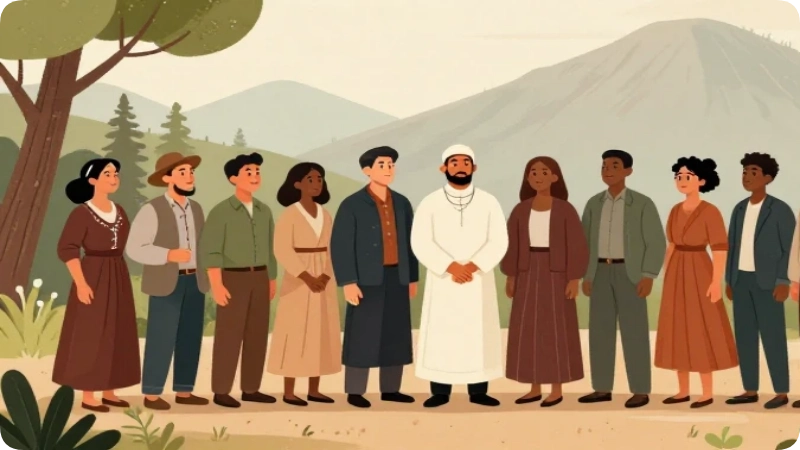
Indigenous peoples are ethnic groups who are the original inhabitants of a given region, maintaining distinct social, cultural, economic, or political systems that often predate the arrival of colonizing or dominant societies. Well known examples include the Māori of New Zealand, the Sámi of northern Europe, the Aboriginal and Torres Strait Islander peoples of Australia, and the many Native American and First Nations groups across North America.
There is no single, universally agreed upon legal definition of “Indigenous peoples” that applies to every country. Instead, organizations like the United Nations rely on a set of common characteristics, including:
- Self identification as Indigenous at both the individual and community level
- Historical continuity with pre colonial or pre settler societies
- Strong links to traditional territories and natural resources
- Distinct language, culture, or belief systems
- A position as a non dominant group within the wider society they live in
Because specific histories and communities closely tie Indigenous identity, people should refer to a specific nation or people whenever the context allows for greater accuracy and respect.
Common Misunderstandings About the Word “Indigenous”
Even careful writers sometimes get details about this word wrong. Here are a few frequent misunderstandings:
- Myth: “Indigenous” and “ethnic minority” mean the same thing. Not every ethnic minority is Indigenous, and not every Indigenous group is a numerical minority in its own country.
- Myth: All Indigenous peoples share the same culture. Indigenous groups around the world have enormously different languages, traditions, and histories. Treating them as one uniform culture erases real diversity.
- Myth: “Indigenous” only applies to people, not plants or animals. The scientific use of “indigenous” for native species is just as valid and predates much of its modern political usage.
- Myth: The word is only historical, describing people who “used to” live somewhere. Indigenous peoples are living communities today, not only historical figures, and many actively maintain their languages, governance systems, and traditions.
Grammar Notes: Capitalization and Usage
Capitalization of “indigenous” depends on context, and style guides don’t always agree.
- Lowercase “indigenous” is standard when describing plants, animals, or general native origin: “This tree is indigenous to Southeast Asia.”
- Capitalized “Indigenous” is increasingly common and preferred by many style guides, governments, and Indigenous organizations when referring to Indigenous peoples, similar to how other ethnic and cultural identities are capitalized.
“Indigenous” is an adjective, so it modifies a noun rather than standing alone as a noun. Writers say “Indigenous peoples” or “Indigenous communities,” not simply “the Indigenous,” when referring to specific groups, since treating an entire population as a single homogeneous “the” can feel reductive.
Synonyms and Antonyms
Synonyms (context dependent): native, original, aboriginal, autochthonous, homegrown, local
Antonyms: foreign, introduced, non native, imported, rare alien (in the biological sense)
Note that these words aren’t perfectly interchangeable. “Rare” and “alien,” for example, are standard scientific terms for non native species, but “alien” can sound harsh when applied to people, so it’s rarely used that way outside of legal immigration contexts.
When to Use and When to Avoid the Word “Indigenous”
Use “indigenous” when:
- Describing native plants, animals, or ecosystems
- Referring generally to original inhabitants of a region in academic, legal, or respectful contexts
- The specific tribal, national, or ethnic name isn’t known or doesn’t fit the sentence
Consider avoiding it, or use a more specific term, when:
- You know the exact name of the nation, group, or people being discussed, since specific names are usually more accurate and respectful
- The context calls for a legal term specific to a country, such as “First Nations” in Canada or “Scheduled Group” in India
- You’re unsure if the community itself prefers a different term, since preferences vary by region and group
Quick Reference Summary
| Aspect | Key Point |
| Core meaning | Originating naturally in a place, not introduced from elsewhere |
| Word origin | Latin indigena, “born in a place” |
| Pronunciation | in DIJ uh nus |
| Common uses | People, cultures, plants, animals, knowledge systems |
| Capitalization | Often capitalized for Indigenous peoples; lowercase for species |
| Related terms | Native, Aboriginal, First Nations (each with distinct regional meaning) |
FAQs
Is “Indigenous” always capitalized?
Not always. Many style guides now capitalize “Indigenous” when referring to peoples, similar to other ethnic and cultural terms, but keep it lowercase when describing native plants, animals, or general origin.
What’s the difference between “indigenous” and “native”?
“Native” is broader and can describe anyone or anything born or originating in a place, including recent generations. “Indigenous” usually refers specifically to the earliest known inhabitants of a region and their descendants, carrying more historical and cultural weight.
Can “indigenous” describe something other than people?
Yes. Scientists commonly use it to describe plants, animals, and ecosystems that developed naturally in a region without human introduction.
Is it offensive to call someone “indigenous”?
Generally no, but it depends on context and the individual’s preference. Many people prefer being identified by their specific nation or group rather than the general term “Indigenous,” so it’s respectful to ask or research the preferred terminology when possible.
What is an example of an indigenous group?
Examples include the Māori of New Zealand, the Sámi of Scandinavia and Russia, the Navajo Nation in the United States, and the many First Nations across Canada. Each group has its own distinct history, language, and culture.
Does “indigenous” mean the same thing in every country?
No. Legal definitions and preferred terminology vary by country. Canada uses “First Nations,” Australia distinguishes “Aboriginal” from “Torres Strait Islander,” and other nations use their own specific legal categories.
How is “indigenous” different from “endemic” in biology?
“Indigenous” means a species occurs naturally in a region, though it may also be found elsewhere. “Endemic” is more specific and means a species is found only in that one region and nowhere else in the world.
Conclusion
“Indigenous” describes people, cultures, plants, or animals that originated naturally in a specific place rather than arriving from somewhere else. The word carries different weight depending on context, from a simple biological label to a term tied to identity, history, and legal rights.
Using it accurately and respectfully means paying attention to capitalization, context, and, whenever possible, using the specific name of the community or species being discussed.