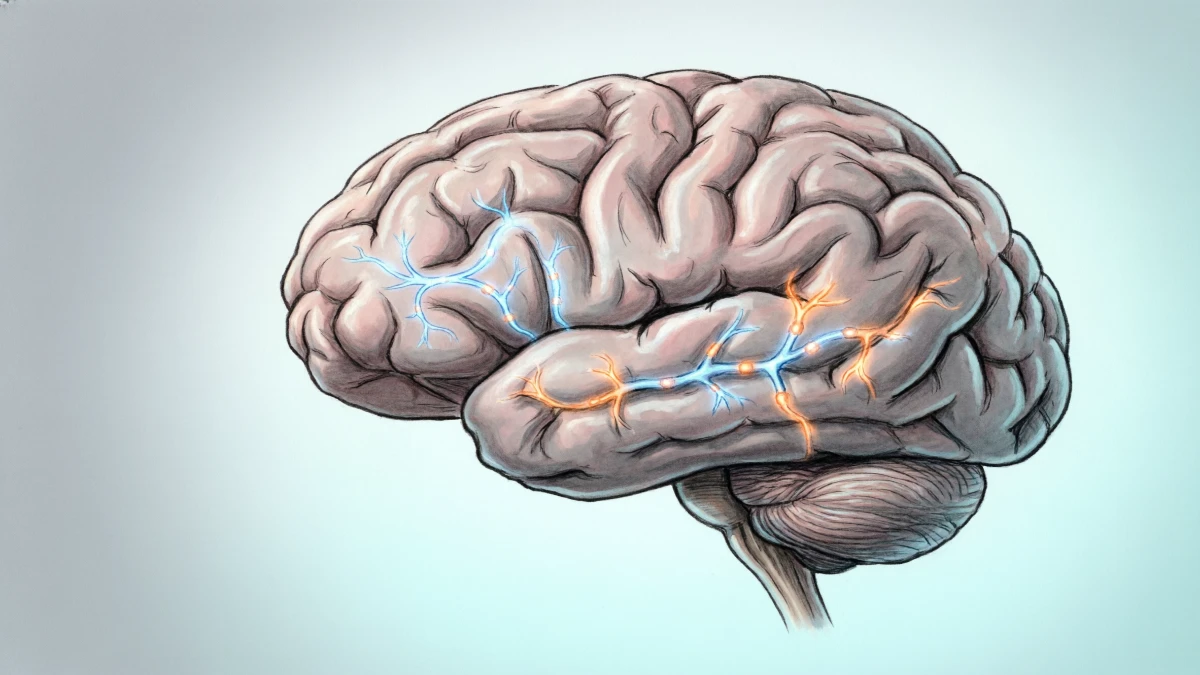
Dopamine is a brain chemical that helps control motivation, movement, mood, and the sense of reward you feel after doing something pleasurable or meaningful. It doesn’t just make you “happy” it drives you to pursue goals, learn from experience, and keep your body moving smoothly.
Understanding how dopamine works can help you make sense of habits, cravings, focus problems, and even certain medical conditions.
In this guide, you’ll learn exactly what it does in the brain, how it affects behavior and mental health, what happens when levels are too high or too low, and practical ways to support healthy dopamine function.
What Is Dopamine?
It is a neurotransmitter, a chemical messenger that nerve cells use to communicate with each other. It’s produced mainly in two areas deep in the brain: the substantia nigra and the ventral tegmental area (VTA).
From there, dopamine travels along several major pathways to different brain regions, each responsible for a different job. This is why dopamine influences so many things at once movement, motivation, memory, mood, and even hormone release.
It belongs to a group of chemicals called catecholamines, and it’s also considered a precursor to other important neurotransmitters like norepinephrine and epinephrine (adrenaline).
The Main Functions of Dopamine
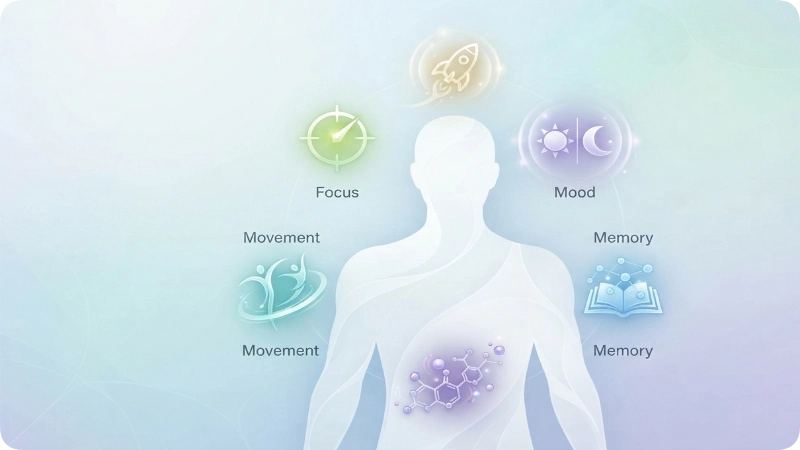
Dopamine’s effects reach far beyond feeling good. Here’s a breakdown of its core roles in the body.
1. Motivation and Reward
It is often called the “motivation molecule” rather than the “pleasure molecule,” and that distinction matters. Research suggests dopamine spikes before a reward, driving the anticipation and effort needed to pursue it, more than it spikes during the reward itself.
For example, the anticipation you feel while waiting for a package to arrive often involves more dopamine activity than opening the box once it’s here. This system evolved to keep humans and animals seeking food, connection, and other resources needed for survival.
2. Movement and Motor Control
In the area of the brain called the basal ganglia, it helps coordinate smooth, controlled muscle movements. When dopamine producing cells in this region break down, movement becomes stiff, slow, or shaky, a hallmark of Parkinson’s disease.
3. Mood Regulation
Balanced dopamine levels contribute to feelings of satisfaction, confidence, and emotional stability. Both unusually low and unusually high dopamine activity have been linked to mood related symptoms, though dopamine works alongside other neurotransmitters like serotonin rather than acting alone.
4. Learning and Memory
It plays a key role in reinforcement learning the process by which your brain links actions to outcomes. When something unexpectedly good happens, a dopamine surge helps “tag” that experience so you’re more likely to repeat the behavior that led to it.
5. Focus and Attention
Adequate dopamine activity in the prefrontal cortex supports concentration, planning, and impulse control. This is part of why dopamine related medications are sometimes used to treat attention deficit/hyperactivity disorder (ADHD).
6. Hormone Regulation
It also acts outside the brain. It helps regulate the release of prolactin, a hormone involved in milk production, and plays a role in kidney function, blood vessel dilation, and digestion.
How Dopamine Affects Everyday Behavior
It shapes far more of daily life than most people realize. A few real world examples:
- Checking your phone. The unpredictable nature of notifications, likes, and messages triggers small, frequent dopamine responses, which is part of why apps can feel hard to put down.
- Finishing a workout. Completing a challenging task, even a hard exercise session, produces a dopamine driven sense of accomplishment.
- Studying for an exam. Small wins, like understanding a tricky concept, reinforce the studying behavior through dopamine’s learning pathway.
- Craving your favorite food. The anticipation of a meal you enjoy activates dopamine before you’ve taken a single bite.
None of these examples mean dopamine is “good” or “bad” on its own. It’s a neutral signal that strengthens whatever behavior comes right before a reward, if that behavior is healthy or not.
Dopamine vs. Serotonin: What’s the Difference?
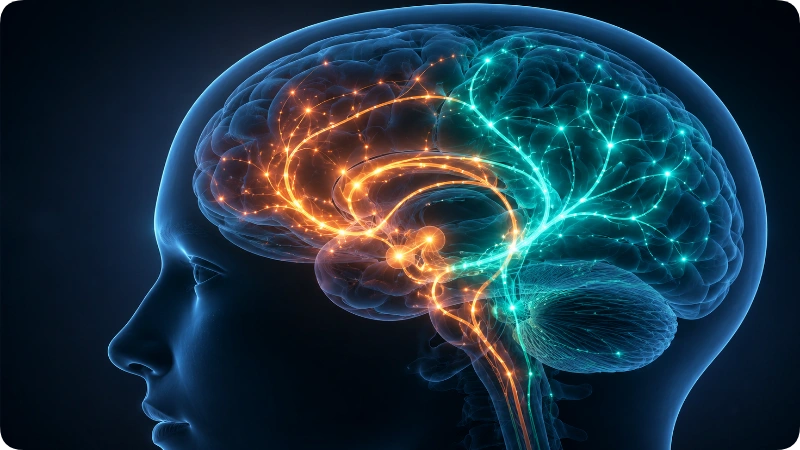
People often confuse dopamine with serotonin because both affect mood, but they serve different primary purposes.
| Feature | Dopamine | Serotonin |
| Main role | Motivation, reward, movement | Mood stability, sleep, digestion |
| Peak activity | Before or during a rewarding action | More stable, background regulation |
| Deficiency linked to | Parkinson’s disease, low motivation | Depression, anxiety symptoms |
| Common trigger | Anticipating or achieving a goal | Sunlight, food, social connection |
Both neurotransmitters interact with each other, and mental health conditions typically involve more than one chemical system, not dopamine or serotonin in isolation.
What Happens When Dopamine Levels Are Too Low?
Low dopamine activity has been associated with:
- Low motivation or apathy
- Fatigue and low energy
- Difficulty concentrating
- Reduced ability to feel pleasure (a state sometimes called anhedonia)
- Movement issues, as seen in Parkinson’s disease
Chronic stress, certain medications, poor sleep, and some medical conditions can all contribute to reduced dopamine signaling. If you consistently notice low motivation or mood changes, it’s worth discussing this with a healthcare provider rather than self diagnosing a “dopamine deficiency,” since blood or brain dopamine levels aren’t something people typically test or adjust on their own.
What Happens When Dopamine Levels Are Too High?
Excess dopamine activity, particularly in certain brain circuits, has been linked to:
- Impulsive or risk taking behavior
- Restlessness or agitation
- In some cases, symptoms associated with psychosis or mania
This is one reason it is closely studied in conditions like schizophrenia and bipolar disorder, and why some antipsychotic medications work by blocking dopamine receptors.
Dopamine and Addiction
Addictive substances and behaviors including drugs, alcohol, gambling, and compulsive social media use can trigger dopamine release far beyond what natural rewards produce. Over time, the brain may adjust by reducing its own dopamine sensitivity, which can make everyday pleasures feel less satisfying and drive a cycle of seeking more of the substance or behavior just to feel normal.
This doesn’t mean it causes addiction by itself. Genetics, environment, and individual brain chemistry all play a role, but its involvement in reinforcement learning helps explain why addictive patterns can be so difficult to break.
Common Misunderstandings About Dopamine
Myth: Dopamine is the “happiness chemical.” Dopamine is more accurately tied to motivation and anticipation than to happiness itself. Contentment and joy involve a broader mix of neurotransmitters and life circumstances.
Myth: You can simply “detox” dopamine. Popular trends promote temporary abstinence from stimulating activities as a way to “reset” dopamine. While reducing overstimulation can genuinely help some people regain balance and focus, the idea that dopamine itself gets “used up” or needs a literal detox isn’t how the science works.
Myth: More dopamine is always better. As covered above, both too little and too much dopamine activity can cause problems. Balance matters more than maximizing dopamine.
Practical Ways to Support Healthy Dopamine Function

These evidence informed habits are commonly associated with supporting healthy dopamine activity:
- Get consistent, quality sleep. Sleep deprivation has been shown to disrupt dopamine receptor sensitivity.
- Exercise regularly. Physical activity is linked to healthy dopamine and endorphin activity.
- Eat a balanced diet. Foods containing tyrosine, an amino acid found in proteins like eggs, dairy, and legumes, support dopamine production, since tyrosine is a building block for it.
- Set achievable goals. Breaking tasks into smaller steps creates more frequent opportunities for the dopamine driven satisfaction of completing something.
- Limit constant digital stimulation. Reducing nonstop notifications and scrolling can help restore sensitivity to everyday rewards.
- Practice mindfulness or meditation. Some research suggests these practices may support balanced dopamine activity over time.
These habits support overall brain health; they aren’t a substitute for medical treatment if you’re experiencing a diagnosed condition related to dopamine function.
FAQs
Does dopamine make you happy?
Not directly. It drives motivation and the pursuit of rewards, while feelings of lasting happiness involve multiple neurotransmitters and life factors working together.
Can you increase dopamine naturally?
Yes, habits like regular exercise, good sleep, a protein rich diet, and achievable goal setting are commonly associated with supporting healthy dopamine activity.
What foods help boost dopamine?
Foods containing tyrosine, such as eggs, poultry, dairy, nuts, and legumes, provide the building blocks your brain uses to produce dopamine.
Is low dopamine the same as depression?
No. Depression involves multiple brain chemicals and circuits, not just dopamine, so low dopamine alone doesn’t equal depression, though it may contribute to some symptoms.
What role does dopamine play in Parkinson’s disease?
Parkinson’s disease develops when it producing brain cells in the basal ganglia break down, leading to tremors, stiffness, and slowed movement.
Can too much dopamine be harmful?
Yes, excessive dopamine activity in certain brain pathways has been linked to impulsivity, agitation, and in some cases symptoms associated with psychosis.
Is a “dopamine detox” actually effective?
Reducing overstimulation from screens and constant rewards can help some people feel more focused, but the term “detox” is misleading since it isn’t depleted or flushed out in a literal sense.
Key Takeaway
It is a powerful neurotransmitter that shapes motivation, movement, mood, learning, and focus, working quietly in the background of nearly everything you do.
It isn’t simply a “pleasure chemical,” but rather the brain’s way of driving you toward goals and reinforcing useful behaviors.
Supporting healthy dopamine function through sleep, exercise, nutrition, and mindful habits can help you feel more motivated, focused, and emotionally balanced.